Cyber Security and Emerging Threats

From Trenches to Algorithms: Integrating Unmanned Ground Vehicles into NATO’s Cyber-Resilient Structure

How can NATO integrate Unmanned Ground Vehicles (UGVs) into the Cyber Defence Framework? In this article, Christopher Macartney highlights the developments and capabilities of UGVs during the Russia-Ukraine War and strengthening UGV network defences as a strategic asset for NATO in the future of warfare.

Morgan Singer Women in Security

The Future of the Frontline: Embedding Gender in the Transition to Drone Warfare

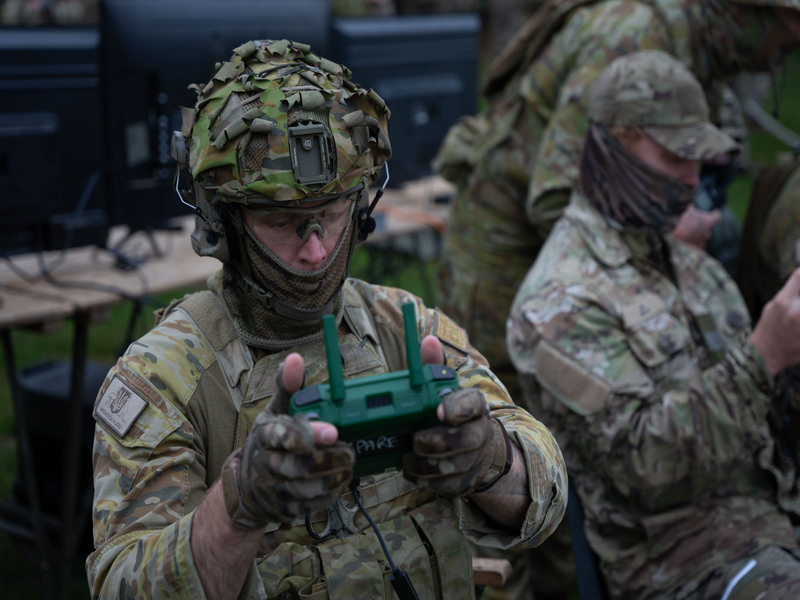
The transition toward drone warfare is transforming the frontline. Drawing on Ukraine’s experience, this article explores how remote warfare challenges conventional standards for combat effectiveness. These transformations create new opportunities and threats; the necessity for precision, composure, and critical thinking bolsters women’s greater capacity to perform as impressive drone operators. Alternatively, gendered stereotypes and psychological challenges persist. This article outlines pathways through which NATO can integrate gender perspectives into the deployment of uncrewed systems in order to optimize the integration of combat innovation.

Cyber Security and Emerging Threats

Delegating Destruction: AI and the Ethics of Warfare

As artificial intelligence becomes embedded in modern warfare, it is reshaping how states conduct war and raising urgent questions of ethics and accountability regarding the potential absence of human judgment in lethal decisions. If machines can decide when force is used, who ultimately remains accountable for the decision to take a human life in war?

Previous Events

Event Report – Baltic and Ukrainian Youth on Security and Solidarity 

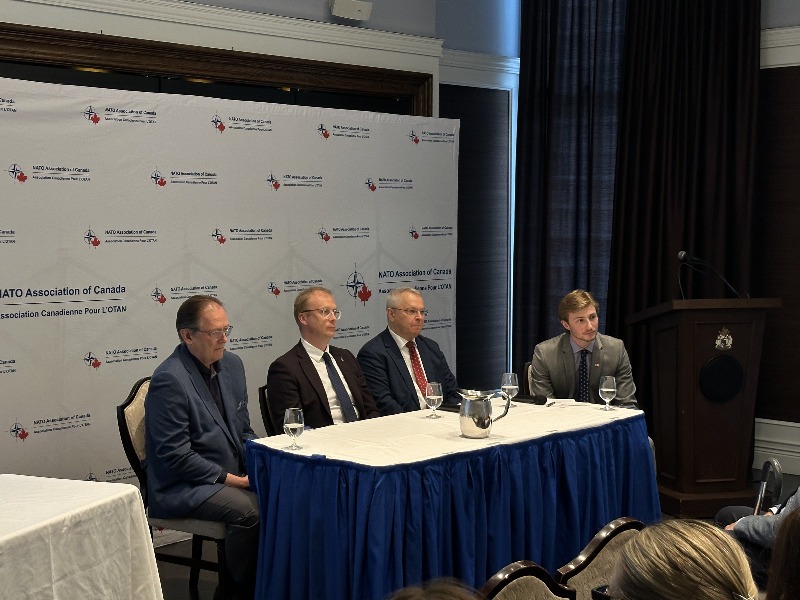
On May 13, 2026, the NATO Association of Canada (NAOC), the Canadian Lithuanian Youth Association, and the Embassy of Lithuania to Canada co-hosted a panel discussion titled “Baltic and Ukrainian Youth on Security and Solidarity.” The event explored the role of youth in supporting Ukraine’s resistance against Russia’s full-scale invasion, countering Russian disinformation, and maintaining transatlantic solidarity with Ukraine. The discussion also examined what NATO countries can learn from Ukraine’s resilience, including lessons on informational resilience, civic mobilization, and rapid innovation in defence technologies. Read the full event report for a detailed overview of the discussion and key takeaways.

Cyber Security and Emerging Threats

Nuclear Allegations and Rhetoric Continue to Undermine Global Peace

Hope Arpa re-evaluates the logic of nuclear deterrence in the context of nuclear programs allegation’s use to justify interventions. The article considers allegations of nuclear programs as motivators of preemptive strikes, discursive tools to justify intervention politically and socially, and the perception of enemy states as nuclear ambitious causing security dilemmas. The root cause of these conflicts is not necessarily framed as exclusively the nuclear weapons themselves, but the international system’s framing of them as the ultimate ‘self-defense’ tools.

Society, Culture, and Security

NATO’s Defence Capabilities: Quality, Quantity, and Self-Sufficiency

With rapid technological innovation, it can be tempting to make technology the central focus of the defence industry by assuming that superior advancements alone could secure victory on a potential battlefield. A dangerous assumption in this current political climate is to assume that war is unlikely and that defence funds would be better allocated elsewhere. Read More…

Security, Trade and the Economy

The power of Atom, shared: Future of Canada’s extended nuclear deterrence within NATO. 

Recent shifts in US defence policy have cast doubt on the reliability of the American nuclear umbrella that Canada and NATO allies have relied on for decades. While European states explore alternative deterrence arrangements through possible nuclear sharing by France and the UK, Canada’s access to these options is limited by its geography. This article argues that Canada can address this vulnerability without compromising its non-proliferation commitments by deepening its role in NORAD. Canada’s strategic importance to North America’s Arctic defence gives Ottawa unique leverage – which it should actively use to reinforce its membership within the American extended nuclear deterrence in face of mounting global security challenges.

Daria Synelnykova Previous Events

Charting Ukraine’s Pathway Toward a Just Peace with Canada & NATO Allies – Panel Report

On February 23, 2026, the NATO Association of Canada (NAOC), in partnership with the Canada-Ukraine Parliamentary Friendship Group and the Embassies of Ukraine and Lithuania in Canada, organized a panel discussion entitled “Charting Ukraine’s Pathway Toward a Just Peace with Canada & NATO Allies”. The event was dedicated to commemorating the 4th anniversary of the Read More…

Centre For Disinformation Studies

Defending Solidarity After Warsaw’s Flag Incident

On 9 August in Warsaw, police detained 109 people during a concert by Belarusian singer Max Korzh for “drug possession, unlawful entry, assaults on security staff and use of pyrotechnics.” At the same event, one attendee displayed the red-and-black flag associated with the Ukrainian Insurgent Army (UPA). The symbol is contentious in Poland because the Read More…

Centre For Disinformation Studies

What Canada Has Yet To Learn from Ukraine About Countering Disinformation

Imagine a government on the verge of a decision that will take years to implement and billions of dollars to sustain. A major defence procurement. A long-term NATO deployment. A new assistance package for an ally. On paper, everything looks orderly. Briefings are prepared. Consultations take place. Procedures are followed. Yet, even before the decision Read More…