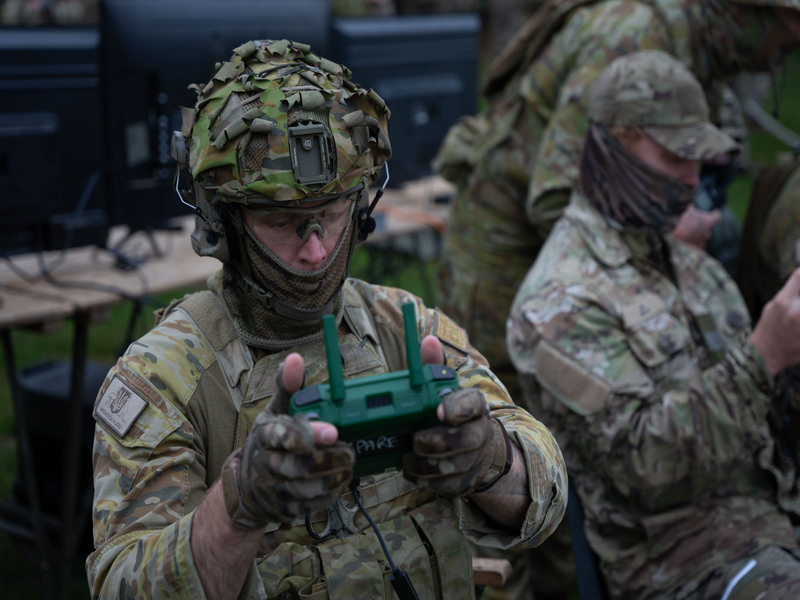
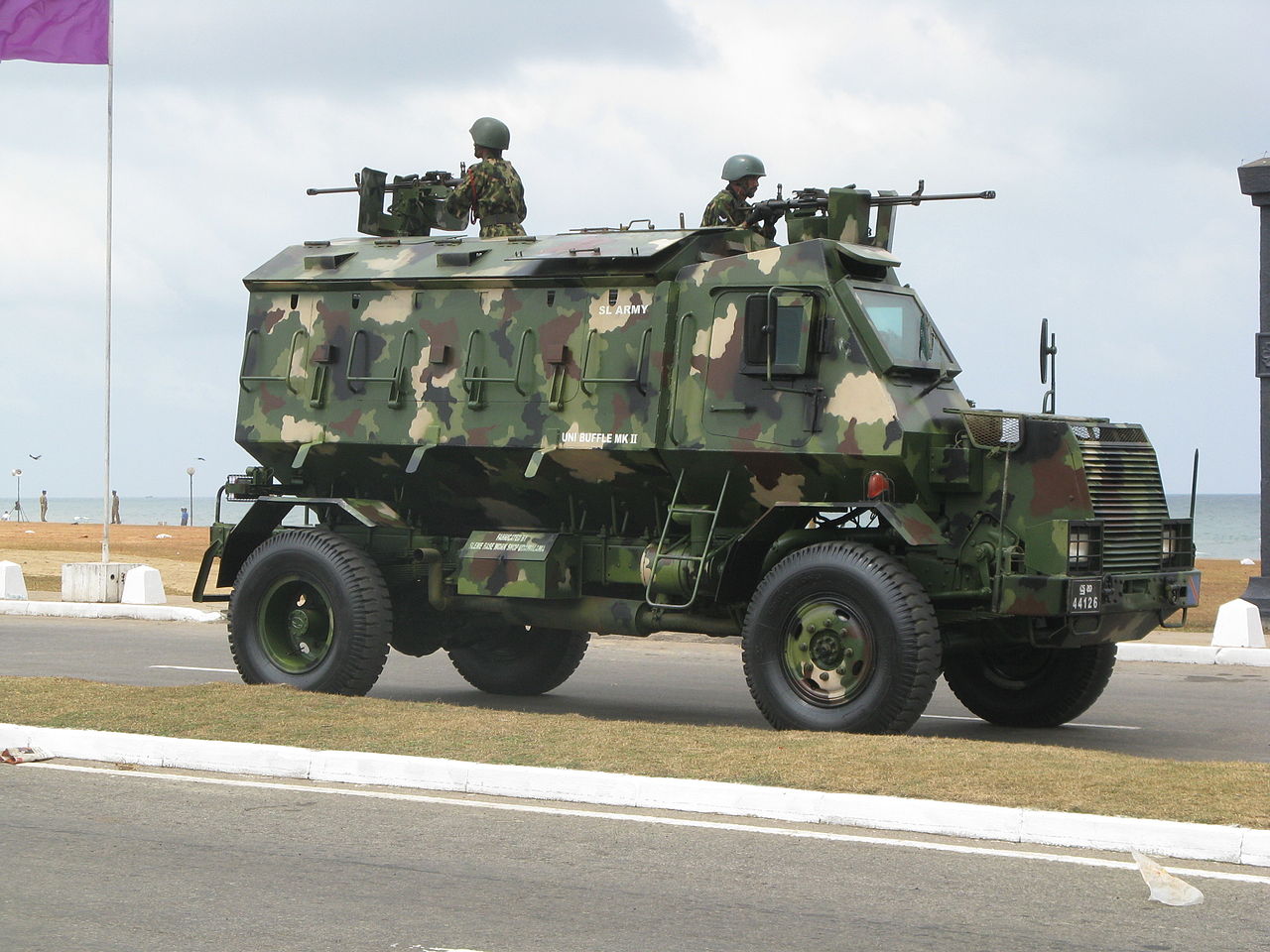
Modern warfare between nations continues to rapidly evolve due to advancements in autonomous technology that change how militaries operate on the battlefield and in intelligence gathering. In the Russo-Ukrainian War, Kyiv’s innovations in the use of Unmanned Ground Vehicles (UGVs) have shaped the war into a cyber-physical battlefield. On this battlefront, land-based robotic vehicles operated by artificial intelligence (AI) enhance efficiency and reduce risks by conducting reconnaissance missions and related activities, transporting supplies, and providing combat support alongside soldiers or in solo operations. UGVs are a ground-level extension of Unmanned Aerial Vehicles (UAVS), driving a broader shift toward a networked, attritable, and cyber-dependent battlefield.
Ukraine as A Live Case Study
Ukraine’s deployment of UGVs to deliver supplies, conduct reconnaissance, and provide combat support in frontline operations illustrates how UGVs enhance battlefield effectiveness. However, these autonomous systems are vulnerable to exploitation. Since January 2025, Ukrainian UGVs have heavily depended on continuous cyber resilience through secured network connectivity, GPS signals, software systems, sensors, and remote communications. These dependencies create risks of cyberattacks on communication infrastructure through data interception, signal jamming, and remote hijacking, intensifying electronic warfare in favour of shifting the integrity of all ied digital systems for strategic enemy interests. Russian forces have exploited Ukrainian electronic warfare systems to degrade, destroy, disrupt and discredit communication channels used by UGVs, demonstrating how quickly cyberattacks can degrade battlefield effectiveness. The challenges in maintaining a secure cyber network continue to prove difficult for Ukraine and are further indicated within NATO given the widespread use of UGV technologies. Further investment into Russia’s intelligence gathering to exploit UGVs poses a direct threat to NATO’s developing UGV integration. China is also a direct threat by integrating its advancing AI systems to outpace allied UGV forces. Both adversaries with such strategic interests are a threat to Ukraine and NATO’s ability to maintain a secure and preventive cyber battlefield.
UGV-NATO Integration
NATO’s approach to autonomous systems is broadly mentioned in the Autonomy Implementation Plan, establishing a guiding plan for the development, integration, and adoption of autonomous capabilities. This Plan does not explicitly address UGVs or adopt the frameworks, policies, and standards needed to integrate UGV-specific requirements to protect the networks they operate on. By dissuading adversaries under strategic fundamentals of preventing crisis and war, and by effectively coordinating the use of autonomous systems, it could be strengthened by expanding to integrate UGVs into NATO’s Cyber Defence Framework as an emerging component of cyber-physical warfare.
NATO’s Cyber Defence Framework illustrates the real threat of malicious cyber events, ranging from low-level to technologically sophisticated attacks. NATO and its allies leverage their strong and resilient cyber defence capabilities to detect and prevent these threats alongside the Alliance’s three core tasks: deterrence and defence, crisis prevention and management, and cooperative security. Lessons from the Russo-Ukrainian War demonstrate the effectiveness of disrupting communications that degrade the effectiveness of autonomous systems. Improving resilience against signal jamming, data interception, and network disruptions reduces vulnerabilities and improves operational reliability in future UGV deployments. By utilizing NATO’s cyber defence resources and technical capabilities to strengthen the networks on which UGVs depend, NATO and allies are better equipped to maintain peace and deter crises and conflicts.
UGV integration also raises important considerations within NATO on assessments of the procurement of emerging technologies. Battlefield systems are increasingly interconnected as the boundary between physical operations and digital security blurs. UGVs must be assessed not only on their mechanical performance and operational utility, but also on their maintained functionality in contested environments to withstand electronic and cyber interference. Electronic warfare is pervasive, but Canada can play a leading role in adapting NATO’s cyber defence through its established expertise in cybersecurity, secure communications systems, and intelligence analysis.
Canadian Leadership
The Canadian Centre for Cyber Security notes that Canada’s Communications Security Establishment (CSE), our nation’s information technology security and foreign signals intelligence department, has a foreign intelligence mandate that can provide NATO and allied countries with exceptional experience in cyberspace. This mandate provides valuable insight into adversary exploits, establishing unique perspectives on trends in cyber threats. Assessing Russian state-sponsored cyber threats to prevent cyberespionage of NATO and its allies remains a critical priority and is further heightened by NATO’s support for Ukraine. With this expectation, the CSE can further strengthen NATO and Allies in a leading role within NATO’s Cyber Defence Framework, as well as UGV integration. Drawing lessons from Ukraine, the large-scale NATO military exercise Crystal Arrow, led by Latvian and Canadian troops, includes UGV exercises for the first time. This is a clear sign that one of NATO’s member states is practicing UGV integration on the battlefield alongside soldiers.
Policy Recommendations
To assist NATO and Allies in integrating UGV development and cyber defence, NATO could consider implementing the following two policy proposals.
1: To address the growing role of autonomous development and battlefield capabilities, NATO and allied governments should formalize UGVs by integrating them into NATO’s Cyber Defence Framework. As illustrated by the Ukrainian case, UGVs can support logistics, reconnaissance, transportation, and frontline operations while reducing personnel exposure to enemy combatants and battlefield hazards. Ideally, this would assist NATO and allies in allocating resources to reinforce networks that UGVs rely on to operate. An example of resource allocation could be creating a UGV cyber defence division within NATO’s Integrated Cyber Defence Centre to leverage advanced technologies to increase situational awareness for NATO military commanders and enhance resilience on their relied-upon networks.
2: NATO could also benefit from establishing a collaborative procurement initiative among member states to reduce fragmentation between alliance-wide coordination and interoperability. This initiative would further involve joint education and training programs on collaborative UGV deployment.
UGVs are no longer a distant possibility as they transform the battlefield into operational realities established in the Russo-Ukrainian War. Autonomous systems are reshaping modern warfare into a cyber-physical battlespace, enabling deeper collaboration between soldiers and machines on the ground. NATO and allies should recognize UGV capabilities by integrating them securely and effectively into joint operations. Integration could be possible within the Cyber Defence Framework, protecting digital infrastructure, securing communications, and protecting the networks that strengthen the collaborative integrity of troops working alongside UGVs in contested environments.
This broader shift toward cyber-physical warfare could prompt NATO to adapt its procurement strategies, cyberdefence frameworks, and government interoperability in changing technological innovations and new standards of warfare. As China and Russia continue to advance their autonomous and AI-enabled capabilities, delays in securing integration could pose operational vulnerabilities for NATO members.
The question lies less in whether NATO allies will incorporate UGVs into future joint operations but in whether the alliance can integrate and protect UGVs and their operating systems in contested environments. In this evolving cyber-physical environment, cyber resilience will become just as important to strategic and military success as traditional military capability itself.
Disclaimer: Any views or opinions expressed in articles are solely those of the authors and do not necessarily represent the views of the NATO Association of Canada.
Photo: Russo-Ukrainian War (2025), by NATO via . Photo courtesy of NATO.