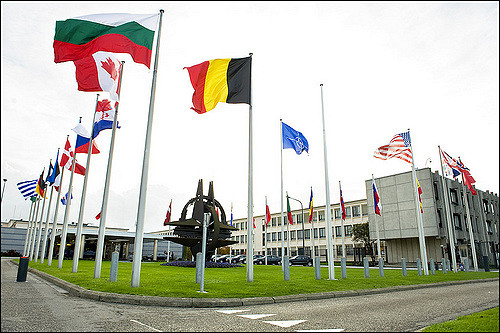
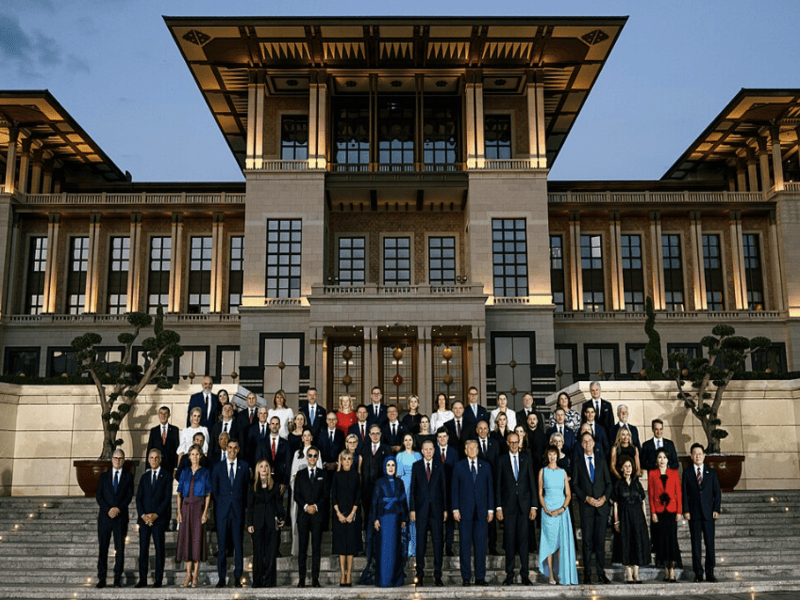
In the first week of July, leaders of the NATO Alliance convened in Ankara, Turkey, for the annual NATO summit. Each member reaffirmed their commitment to the transatlantic bond. The summit dialogue symbolized the deep solidarity between members committed to consolidating peace and security. The Ankara Summit Declaration translated these ongoing commitments into writing, and promised prosperity for the one billion people in NATO’s, “free and democratic nations.” In deploying this effort, the Alliance collectively committed to codifying institutions such as the Women, Peace and Security (WPS) Agenda, which embeds humanitarian efforts within deterrent frameworks for advancing peace and security. NATO’s official text of the WPS Agenda describes the importance of gender-responsive leadership, ensuring NATO leaders are accountable for the implementation of the WPS Agenda within their respective borders. This policy was endorsed by NATO Heads of State at the Washington Summit in 2024. Despite this, Turkey has recently regressed in its humanitarian agenda; accelerating mass arrests and democratic backsliding creating a concerning backdrop for dialogue surrounding the WPS agenda. Humanitarian organizations have watched the Summit closely for this reason, with some remaining highly critical and calling for the restoration of a commitment to humanitarian issues in official Summit texts. The Ankara Summit consequently, exposed tensions between NATO’s commitment to the WPS Agenda and current political realities in Turkey. The Ankara Summit proposed a unique opportunity for the Alliance to test its capacity to uphold its commitment to advancing the WPS Agenda as a prerequisite for peace and security.
In an era increasingly defined by confrontation rather than diplomacy, the Ankara Summit nonetheless served its purpose of cultivating dialogue and combatting division. This principle is increasingly scarce in the contemporary geopolitical climate. This year offered a valuable forum for discussions, including those on women and societal resilience, which was collectively reinforced as essential for security. Through contributions from leaders such as Iryna Nykorak, the Alliance maintained a positive commitment to advancing the WPS Agenda. It is imperative, however, that these conversations do not remain confined to the room in which leaders convene. The responsibility of Heads of State, as outlined at the Washington Summit, extends beyond the negotiating table and requires them to uphold collective efforts at home. Member states must equally hold one another accountable to these shared standards. Dialogue in Ankara reaffirmed that women’s participation remains essential to strengthening collective security, but this sentiment must be upheld in respective states, even after the meeting adjourns.
There are three rooms at the Summit in which the most important conversations surrounding women seemingly occurred. The first two featured panels in which Iryna Nykorak was invited to speak. A Member of Parliament in Ukraine, the Head of the Subcommittee on Veteran’s Rehabilitation, and Head of the Inter-Factional Group “Veterans Now” in the Verkhovna Rada, Nykorak is a prominent voice in advocacy for gender-responsive defence reform, having founded the “Arm Women Now” initiative and authored Ukraine’s comprehensive study titled “The Female Face of Ukraine’s Defence.” She represented Ukraine as a speaker at two panels in Ankara, dedicated to advancing the roles of women in defence and security. The first panel reinforced the WPS Agenda as a prerequisite for strong operational resilience and readiness. Drawing on experience from Ukraine, Nykorak presented the importance of women and investment in human capital as critical elements of defence during wartime. The second panel discussed women as the fundamental “piece for peace,” and emphasized the importance of women’s leadership for navigating contemporary security challenges. By drawing directly from Ukraine’s experience, Nykorak challenged delegates to view women’s leadership as a strategic component to defence capability. The lessons she shared were forged under the pressures of an ongoing war, giving them a level of operational credibility that transcends the summit itself. These insights cannot remain confined to the rooms in which they were presented; rather, their value depends on whether the delegates who heard them carry these lessons home.
The third room in which these discussions occurred included a roundtable involving the spouses of Heads of State. The roundtable was hosted by First Lady Emine Erdoğan at the Çankaya Mansion, and convened the first spouses of NATO allied and partner countries to discuss security issues, notably for children, in the rapidly evolving digital era. This room, consisting of a majority of women, reiterated the importance of gender-responsive framings of security issues. By convening around these issues, the discussion contributed to broadening definitions of security; the WPS Agenda describes that security transcends military preparedness and must include the social and human consequences of emerging threats. The predominance of women leading this discussion further reinforced that gender-responsive conceptions of peace and security are often advanced when women are granted the platform to convene and lead. Article 17.2.2 of NATO’s WPS Agenda indicates that women’s leadership is immensely valuable in shaping conversations around human security and resilience. Yet, as with any diplomatic dialogue, the significance of this roundtable rests in its ability to transcend the Çankaya Mansion.
While these conversations offered a meaningful platform for advancing the WPS Agenda, their significance extends far beyond the four walls in which they were held. The value of these conversations, however, depends not on their occurrence alone, but on their capacity to be imported home. Diplomacy is not defined by the willingness to gather, but by the willingness to act. The willingness to gather is an important and increasingly rare step, however, the collective commitment to join the conversation must be matched by a collective responsibility to actualize conclusions and hold one another accountable for doing so. If the Alliance is to meaningfully advance its mandate, including the WPS Agenda, it must ensure that the voices elevated in Ankara continue to shape decisions beyond the conclusion of the Summit. NATO’s greatest strength, which sets it apart from its adversaries, is the readiness of its members to choose diplomacy over confrontation. By continuing to opt for diplomacy, and to engage in the hard conversations, NATO retains leverage in its capacity to challenge its allies to be better. In doing so, each ally strengthens not only its own institutions, but the collective security and unity of the Alliance.
This becomes tangible through Allies’ pursuit of alignment; a collective upholding of collective values promises positive outcomes. In order to measure this alignment, Allies can produce a framework for assessing whether collective values are being upheld. Official texts, such as the WPS Agenda, can transcend their consultative roles if they include mechanisms for measuring alignment and execution.
Photo: NATO Family Photo at the Presidential Palace in Ankara, Turkey, July 7, 2026. Source: Public Domain via Wikimedia Commons.
Disclaimer: Any views or opinions expressed in articles are solely those of the authors and do not necessarily represent the views of the NATO Association of Canada.