placeholder for programs

Security, Trade and the Economy Uncategorized

Canada’s Dual Exposure to the Strait of Hormuz

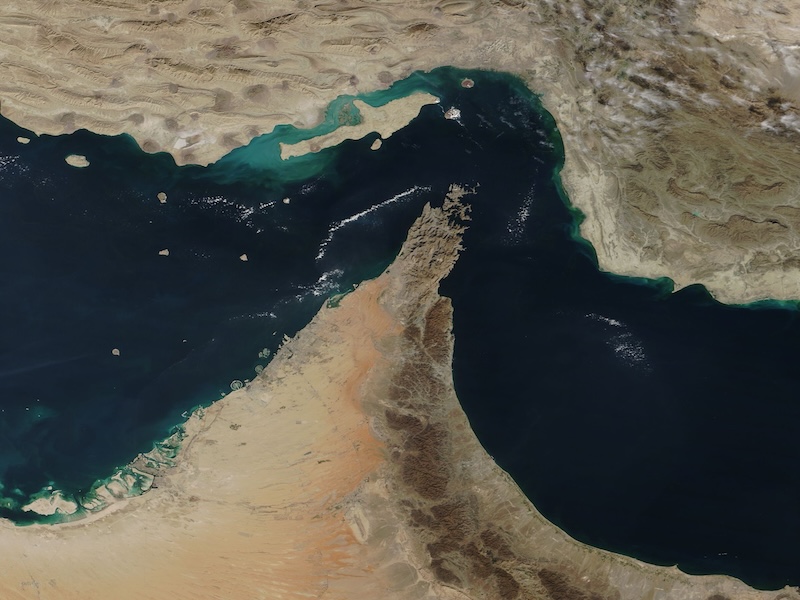
The Strait of Hormuz is barely 30 miles wide at its narrowest point, yet it is arguably one of the most consequential stretches of water on earth. Through this narrow corridor connecting the Persian Gulf to the Gulf of Oman flows approximately 20 million barrels of oil per day (b/d); roughly 20% of global petroleum Read More…

Indo-Pacific and NATO

What’s Next for Canada and Carney’s ‘Variable Geometry’ Strategy in the Indo-Pacific?

What is Mark Carney’s ‘variable geometry’ strategy, and does it differ significantly from previous concepts of Canadian foreign policy? In this piece, Joel Sawyer (Indo-Pacific and NATO Junior Research Fellow) analyzes continuity and change in Canada’s Indo-Pacific engagement across the current decade, what variable geometry offers, and the challenge posed by worsening global economic conditions.

Indo-Pacific and NATO

Canada’s Indo-Pacific Turn: What Carney’s Tour Signals for the Future of Canadian Partnerships 

In his latest piece, Narayan Srivistava argues that Carney’s Indo-Pacific tour was a deliberate push to diversify Canada’s partnerships, improve ties with both developing and developed countries in Asia, and integrate Canada more securely inside the economic and geopolitical networks shaping the region’s future.

Indo-Pacific and NATO

After the Lull: Why Renewed Chinese Military Pressure on Taiwan Matters

How should NATO respond to growing strategic links between the Taiwan Strait and the Euro-Atlantic theatre? In this article, Nguyen Bao Han Tran examines China’s calibrated military pressure on Taiwan and argues that NATO must prepare for the indirect consequences of a Taiwan contingency, from defence-industrial strain to cross-regional deterrence challenges.

Society, Culture, and Security

Au-delà des armes : la fragilisation des systèmes de santé comme stratégie de guerre et de coercion

Dans les conflits armés contemporains, la violence ne se limite plus aux affrontements militairesdirects, mais s’étend à des leviers indirects visant à affaiblir la résilience des sociétés civiles. Elles’étend désormais aux infrastructures civiles essentielles, et en particulier aux systèmes de santé,qui sont de plus en plus pris pour cibles de manière délibérée. Pourquoi la destruction Read More…

Security, Trade and the Economy

Caught between Allies and Autonomy: What the F-35 vs Gripen Dilemma means for Canada’s Defence and Security

Canada’s decision to replace its aging CF-18 fleet has taken on new geopolitical weight. Initially committed to procuring 88 F-35s, Ottawa began reconsidering further orders in 2025 amid deteriorating US-Canada relations, turning its attention to Sweden’s Gripen as an alternative. This article evaluates the two programs across four dimensions: homeland defence, alliance interoperability, industrial sovereignty, and combat performance. It finds that while the F-35 offers superior stealth and NATO integration, the Gripen presents compelling advantages in Arctic operability, cost efficiency, and supply chain independence. Ultimately, the right choice depends on whether Canada prioritizes allied commitments or long-term defence autonomy.

NATO and Canada

What Canada’s Bid to Host the Defence, Security and Resilience Bank Signals About Allied Rearmament and National Ambition

Rachel Potter examines Canada’s bid to host the proposed Defence, Security and Resilience Bank and its implications for allied defence investment. She explores how the institution would mobilise capital markets to finance defence procurement and industrial expansion for NATO members and partner states, and how hosting the bank could position Canada at the centre of an emerging system of allied defence finance while strengthening its strategic role within the NATO security ecosystem.

Security, Trade and the Economy

Europe’s Rearmament and the Question of Allied Market Access

As the European Union moves to a more structured defence-industrial strategy, its new programmes are beginning to shape who gets financed to produce what, and on what terms. Canada has secured rare, privileged access to this emerging system through SAFE, but access alone does not guarantee durable industrial relevance. Are Canada, and allies, able to be meaningfully included?

Society, Culture, and Security

A One-Year Retrospective on Mark Carney’s Defence Policy 

March 16, 2026 marks one year since Mark Carney took office as Prime Minister of Canada, following his victory in the 2025 Liberal Party leadership race. Subsequently, in a rare federal election where foreign policy was the most salient issue, Carney promised to revitalize the Canadian Armed Forces and meet NATO defence spending guidelines while reinforcing Canada’s relationships with its non-US allies and partners.  The zenith of Carney’s first year was Read More…