Aluminum is pivotal to ensuring military aircraft and missiles maintain their lightweight and agile capabilities. Similarly, main battle tanks and corvettes would not retain their high strength and thermal stability without sustained access to graphite in production. Jet engines and submarines would not be able to withstand extreme temperatures and stress without superalloys that incorporate cobalt. These are just three among several minerals which NATO has identified as defence-critical, as they are integral to the manufacturing and maintenance of advanced defence systems. The supply chains of these minerals are growing increasingly vulnerable, and this is compounding the way in which these minerals shape geopolitics and security. Since securing a steady supply chain of critical minerals is essential to achieving military capabilities, access to these resources is becoming weaponized in geopolitical competition. These minerals are not only critical for defence capability; demand is also propelled by the growing necessity for renewable energy infrastructure among global transitions to greener and more digital economies. Canada, in particular, has described in their case for critical mineral extraction that these minerals are integral to the development of clean technologies such as zero-emission vehicles or essential telecommunications information technologies. Alongside Canada, NATO countries are intensifying efforts to secure critical minerals. The dual necessity for defence-critical minerals and clean energy infrastructure cultivates new challenges for the Alliance. Among these challenges, however, are the gender-disparate harms associated with mineral extractions. Canada has developed advanced frameworks for targeting these effects, and demonstrated that critical mineral development can produce positive outcomes when gender equality is imperative to extraction efforts. Given the importance of critical minerals to defence-industrial capacity, NATO must similarly integrate gender-responsive critical mineral governance into its Women, Peace and Security (WPS) Agenda. This will ensure mineral security strengthens military readiness in tandem with gender equality, demonstrating adherence to established gender-based considerations.
Integrating gender-responsive governance has proven a challenge for many regions where critical minerals are salient; there remains evidence of negative outcomes on women in mining regions. Women in rural areas face distinct corruption risks which are often exacerbated in mining regions by weak enforcement and governance. Where enforcement does exist, exclusion is often embedded within policy, as mining laws in several countries still prevent pregnant or unmarried women from entering the industry. Corruption in critical mineral extraction areas also drives land grabbing, which refers to the mass purchasing of land by private profit-seeking investors. Tenure systems in these areas are often informal, allowing companies and state actors to execute decisions without fair consultation. Women, who are less likely to hold formal land titles, are particularly vulnerable to omission from these decision-making processes, reinforcing their economic and political isolation. Development banks and similar institutions have deployed financial initiatives such as community development funds to empower these regions. However, areas that implement community development funds alongside mining projects often fail to disaggregate gender data. This data omits the important gender-based considerations that would prevent the marginalization of women and girls.
These issues are exacerbated by the climate crisis, as critical mineral extraction produces environmental impacts that disproportionately affect women. Women are often responsible for caregiving; they are more likely to absorb the responsibility for water collection, food production, and sacrifice greater amounts of income and time when the degradation of natural resources makes these processes more challenging. This is enhanced by women’s continued exclusion from decision-making spaces around mining activities. Effective frameworks for governing accelerating critical mineral extraction, therefore, must properly and meaningfully engage women. The industrialization that accompanies mining projects cultivates opportunities for women to access formal and higher-value employment, and placing gender equality at the centre of critical minerals governance can guarantee these inclusive outcomes. Legal safeguards that protect women in these spaces are thus essential, especially as critical minerals become increasingly pertinent to the defence sector amongst other energy transition and digital innovation goals. Canada’s framework aims to commence this very mechanism, observing extraction as an opportunity to advance women’s interests alongside sustainable mineral development.
Despite Canada’s advancement of this framework, NATO’s identification of critical mineral importance has yet to develop a similar gender-inclusive structure for governance. It is evident, nonetheless, that a governance framework for integrating gender equality into critical mineral extraction is essential to improving outcomes for women. Even in Canada, where this framework exists, women only represent 16 per cent of the mining industry. Since November 2015, however, Women and Gender Equality Canada has invested $31 million in over 60 projects advancing women’s participation in non-traditional professions, including Canada’s mining sector. Investments like this align with recommendations from international institutions. Research by United Nations Trade and Development has identified that targeted investment in technical and vocational education, as well as on-the-job skills development for women, is essential to producing the positive outcomes across mining and critical mineral extraction. By continuing on this path, Canada can yield the transformative results predicted by international institutions.
As critical minerals become increasingly important to NATO, legal safeguards and targeted investment mechanisms are key to repairing the historically negative outcomes critical mineral extraction has had on women. Critical minerals are growing in pertinence to international security, and there are several pathways to ensuring extraction becomes a mechanism for inclusive development. This however, requires deliberate, gender-sensitive action. NATO countries can respectively implement similar frameworks to Canada, ensuring the Alliance is paralleled in its commitment to accessing the positive outcomes that can emerge from the growing economy for critical minerals. NATO’s WPS Agenda elects gender equality as integral to achieving sustainable peace and security. This commitment is compatible with the understanding that critical mineral extraction must equally place gender equality at the centre of its governance.
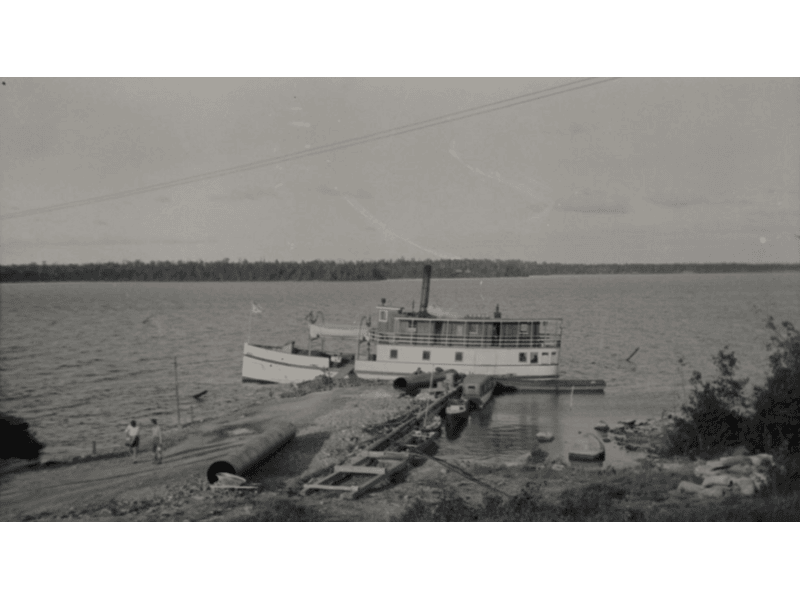
Photo: Siscoe Mine, Canada, 1935. Source: Public Domain, via Wikimedia Commons.
Disclaimer: Any views or opinions expressed in articles are solely those of the authors and do not necessarily represent the views of the NATO Association of Canada.