This article argues that without integrating IP protection into its cyber, emerging and disruptive technologies, and innovation strategies, NATO risks undermining the very technological edge it seeks to secure.

This article argues that without integrating IP protection into its cyber, emerging and disruptive technologies, and innovation strategies, NATO risks undermining the very technological edge it seeks to secure.
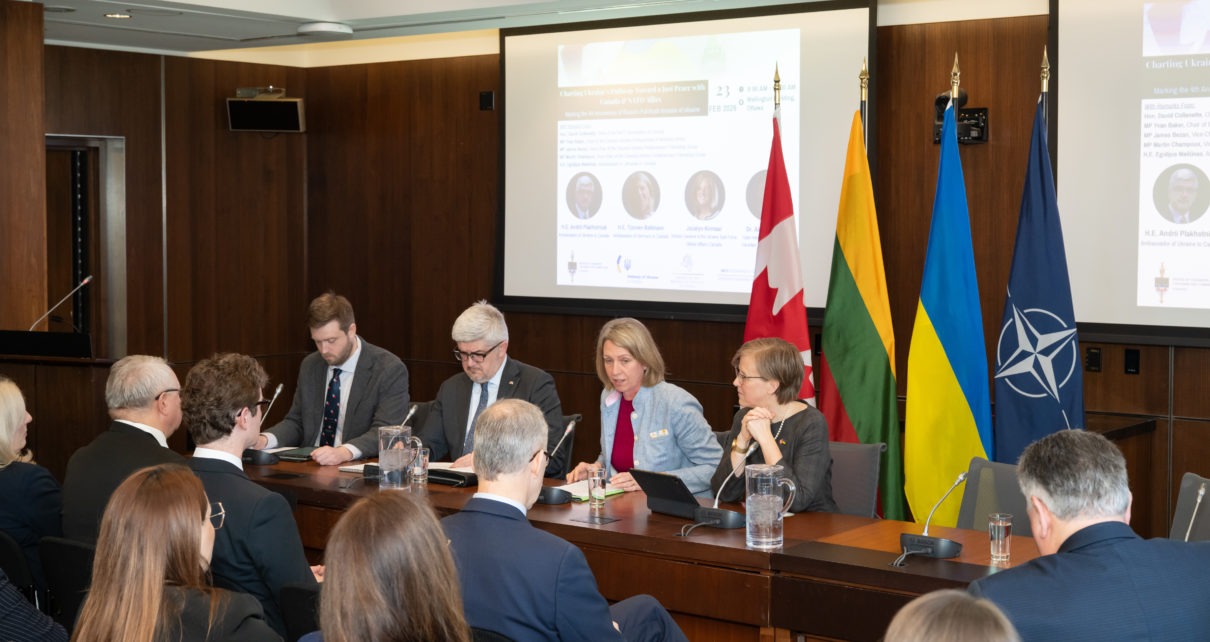
On February 23, 2026, the NATO Association of Canada (NAOC), in partnership with the Canada-Ukraine Parliamentary Friendship Group and the Embassies of Ukraine and Lithuania in Canada, organized a panel discussion entitled “Charting Ukraine’s Pathway Toward a Just Peace with Canada & NATO Allies”. The event was dedicated to commemorating the 4th anniversary of the Read More…

On 9 August in Warsaw, police detained 109 people during a concert by Belarusian singer Max Korzh for “drug possession, unlawful entry, assaults on security staff and use of pyrotechnics.” At the same event, one attendee displayed the red-and-black flag associated with the Ukrainian Insurgent Army (UPA). The symbol is contentious in Poland because the Read More…
Imagine a government on the verge of a decision that will take years to implement and billions of dollars to sustain. A major defence procurement. A long-term NATO deployment. A new assistance package for an ally. On paper, everything looks orderly. Briefings are prepared. Consultations take place. Procedures are followed. Yet, even before the decision Read More…

*This is the final instalment of a six-part series. For the final instalment of the “Power Play in the Arctic” series, Marcus Wong (MW) sat down with Dr. George Soroka (GS) of Harvard University’s Department of Government, who also serves as Executive Officer of The Harvard Academy for International and Area Studies at the Weatherhead Read More…
On January 2nd 2026, 45,000 households in southwestern Berlin woke up to find themselves without power or heating in the middle of winter. Overnight, assailants set fire to a cable bridge near a power plant, disrupting parts of the Berlin power supply network for weeks. Even after power was eventually restored, the subsequent fallout from the city government’s lacklustre response has led to calls for the mayor, who had been caught playing tennis during Read More…

WPS policies are often disregarded when matters deemed of higher priority emerge, despite NATO’s high engagement of WPS values through public diplomacy, military, and political means. Russia’s invasion of Ukraine has posed the biggest security crisis to NATO in decades, and considering the gendered dimensions of the war, which has seen high rates of sexual and gender
based violence, NATO’s limited WPS response leaves the future of the Agenda in question. As a core tenet of NATO’s values, WPS must not be disregarded; member states that have adopted FFPs, such as Canada, should continue to drive the WPS agenda forward. This article makes key recommendations, including shifting to a human rights-based approach (HRBA) and employing more intentional language in operational directives, to support Ukraine’s current WPS policies.

Disinformation does not always need trolls or hackers. Sometimes it only needs an algorithm. Build fake sites, get them indexed, and boost them through social media and AI. That simple formula can turn fiction into something that looks like fact. “You can’t outshout disinformation. You have to outsmart it,” says Viktoriia Romaniuk, Deputy Editor of Read More…

Increasingly, NATO countries have begun to describe digital media disinformation not as a discrepancy in communication between formal and informal state actors, but as a risk to national security. This shift is reflected in the Cyber Threat Assessment for Canada 2025, which notes that foreign state actors are using artificial intelligence (AI) to manipulate information, Read More…
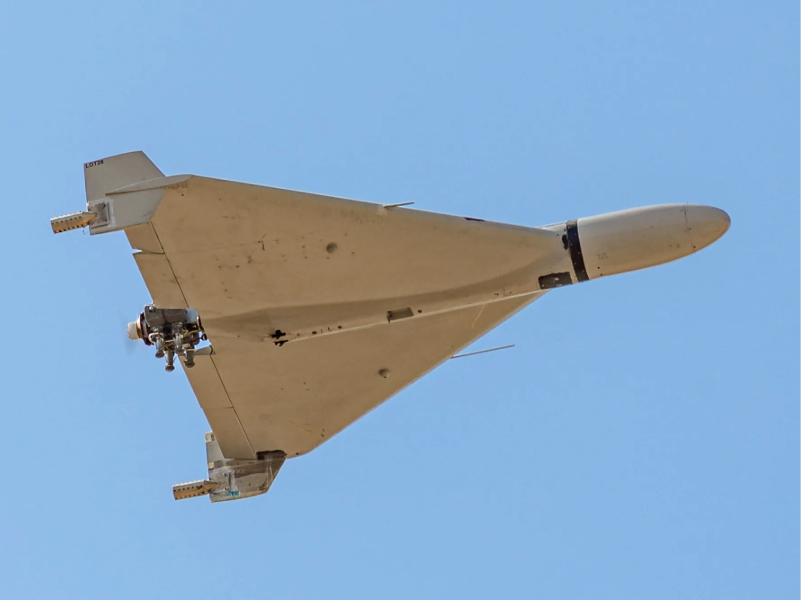
In recent months, there has been a growing number of incursions of NATO airspace by Russian drones. These drone incursions constitute an escalation in Russia’s hybrid warfare against Europe, which has for years sought to erode the NATO alliance, disrupt Eastern European states, and most recently interfere with the continent’s support for Ukraine. For Canada, this drastic uptick in grey-zone aggression should not be taken lightly, as it displays Moscow’s willingness to upset European security.