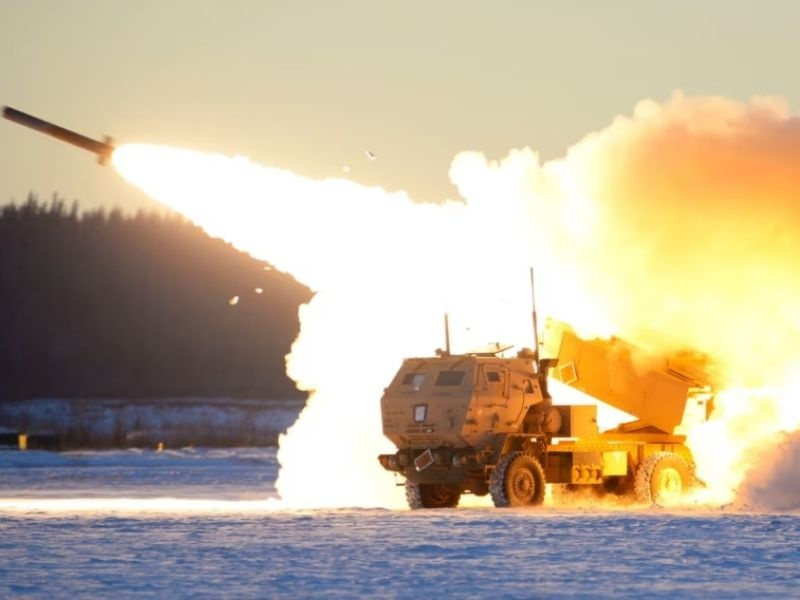
On April 29th, a U.S. Pentagon contract notice announced a $1.1 billion contract with Lockheed Martin to manufacture M142 High Mobility Artillery Rocket Systems (HIMARS). HIMARS is a long-range precision strike system and one of the most combat-proven rocket artillery systems in service today for several allied nations, including Canada. Ottawa has yet to formally announce the roughly $2.4 billion acquisition, which comes as Canada rolls out its recently released Defence Industrial Strategy (DIS), Ottawa’s blueprint for strengthening domestic defence industrial capacity.
The acquisition does not exist in a vacuum, however. As Canada works to maintain a combat-capable brigade in Latvia, Ottawa’s 2024 defence policy, Our North, Strong and Free, highlighted long-range strike capabilities as a major priority in the modernization of the Canadian Armed Forces.
However, filling the capability gap and controlling this capability are two different things. Although the launcher would be Canadian-operated, its effectiveness would remain tied to U.S.-based munitions, sustainment, and support networks. The challenge is therefore less about ownership than about ensuring reliable access to the systems and supplies that enable the capability to function in a crisis.
The Operational Logic Behind Canada’s HIMARS Purchase
Since the Cold War, many NATO militaries have structured their operational doctrine around the expectation that air superiority would enable aircraft to shape the battlefield deep behind enemy lines.
The war in Ukraine challenged some of these assumptions, where, within weeks of receiving HIMARS in 2022, Ukrainian forces were using the system to strike Russian ammunition depots, command centres and logistical hubs deep behind the front line, despite operating without air superiority. In Kherson, 4 launchers operated for 37 hours straight, destroying over 120 targets and severing Russian supply lines so completely that Russian forces retreated. The lesson was not lost on NATO’s eastern flank. Within 18 months of seeing HIMARS reshape the battlefield, Estonia, Lithuania, and Latvia each signed contracts for the system, citing the need to strengthen their deep-strike capabilities against a potential Russian threat.
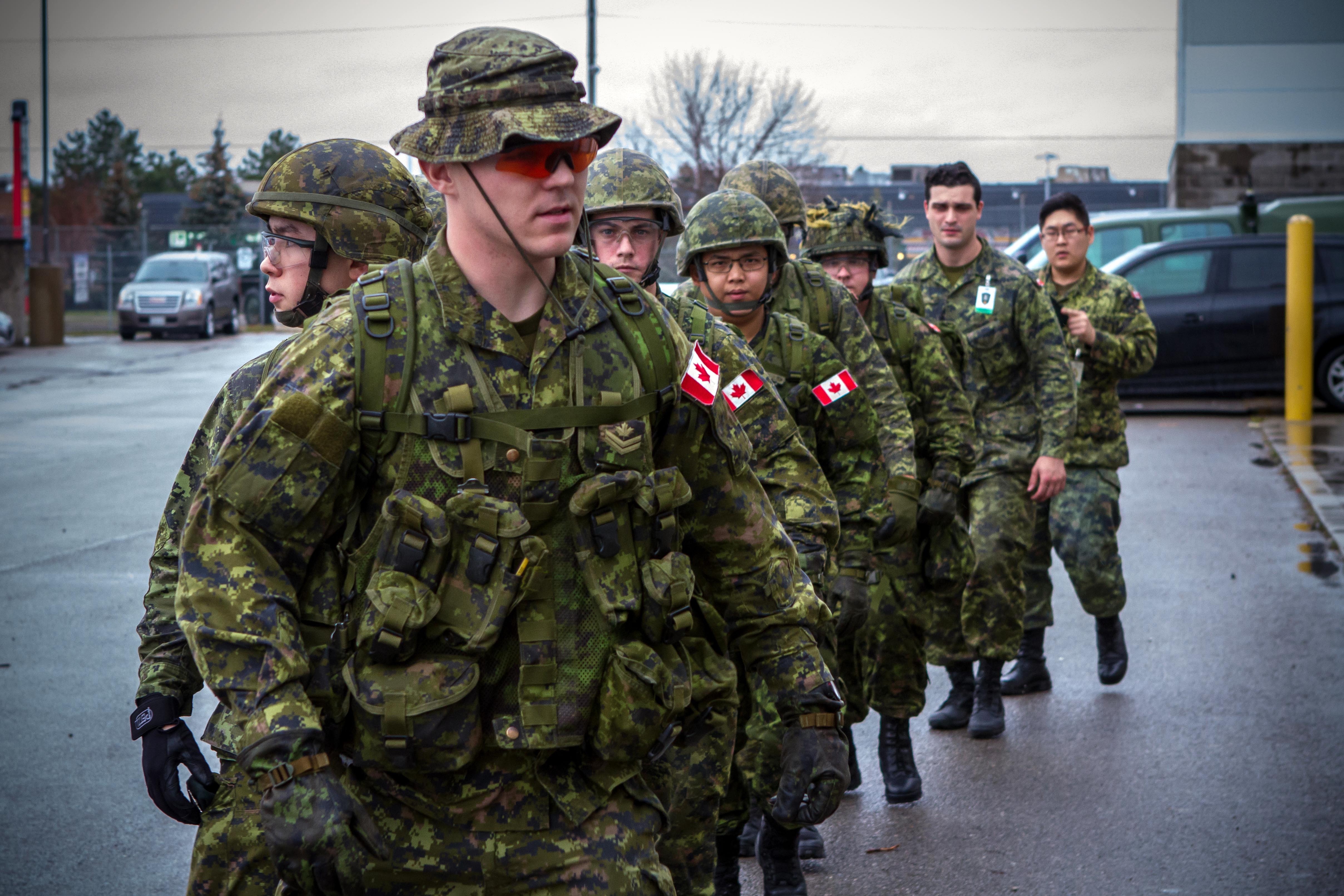
For Canada specifically, the most immediate operational context is Latvia. As Framework Nation, Canada leads the NATO Multinational Brigade in Latvia, a formation of approximately 3,000 personnel from 14 allied states and has committed to fielding a full combat-capable brigade on NATO’s eastern flank. Meeting that commitment requires supporting the capabilities needed to operate effectively in a high-intensity conflict, including long-range precision strike. In the event of a NATO-Russia conflict, Canadian forces could be required to engage high-value targets at operational depth beyond the range of conventional artillery. These may include critical military infrastructure beyond the range of conventional artillery.
A brigade without its own long-range fires is one that depends on allies for deep-strike capability. In practice, that means relying on allied aircraft, artillery, or missile forces to engage critical targets at operational depth, leaving Canada dependent on the availability, priorities, and operational pace of other NATO members. HIMARS is the logical answer to that gap, but only if Canada can count on reliable access to the system and its munitions when it matters most.
The Latvia commitment makes the case on its own terms. But the argument for HIMARS does not stop at Canada’s brigade boundaries. Interoperability, the ability to operate seamlessly alongside allies, forms the second major argument behind the acquisition. HIMARS is not simply an American weapons system; it is rapidly becoming NATO’s standard long-range fires platform. More than 20 allied states now operate HIMARS or its tracked variant, the M270, using shared munitions, common fire-control software, and increasingly integrated training and logistics networks. For Canada, acquiring HIMARS means joining that network. As more allies adopt the system, Canadian forces would be better positioned to integrate into coalition operations alongside key partners such as the United States, the United Kingdom, and Poland. Whether Ottawa would retain full access to it in a crisis is precisely where the strategic logic begins to complicate.
The Sovereignty Question
Interoperability, however, also creates dependency. In April 2026, the United States paused ammunition deliveries to Estonia, including HIMARS munitions, for the duration of the Iran conflict, prompting Estonian Defence Minister Hanno Pevkur to warn that prolonged delays could force Tallinn to rethink its procurement choices altogether.
The concern was not limited to Estonia. During the Iran conflict, Washington reportedly informed several allies, including the United Kingdom, Poland, Lithuania, and Estonia to expect delays across multiple missile systems as U.S. stockpiles came under pressure, including munitions linked to HIMARS platforms. Earlier in March 2025, following tensions between Washington and Kyiv after President Volodymyr Zelenskyy’s visit to the White House, the United States suspended the intelligence/targeting data that HIMARS depends on for precision strikes, reducing the system’s battlefield effectiveness.
Such risks are inherent to alliance dependence. The United States allocates munitions, intelligence support, and industrial capacity according to its own operational priorities, particularly when multiple regions compete for finite resources simultaneously. Whether access is constrained by political decision or supply chain pressure, the outcome for allies is the same: the availability of American-supplied capabilities may be affected during major crises.
For Canada, the implications are difficult to ignore. Unlike Poland, which paired HIMARS with South Korea’s Chunmoo system, or Germany and the Netherlands, which selected the Israeli-made PULS launcher, Canada’s long-range fires modernization will be centered exclusively on HIMARS and U.S.-produced precision-guided munitions, increasing dependence on a single supplier with no alternative long-range fires platform currently planned.
In Latvia, where Canadian forces are expected to rely on HIMARS to fulfil their brigade-level role on NATO’s eastern flank, any disruption in accessing American munitions or targeting support would directly weaken Canada’s operational contributions under the same high-intensity conditions the system was acquired to prepare for.
What Ottawa Should Do
Canada currently lacks domestic capacity to produce the precision-guided munitions HIMARS depends on, leaving sustained operations heavily reliant on American supply chains. This is beginning to change. In March 2026, Ottawa committed $1.4 billion to domestic ammunition production, including new 155mm artillery shell facilities and a nitrocellulose plant, with production to begin by 2029. These are meaningful steps, but they stop short of the precision-guided rocket munitions HIMARS actually fires.
Building and maintaining a dedicated national munitions reserve for HIMARS would provide a buffer against the supply disruptions and political constraints that have already affected allies such as Estonia and Ukraine. The financial commitment would be significant, but several NATO allies have already concluded that ammunition stockpiles are worth the cost. Estonia has allocated roughly a quarter of its entire 2026–2029 defence development plan to ammunition stockpiles, recognizing that combat capability depends on sustaining operations as much as fielding them. For Canada, a HIMARS launcher without assured access to munitions risks becoming a capability that exists only on paper.
The second priority is collective supply resilience. Canada already participates in NATO’s Air Battle Decisive Munitions program and the Land Battle Decisive Munitions (LBDM) initiative, which pools procurement of air and land-domain munitions among allies to reduce costs and strengthen supply continuity. Neither framework, however, covers the precision-guided rocket munitions that HIMARS depends on. Advocating for extending the LBDM framework to include long-range rocket munitions would enhance the collective supply security of Canada and its allies during a crisis. Canada is well-positioned to lead such an effort.
Collective frameworks, however, are only as strong as the industrial capacity members bring to them. The DIS provides Ottawa with a mechanism to begin addressing these vulnerabilities. In the context of HIMARS, strengthening domestic industrial participation, from nitrocellulose and propellants to launcher maintenance and key components, would help ensure that Canada is not only purchasing the capability but also building the capacity to sustain it.
Photo Credits: U.S. Air Force photo by Senior Airman Beaux Hebert (Courtesy image).
Disclaimer: Any views or opinions expressed in articles are solely those of the authors and do not necessarily represent the views of the NATO Association of Canada.