The recent American intervention into Venezuela has reinforced concerns that the America first ideology triumphs over all else, leaving significant uncertainty over the future of the international order and North Atlantic security. The United States National Security Strategy (NSS) released in December 2025, offers insight into Washington’s perception of its role in the world and helps to contextualize recent headlines. The willingness of the United States to prioritize its own security interests over the sovereignty of Venezuela raises important questions over the future of the long-contested Northwest Passage. As the United States increasingly acts independently of multilateral frameworks, Canada has an opportunity to exercise leadership within NATO by advancing its national interests through coordinated diplomacy with likeminded allies.
The 2025 NSS utilizes the Monroe Doctrine to justify its assessment that American security extends beyond territorial borders to encompass the entire Western Hemisphere. Dating back over 200 years, the Monroe Doctrine was effectively a declaration to the colonial powers of Europe that the Western hemisphere was closed for business, and that any move to expand empires would be viewed in the United States as a hostile act. This was the theoretical basis for President Roosevelt’s foreign policy in Central America, which asserted American power to deter European intervention. Similarly, the recent NSS outlines a Trump Corollary to the Monroe Doctrine, emphasising the importance of American access to key strategic locations and the protection of strategically vital assets. The ambiguity of these statements provides a great deal of leeway for interpretation, allowing flexibility for a wide range of actions.
On January 3rd, 2026, the United States Military apprehended the President of Venezuela Nicolas Maduro and his wife in a surprise nighttime raid, simultaneously disabling the country’s ability to defend its airspace. Operation Absolute Resolve demonstrated to the international community that Washington’s hemispheric view of security is not merely theoretical but actionable. American influence in Venezuela is strategically advantageous, enabling the United States to project its power across South America, deter Chinese economic influence in the region, and capitalize on Venezuelan oil reserves.
These advantages align with the language of the Trump Corollary, which emphasises the importance of denying foreign ownership of crucial resources in the Western Hemisphere, to ensure no power becomes dominant enough to threaten American interests.
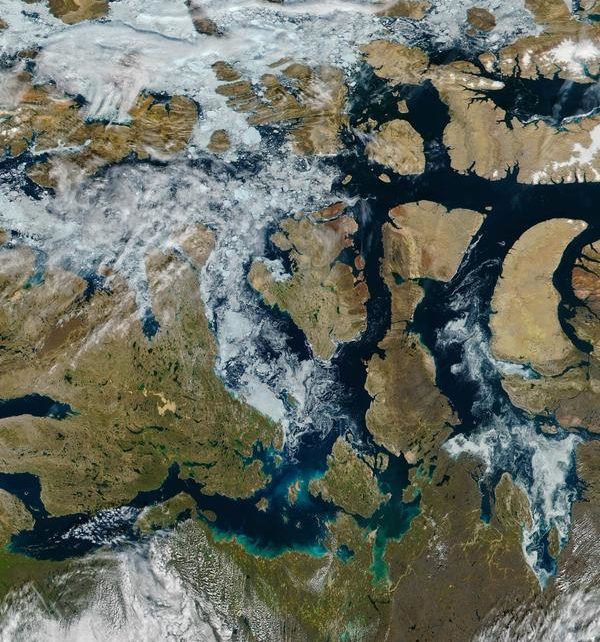
The pursuit of this strategy, however, came at the cost of Venezuelan sovereignty and in violation of Article 2(4) of the UN Charter, which prohibits the use of force against the political independence of another state. Operation Absolute Resolve, a unilateral military intervention, is also antithetical to Article 1 of NATO’s Washington Treaty and the inherent purpose of the alliance itself. Article 1 makes clear that NATO is an accessory to the Charter of the United Nations and reaffirms that members must refrain from the use of force. The United States has prioritized its own interests over maintaining international norms, raising important questions over the future of the Northwest Passage; a legally contested series of nautical lanes that wind through the Canadian Arctic, providing a potential shortcut between Europe and Asia. The ongoing warming of the Arctic has begun melting the ice that made the Passage previously unviable, renewing interest over shipping while increasing the potential for tensions between Washington and Ottawa.
Canada and the United States have long disagreed over the legal status of the Northwest Passage. The 2024 Canadian Arctic Foreign Policy makes clear that Canadian sovereignty encompasses land, sea, and ice, and reaffirms that the North-West Passage constitutes internal waters. The United States rejects this claim, arguing instead that the Passage’s role in connecting the Atlantic and Pacific Oceans classifies it as an international strait, for which the United States may freely navigate. The 2025 American NSS indirectly comments on this tension, emphasising preserving freedom of navigation in “all crucial sea lanes”. If the warming Arctic indeed changes global shipping patterns, it is likely to be perceived as crucial by Washington, necessitating Canadian awareness of the issue.
Canada’s Arctic is an archipelago, meaning there is no simple coastline from which to delineate the maritime boundaries defined under international law. Canada therefore uses the straight baseline method, a process that involves drawing a straight line from the coast to the furthest island in the archipelago. The area between the beginning and the end of this line is then classified as internal waters, providing Canada with complete sovereign authority in the region that encompasses the Northwest Passage. To transit these waters, the United States would require Canadian permission and comply with all relevant laws and regulations. For an American administration concerned with economic and strategic access, the subordination to Canada over all matters of Arctic shipping is likely irreconcilable.
Canada must not, however, acquiesce to Washington’s view of the Arctic and succumb to pressures over freedom of navigation in the Northwest Passage. Straight baselines are not Ottawa’s sole rationale for claiming its Arctic Archipelago as internal waters, there is also the appeal to the historic and important relationship of the Inuit peoples to the region. It is imperative to remember that the Arctic is more than just a geostrategic flashpoint, it is a homeland. Increased ship-traffic in the Arctic Ocean will alter the ecosystem that Inuit communities rely on for survival by disrupting wildlife, increasing pollution, and altering sea-levels. Canada therefore has an obligation to ensure the integrity of its Arctic is upheld.
This can be achieved through increased collaboration with the Nordic members of NATO, who also have a vested interest in the maintenance of a rules-based order and protected Arctic communities. Recent American rhetoric over the acquisition of Greenland has been effectively countered by the Nordic states through coordinated diplomacy, utilizing the economic weight of the European Union to repel Washington’s threats. Moreover, seven other European heads of state released a joint statement on Greenland, emphasising the importance of NATO in achieving collective security and reaffirming their commitment to international law and the UN Charter. Canada is therefore not alone in rejecting the hemispheric ambition of the United States and must utilize the frameworks and forum of NATO to demonstrate that the security of the Arctic is collaborative, not independent.
The American intervention in Venezuela has proven that the interests of the Trump Administration transcend the restrictions of international law, casting an imposing shadow over the future of the Northwest Passage. To navigate these uncertainties, it is imperative for Canada to lean closer to its Nordic allies, leveraging the full diplomatic capacity of NATO to protect its territorial integrity. Canada has an opportunity to counterbalance the shifting priorities of the United States, emerging as a leader of multilateralism and a firm defender of its sovereignty, ensuring that the Arctic does not become a region of unilateral, zero-sum competition.
Photo Credits: Partial Opening of the Northwest Passage, via NASA
Disclaimer: Any views or opinions expressed in articles are solely those of the authors and do not necessarily represent the views of the NATO Association of Canada.