It seems like something out of an episode of Black Mirror: individuals, many of them teenagers, recruited on online chat platforms and offered payment in exchange for carrying out attacks on behalf of an unknown third party.
But, it is very real. From its establishment in April 2025 through April 2026, Europol’s GRIMM operational task force identified over 14,000 accounts linked to violence-as-a-service (VaaS) and arrested 280 suspects across Belgium, Denmark, Finland, France, Germany, Iceland, the Netherlands, Norway, Spain, Sweden, and the United Kingdom. The suspects came from various countries and are accused of a variety of crimes, but for many, one state actor stands out.
“We are united in our opposition to the attempts of Iranian intelligence services to kill, kidnap, and harass people in Europe and North America in clear violation of our sovereignty,” Canada, the United States, the United Kingdom and 11 other countries said in a July 31, 2025 statement. “These Services are increasingly collaborating with international criminal organisations to target journalists, dissidents, Jewish citizens, and current and former officials in Europe and North America. This is unacceptable. ”
In the past, the possibility that the Iranian regime could evolve into a significant hybrid threat operating deep inside the West was rarely treated as an urgent priority. When intelligence agencies warned of Iranian plots, these were often viewed as isolated episodes targeting dissidents or exiled opposition figures, rather than evidence of a broader strategy. That has clearly changed.
In June 2026, the Canadian Security Intelligence Service (CSIS) publicly announced it was increasing efforts to combat malicious activities directed by the Iranian regime. Tehran has learned that some of the most effective attacks are also the cheapest. A drive-by shooting or an arson attack against Jewish institutions, for instance, can generate fear and political tension far beyond the scale of the act itself. By outsourcing violence to criminal proxies, Iran minimizes the risks associated with direct state involvement while preserving the ability to deny responsibility when operations are exposed.
Authorities know that the violence-for-hire operations are taking place on both sides of the Atlantic. In May, Iraqi national Mohammad Baqer Saad Dawood Al-Saadi was arrested for allegedly directing terrorist plots in Canada, the United States and across Europe on behalf of the Islamic Revolutionary Guard Corp (IRGC), and an Iranian-backed Iraqi paramilitary organization called Kata’ib Hezbollah. Reports indicate that Al-Saadi and associated networks recruited operatives through online channels and encrypted messaging platforms, offering cash and cryptocurrency payments for surveillance, intimidation, vandalism, and violence. On November 10, while jailed in New York awaiting trial, Al-Saadi was indicted in the United States on additional charges for allegedly trying to direct further attacks through intermediaries, including against a British Royal Air Force Base.
Prosecutors and intelligence officials say Al-Saadi helped coordinate nearly 20 attacks against Jewish communities and other perceived adversaries of the Iranian regime. Two of those took place in Canada: one against a synagogue and the other a shooting in March 2026 targeting the United States Consulate in Toronto. In June, a Toronto police constable was killed while serving a warrant in connection with the consulate shooting.
Canada has been aware of Iranian activity within its borders for years. In 2022, CSIS said it was, “actively investigating several threats to life emanating from the Islamic Republic of Iran based on credible intelligence.” In November 2025, CSIS said it had foiled multiple “lethal threats” from Iran.
After the October 7, 2023 attack on Israel, the RCMP put former Justice Minister Irwin Cotler under police protection. An outspoken critic of the Iranian regime, he was identified as a high-profile target for the IRGC. Then, in late October 2024, the RCMP foiled a plot to assassinate Cotler.
Canada has been aggressive in its position against the IRGC in some areas, and less so in others. It halted diplomatic relations with Iran in 2012, and designated the IRGC a terrorist organization years before Europe followed suit. It has sanctions against hundreds of Iranian individuals and entities, yet it has not designated Kata’ib Hezbollah as a terrorist organization, even after Al-Saadi’s indictment.
It also appears that Canadians have been recruited to carry out attacks elsewhere. In early 2024, while incarcerated in Canada on unrelated charges, two Canadians were indicted in the United States for agreeing in 2021 to assassinate an Iranian defector and a second individual in Maryland on behalf of the Iranian regime.
A good example of how Iranian shadow warfare operates can be seen in a well-documented case in Europe. On October 16th, 19-year-old Johannes Kongsnes Natland of Norway was sentenced to 20 years in prison by a court in the United Kingdom after being convicted of traveling to Britain to carry out a contract killing on behalf of a crime gang called Foxtrot, which is linked to Iran. Upon arriving in Britain, he was allegedly guided to weapons and cash stashes and promised $28,000 for completing the mission. Authorities claim that Natland, who worked at a pizza restaurant, was recruited by a 17-year-old. That teen was convicted in Norway last year and sentenced to 14 years for his role in the murder conspiracy. A 16-year-old is awaiting trial for also allegedly being involved in the plot.
The details illustrate how Iran increasingly leverages transnational criminal organizations as force multipliers, enabling the regime to project violence without deploying official personnel.
Despite the arrests and convictions, the loss of the three teens to the Sweden-based Foxtrot network will likely have no effect on the organization because it uses decentralized, online tactics that make it hard for law enforcement to get ahead of the attacks, according to the Soufan Center, a non-profit, non-partisan organization founded by former FBI Supervisory Special Agent Ali Soufan. The fugitive leader of Foxtrot, Rawa Majid, is wanted internationally for major drug offenses, weapons trafficking, planning murders and the failed 2024 attempt to bomb the Israeli Embassy in Stockholm, Sweden. Both the network and Majid have been sanctioned by the U.S. government. Canada has not imposed sanctions against either Majid or the Foxtrot Network.
To its credit, Canada officially designated the IRGC as a terrorist entity under the Criminal Code on June 19, 2024. That same year, a Swedish member of the European Parliament publicly warned that intelligence services had concluded that the Iranian regime was using organized crime groups to carry out violence across Europe. Nevertheless, the European Union did not designate the IRGC as a terrorist entity until this year.
The danger of shadow warfare is not simply the attacks themselves, but the cumulative erosion of public confidence they create. Persistent low-level violence generates fear, division, and exhaustion. Minority communities feel vulnerable. Political polarization deepens. Security services become overstretched. Because many of these incidents fall below the threshold of mass-casualty terrorism, governments often hesitate to respond forcefully. That hesitation is precisely what makes hybrid warfare effective.
Repeated incidents targeting Jewish institutions underscore this vulnerability. In Canada, in addition to the Al-Saadi attacks, in 2023, a 15-year-old was arrested in Ottawa for allegedly planning an attack against the city’s Jewish community. He was charged with facilitating terrorist activity by communicating instructional material related to an explosive substance.
Authorities in other countries have also investigated plots against Jewish communities, synagogues, and community organizations allegedly connected to Iranian-backed networks. Such targets are attractive to the regime because attacks against them generate significant media attention, inflame social tensions, and spread fear – all while allowing state sponsors to remain several steps removed from the violence itself.
The West has seen this pattern before. Russia has spent years testing Western tolerance for sabotage, covert violence, disinformation, and deniable operations. Iran now appears to be exploiting many of the same vulnerabilities, and authorities are again left chasing ghosts. Initiatives like the GRIMM task force play an important role in investigating and combating these incidents.
It can seem to the observer that fighting shadow warfare is akin to a game of Wac-A-Mole. Security agencies don’t tend to reveal their tactics, but some details are known: The Canadian security establishment is concerned, is coordinating, and is part of a coalition.
The Integrated Threat Assessment Centre (ITAC) is responsible for providing objective threat assessments based on all-source data, information and intelligence. It works with the Canadian Security Intelligence Service and other federal agencies, and with international organizations.
The “ITAC is committed to continuing to seek out new partnerships and opportunities to learn from others,” it says on its website. “With a better understanding of the breadth of threats facing Canadians, and strong partnerships across Canada and beyond, ITAC is better able to assess and report on critical incidents in a credible and timely manner.”
The international coalition appears to be gaining steam. Twenty-nine countries, including Canada, released a joint statement on Oct. 12, stating: “Anyone who conducts hostile activities on behalf of Iran, or any other state, should know that we will take action to identify, investigate, disrupt and prosecute these acts. Iran should be in no doubt that we are united and remain committed to safeguarding our sovereignty and strengthening our international coordination.”
Despite this, “The Plan for a Stronger Canada: National Security for Canadians,” released Oct. 29 by the Government of Canada, does not lay out any actionable items for addressing shadow warfare.
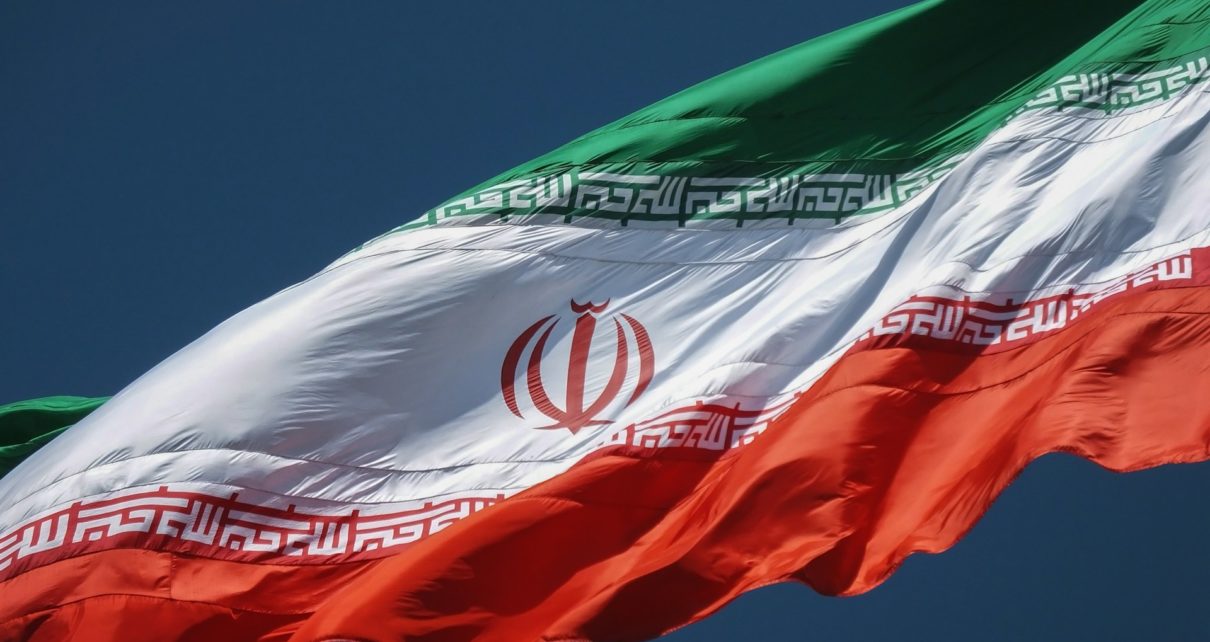
Photo: Iran flag waving in the blue sky. Photo by Sina Drakhshani on Unsplash.
Disclaimer: Any views or opinions expressed in articles are solely those of the authors and do not necessarily represent the views of the NATO Association of Canada.


