Introduction
In politics, stability rests on a collective capacity to perceive and interpret reality accurately: power alone cannot sustain it. However, power fundamentally shapes that perception as dominant actors influence the narratives through which political reality is constructed. That durability of political order therefore depends on a baseline symmetry of information between the public and governing institutions. Naturally, when this power erodes, democratic systems and the overall international liberal order underpinning Western governance grow susceptible to manipulation from within. Today, technological advancement has accelerated that vulnerability considerably. As artificial intelligence rises to reshape the geopolitical terrain, particularly in the realm of disinformation, Canada’s central security challenge is the steady degradation of the shared informational ground on which institutional trust is built; misinformation functions as the crack in the wall, not the force pushing against it.
Deepfakes and AI-enhanced cyber operations are rapidly becoming central instruments for both state and non-state actors across the digital battlespace. For middle powers such as Canada, the rise of synthetic media represents a national security vulnerability that is becoming more acute by the day. As geopolitical competition increasingly unfolds through information channels, states are being forced to reconsider their priorities and approach in how they secure their societies’ digital domain.
Deepfakes as a National Security Challenge
When generative AI can convincingly reproduce a person’s face, body, voice, or even gestures, then disseminate that likeness at scale, digital security becomes not merely a matter of protection, but a contest over identity itself. Deepfakes derive their effectiveness from realistic audio-visual replication that disrupts the distinction between real and synthetic content. State propaganda has also begun weaponizing deepfakes of military leaders and public figures to influence foreign electorates and destabilize allied countries. Consequently, making synthetic media particularly dangerous in political contexts, where narratives precede verification; essentially, shaping public perception before corrective mechanisms can intervene.
In the United States, several GOP politicians have circulated AI-generated videos targeting political opponents, including a recent deepfake that falsely depicted New York Mayor Zohran Mamdani. The Mamdani case illustrates how deepfakes function as political weapons: not to persuade universally, but to seed doubt and suspicion – long enough to shape public perception. Similar synthetic clips have been circulated by prominent figures to manipulate political narratives and galvanize supporters in order to intensify divisions within the fabric of society. AI-Generated media can now be leveraged by elected officials, which underscores how quickly deepfakes are evolving from online novelty into mainstream political tools, and why this emerging threat can no longer be overlooked in security thinking.
A recent CSIS report highlights that while disinformation is centuries old, the speed, realism, and accessibility of deepfake production reflects a fundamental escalation in both the scope and severity of the threat. The report warns that deepfakes are becoming increasingly difficult to detect and disseminate, while the public’s capacity to separate fact from fiction is eroding with alarming speed. For adversarial actors, deepfakes function as a low-cost tool of political disruption, using fabricated portrayal of public figures to erode legitimacy without engaging in direct conflict. In electoral contexts, this poses a security risk as deepfakes skew the informational environment, in which political judgement is formed, while regulatory responses tend to be reactive. This is particularly dangerous for democracies, as it eventually corrodes the public trust and destabilizes the information environment on which democratic life depends; Nobel Laureate Maria Ressa states, “without facts, you can’t have truth… without truth, you can’t have trust… and without trust, democracy cannot survive”.
Moreover, criminal activities are not exempt from generative AI usage. Fraud operations are increasingly weaponizing deepfake voices of CEOs to authorize fraudulent financial transfers, resulting in losses of millions of dollars for companies. An incident involving deepfakes cost $243,000 from a British energy firm after cybercriminals used synthetic instructions impersonating the CEO to authorize a fraudulent transfer. In yet another case, a company in the United Arab Emirates was defrauded of $35 million through deepfake audio in acquisition negotiations. Deepfake technology has also demonstrated its ability to bypass two-factor authentication and other identity verification systems, illustrating how seamlessly trust-based security mechanisms can be compromised. RBC similarly notes that Canadians are operating in an increasingly hostile digital environment marked by unprecedented cyber pressure: 98% report being targeted by increasingly elaborate scams, and 65% feel “fraud fatigue”. Taken together, these trends suggest that deepfakes should be understood not only as political threats, but as mounting economic security threats.
What is now coming into view is a politics shaped not only by deepfakes, but by AI-generated candidates and avatars that could soon autonomously deliver political communication at scale, flooding voters with individualized messaging. The NATO Strategic Communications Centre of Excellence (StratCom COE) cautioned the severity of deepfakes; as deepfakes serve as tools of epistemic sabotage, essentially acting as media catalysts designed to fracture trust in institutions with a single viral clip. From fake videos of soldiers committing war crimes to AI-generated leaders announcing false policy shifts, the greater danger is not whether viewers believe the content at first glance, but the deeper loss of confidence it leaves behind. The objective is not to win over everyone, but to convince enough people to doubt everything; what was once framed as a speculative future threat has now become an operational reality shaping the geopolitical zeitgeist.
Denmark’s Legal Model for Countering Deepfakes
Denmark, through its copyright approach targeting deepfakes and wider cybersecurity framework, has emerged as a leading example of how democratic governments can respond to AI-enabled disinformation before it corrodes political stability. Meanwhile, developments in Canada, such as the CRTC’s updated definition of Canadian content with its emphasis on human creative control, suggests a nascent recognition of the dangers posed by algorithmic manipulation, but still fall short of a coherent national strategy. As deepfakes and AI-enabled disinformation accelerate, particularly from foreign actors, Canada will need to look to its allies, such as Denmark to grapple with the puzzling question of how legal authority and policy design might best defend its information space. Recent Canadian threat reporting has also warned that generative AI is amplifying both the pace and plausibility of cyber-enabled manipulation and political impersonation.
Amid rising concern, the Danish government is pursuing a bold legal innovation that extends beyond conventional state-led defence mechanisms through a novel approach of leveraging copyright enforcement as a cybersecurity tool. In June 2025, Denmark moved to redefine the boundaries of copyright law when its Ministry of Culture proposed a landmark amendment granting individuals legal control over AI-generated reproductions of their voice, face, and body.
Denmark has changed the game, repurposing the existing playbook to extend beyond its conventional focus on creative works. Under the proposed rules, appropriating a person’s digital identity, via political deepfakes, AI-generated revenge porn, or cloned audio for fraud, allows pathways to pursue copyright claims and seek takedown remedies. By explicitly targeting AI-generated media, Denmark has laid the groundwork for a framework that understands deepfakes not only as technical artifacts but rather as infringements of human autonomy and control.
Crucially, the law establishes a clear distinction between malicious and legitimate uses of generative AI. Satirical or parodic content, which has been long protected as a form of free expression in liberal democracies, would remain exempt. In contrast to defamation and privacy laws, which are often hard to enforce and vulnerable to subjective interpretation, this model is tailored for efficiency. Essentially, individuals would not be expected to register their likeness or take legal steps in anticipation of misuse.
At the core of Denmark’s approach are clear liability mechanisms that strengthen the state’s ability to prosecute malicious actors who create or disseminate synthetic media. It also adopts a security-driven framing, positioning deepfakes not only as intellectual property violations but also as immediate risks to public trust and national sovereignty of democratic order. Together, this dual legal-security measure makes Denmark a leading case study for allies seeking to govern the deepfake ecosystem.
Steps Forward
Canada’s intelligence and public safety community have made these warnings increasingly explicit: CSIS notes that deepfakes “threaten democracy” by making it progressively harder for citizens to reach a consensus on basic facts. Even so, the state remains without a legal apparatus for deepfake watermarking or a rapid-response mechanism capable of detecting AI-generated interference in real time, leaving its cybersecurity vulnerabilities exposed.
Denmark’s legal framework presents a preventive model that sidesteps the political and ethical pitfalls associated with outright censorship. Rather than relying on content moderation by state authorities or opaque algorithmic filters it rests on enforceable rights held and exercised by individuals. For countries like Canada, this approach offers a blueprint for addressing hybrid threats without sacrificing democratic integrity.
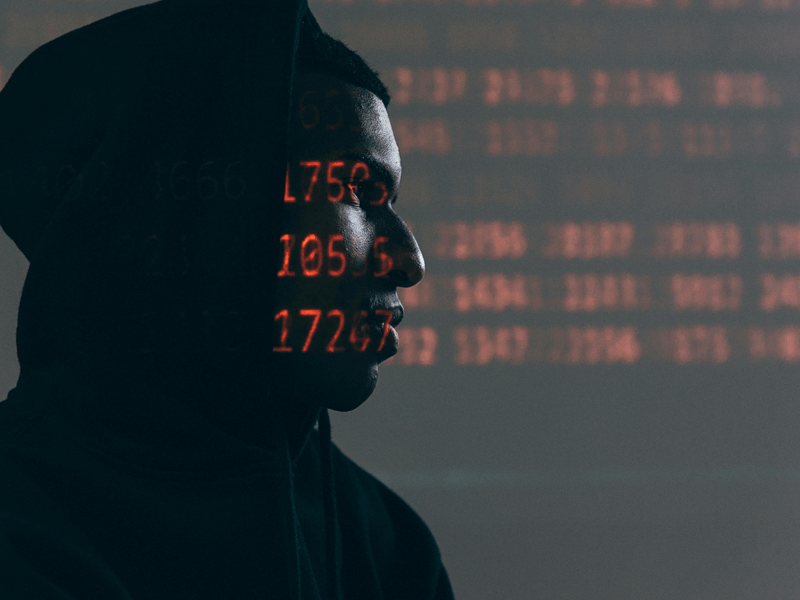
Photo: “Numbers Projected on Face” (2021), by Matias Mango via Pexels. Licensed under the Pexels License.
Disclaimer: Any views or opinions expressed in articles are solely those of the authors and do not necessarily represent the views of the NATO Association of Canada.