Centre For Disinformation Studies

Behind the Algorithm: How Technofascism Lies in the Shadows of Technological Advancements

What happens when the technologies designed to “personalize” and improve the optimization of our lives begin to mirror the tactics historically associated with fascist systems? In this article, Dorigen Gray explores the concept of technofascism and the hidden relationship between AI, algorithmic governance and application, and authoritarian forms of control. By examining the automation of behaviour, the control of information, and the growing concentration of technological and political power, the article reveals how modern technologies can quietly shape human experience, undermine democratic discourse, and normalize systems of domination beneath the promise of innovation and technological progress.

Cyber Security and Emerging Threats

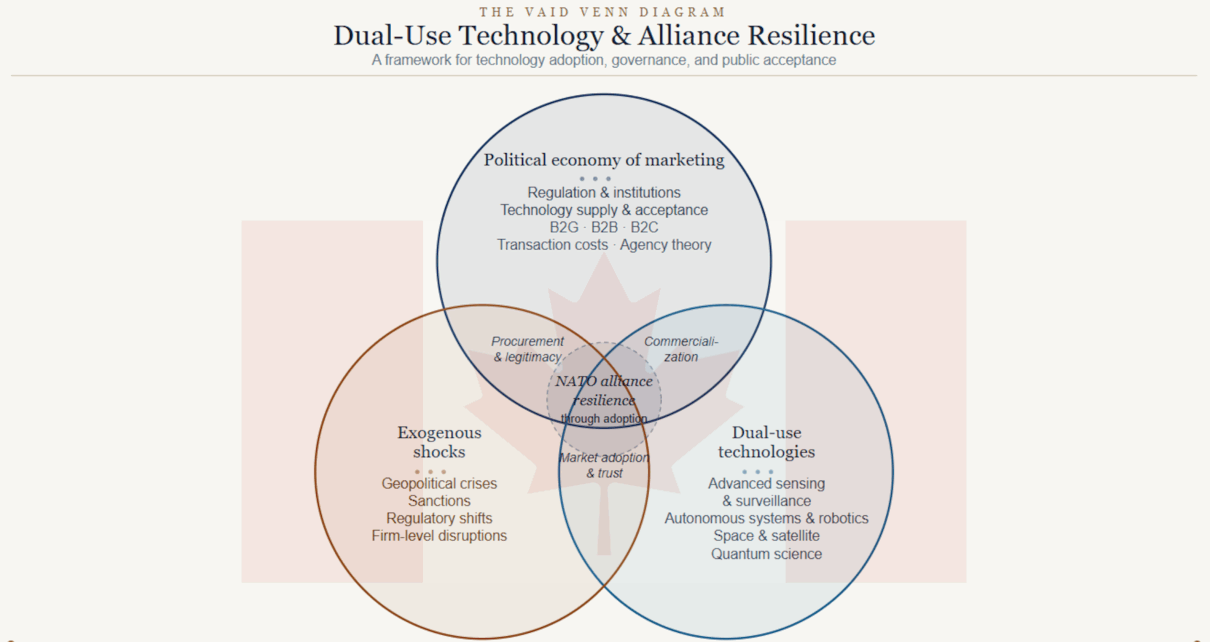
Resilience Through Marketing, Dual‑Use Technologies, and the Power of Public Opinion

Whether it is NATO’s eastern front or the Persian Gulf, wars today have a variety of drivers that range from troops to weapons systems. Many of these advanced technologies are dual-use in nature, often switching between military and commercial (or civilian) settings.  Bringing greater urgency to this matter, prominent defence technologies that are sensitive also Read More…

Tessa McDermid Women in Security

Encoded Bias: How Gender Analysis Benefits NATO’s AI Expansion

Military AI technologies have the potential to replicate gender bias due to the ways AI machine learning encodes patterns in data. In this article, Tessa McDermid argues that as NATO expands its investment in military AI technologies, it must equally commit to monitoring how these systems risk reproducing gender bias. By adopting corrective frameworks that align its AI Strategy with core Alliance values, NATO can meet its goals in advancing the Women, Peace and Security Agenda.

Previous Events

AI and Warfare: When Machines Make Decisions – Event Report

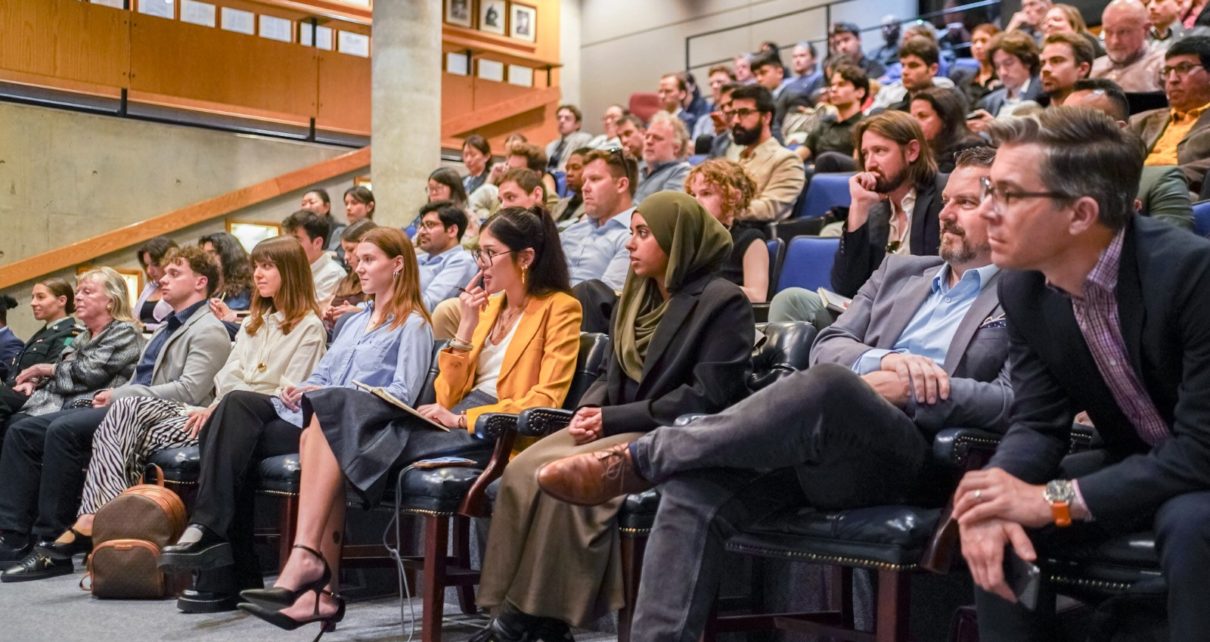
On Monday, May 25, 2026, the NATO Association of Canada hosted a panel discussion titled “AI and Warfare: When Machines Make Decisions”. The discussion brought together experts from defence, academia, policy, and industry to examine the growing role of artificial intelligence in modern warfare. This report provides a detailed overview of the event’s discussions.

Cyber Security and Emerging Threats

Delegating Destruction: AI and the Ethics of Warfare

As artificial intelligence becomes embedded in modern warfare, it is reshaping how states conduct war and raising urgent questions of ethics and accountability regarding the potential absence of human judgment in lethal decisions. If machines can decide when force is used, who ultimately remains accountable for the decision to take a human life in war?

Centre For Disinformation Studies

How AI-Generated Misinformation Creates Friendly-Fire Confusion Among NATO Allies

How can allied democracies inadvertently amplify each other’s friendly-fire of confusion and panic? What existential threat does this pose to content creators, journalists, or news anchors? Ji Young Kim examines how AI-generated misinformation shapes interpretation in the context of recent geopolitics and modern media culture.

Centre For Disinformation Studies

Copyright as Security: Lessons from Denmark’s Approach to Deepfakes

In this article, Soha Sarfraz explores how the rise of deepfakes is placing new strains on democratic resilience, using Denmark’s developing legal and policy response as a case study of how states may preserve trust and political legitimacy in the age of fake media, Soha examines what lessons Canada might draw from that model. She argues that deepfakes increasingly threaten not only individual reputations, but also electoral integrity and the broader information environment, contending that the challenge is no longer merely a technological, but fundamentally political and strategic.

Cyber Security and Emerging Threats

Les algorithmes au pouvoir : comment l’IA redéfinit la guerre de l’information? 

Dans l’espace numérique, l’information circule à une vitesse inédite. Les réseaux sociaux permettent à chacun de diffuser des contenus en quelques secondes auprès d’un public mondial, favorisant les échanges d’idées à grande échelle. Pourtant, ils facilitent aussi la propagation de contenus trompeurs. Avec l’essor de l’intelligence artificielle (IA), cette réalité a franchi un nouveau cap Read More…

Centre For Disinformation Studies

How Fakes Become Facts In Three Steps

Disinformation does not always need trolls or hackers. Sometimes it only needs an algorithm. Build fake sites, get them indexed, and boost them through social media and AI. That simple formula can turn fiction into something that looks like fact. “You can’t outshout disinformation. You have to outsmart it,” says Viktoriia Romaniuk, Deputy Editor of Read More…

Centre For Disinformation Studies

The Culture of Distrust: : How AI Disinformation Exploits Polarization and Democracy

The voice on the line sounded like the President of the United States. It carried his cadence, his gravel, even his familiar pauses. But the words were strange. “Save your vote for the November ballot,” it told thousands of citizens in New Hampshire ahead of the 2024 primary. In reality, the call was orchestrated by Read More…