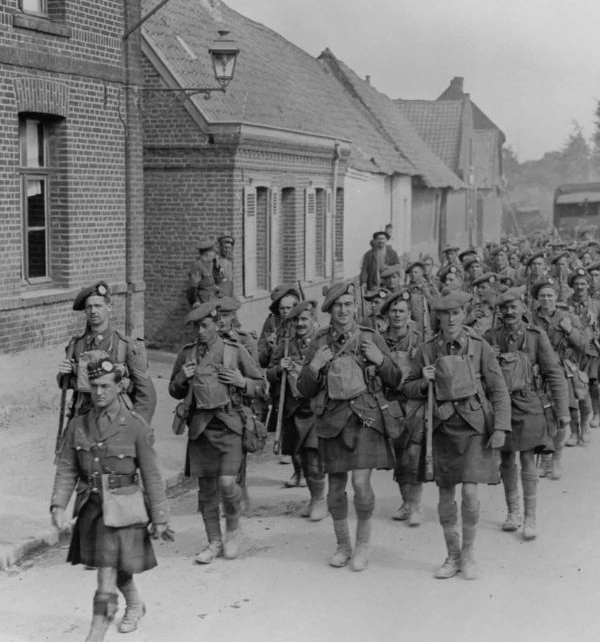
In May of 2024, I partnered with the Oakville Historical Society (OHS) in Oakville, Ontario, to write a book based on a collection of letters written by two local boys who served on the Western Front during WWI. The collection, named the Munro Letters, follows the soldiers from enlistment in February 1915 through major battles — including Ypres, Somme, and Passchendaele, among others — and details the ordinary soldier experience: training, deployment, the mundaneness of trench warfare, and the constant waiting, for correspondence from home, for the end of the war, for death, or for “blighty” — an injury that would send the soldier off to England to recover.
It is quite an extraordinary collection, but what makes it so is, ironically, the ordinariness of the letters. The boys were not professional soldiers, but rather, ordinary Canadian high school graduates when they enlisted. Like most, they were caught up in the pro-war fervour that swept through Canada at the onset of war, prompting thousands of volunteers to flood recruiting stations and creating the need for temporary training camps, such as the one in Georgetown, where these boys were sent to await formal attestation into the CEF.
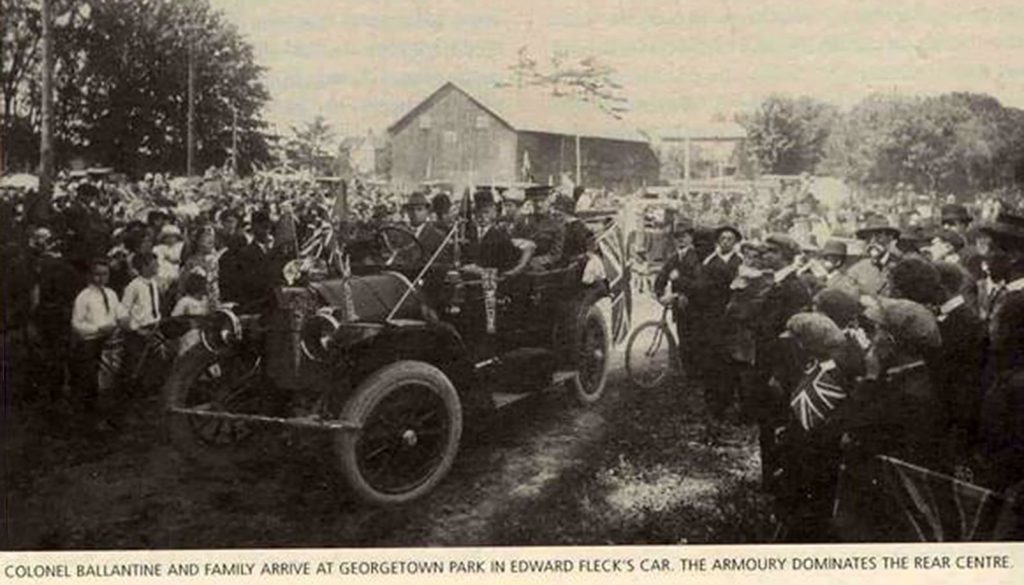
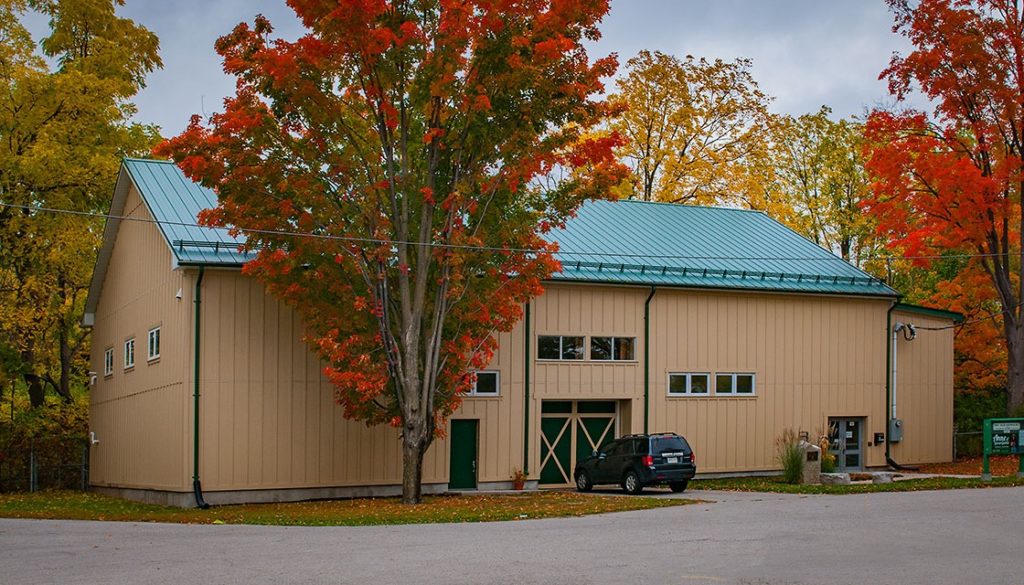
(Left) The Georgetown Armoury, a temporary training camp set up to accommodate soldiers before transferring to a formal training facility (Niagara-by-the-Lake). (Right) The same building today. Images courtesy of Brigadier-General (ret) Greg Young OMM, MSM, CD, Chairman of the 15th Battalion Memorial Project.
One letter, for instance, details snacking on Aunt Kate’s plum pudding in the trenches, while another, written by the boys’ mother, reminds them to sleep early and go to church, ending with, “When will you come home?”
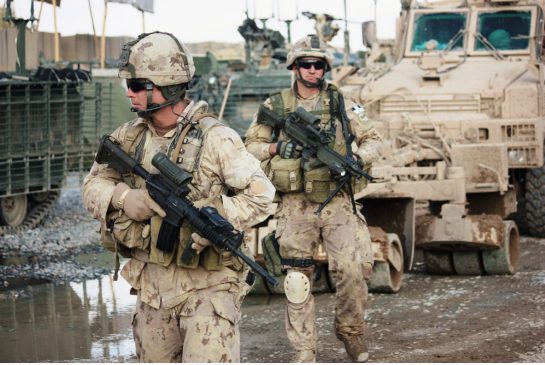
Canada built its WWI army from “citizen-soldiers”, or ordinary civilians, most of them volunteers between the ages 18-45 (although many lied about their ages to enlist). A century later, however, Canada is struggling to recruit and retain soldiers from a society much further removed from military culture. The CAF’s recruitment shortfall is easy to quantify — roughly 15,000 personnel below target strength as of 2023-2024 — but harder to explain solely in terms of logistics. Processing delays and compensation gaps matter, but they are symptoms rather than the core problem of cultural distance. Fewer families have any direct connection to the military than at any point in the country’s history. The significance of the CAF has become invisible to much of the society it serves, and that society has become increasingly abstract to the men and women who serve in it.
To answer the why, it is helpful to examine the collapse of the regimental-civic bond. In the pre-war Canadian militia, regiments were civic institutions in the fullest sense of the word. The 48th Highlanders were Toronto’s regiment, the Queen’s Own Rifles drew from the same city’s civic establishment, and the Black Watch of Canada was Montreal’s Scottish institution in the same way the 48th was Toronto’s. Social roots were also established as officers were often drawn from the same clubs, churches, and professions as the civic elite of their home cities, while enlisted men came from the same neighbourhoods, schools, and professions. Therefore, when war came, recruitment followed those same social networks, and so did casualties: when a battalion suffered heavily, entire neighbourhoods lost sons simultaneously. The grief was communal and concentrated in a way that made the cost of war impossible for civilians to ignore or abstract away. It also meant that the returning soldier came home to a community that had some frame of reference for what he had been through.
The soldiers behind the Munro letters collection are a great example of the regimental-civic bond. Enlisting from Oakville in February 1915, they joined the 15th Battalion, 48th Highlanders, a Toronto-based regiment with deep roots in Scottish tradition. The regiment’s identity was strong enough that when the CEF reorganized its battalions, the 48th was granted special permission to retain its name rather than be absorbed into a numbered unit. Gordon Munro noted this himself in a letter home dated July 27, 1915, written from the address:
Pte. H. G. Munro no. 47904
No. 16 Platoon No. 4 Company
48th Highlanders 1st Can. Cont.
Brit. Exped. Force. France.
Their Scottish identity had followed them to the front. The Highlanders wore kilts in battle — a rare concession in the CEF for Scottish units — and at Christmas 1915, the battalion received large shipments of gifts from both the 48th Highlanders and the City of Toronto. By 1932, the regiment’s achievements in the war had been recorded in a 500-page official history written by Kim Beattie, a document that itself reflects how seriously these institutions took the task of remembering who they were and what they had done.
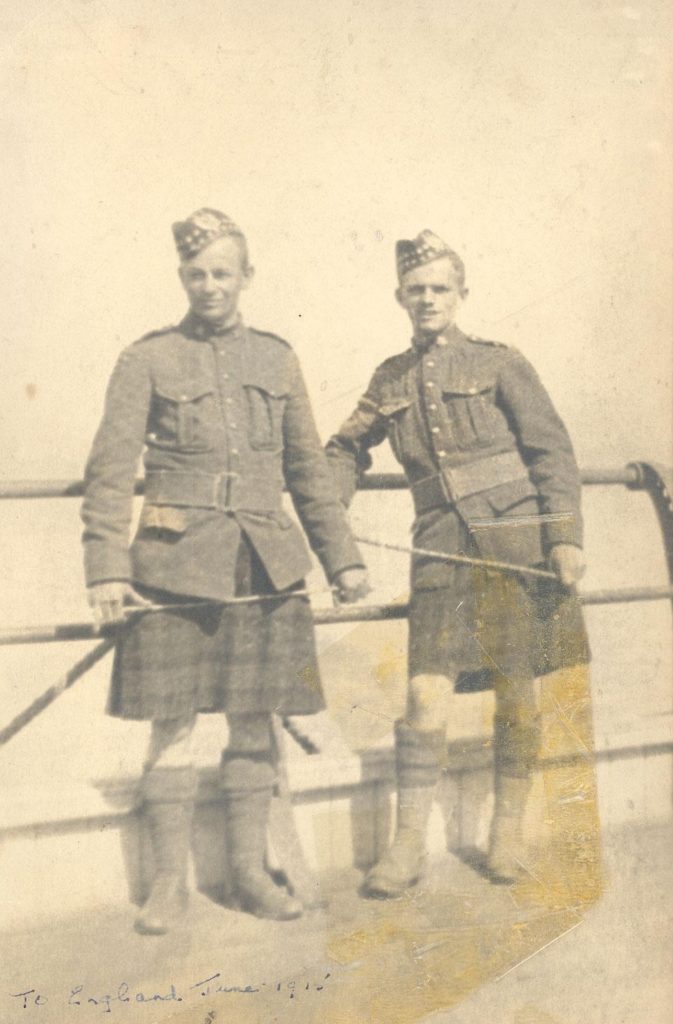
Brock (left) and Gordon (right), taken in June 1915 as soldiers of the 17th Reserve Battalion (Nova Scotia Highlanders). Also a Highlanders regiment, note the wear of kilts that Scottish units share. Photo courtesy of the Oakville Historical Society.
Now, that bond is almost entirely gone. The unification of the Canadian Armed Forces in 1968 accelerated a process of nationalizing and centralizing recruitment that had been underway since WWII, but for reasons that were, at the time, defensible. The Cold War demanded a standing professional force capable of rapid deployment to distant theatres (the CAF participated in campaigns in Korea, then NATO operations in the former Yugoslavia, and Afghanistan, among others). The citizen-soldier model, effective for mobilizing large armies in existential conflicts, was poorly suited to a military that needed to maintain readiness year-round, interoperate with NATO partners, and manage the logistics of a technologically complex force.
The CAF now recruits from a national pool, trains members at centralized facilities far from their home communities, and posts them based on institutional need (such as standardized readiness, bilingualism requirements, occupational fit) rather than local connection. A soldier from Oakville today, for example, is as likely to be posted to Petawawa or Esquimalt as anywhere near home. Their service and their sacrifices are largely invisible to the communities they came from. The consequences of this on the civic-military bond compound over time. When military service is locally rooted, it generates what might be called a civic memory of soldiering. That memory creates familiarity, and familiarity creates the conditions in which young people can imagine military service as part of their world.
The operational logic that drove centralization has not disappeared, and no serious proposal for addressing the recruitment crisis should pretend otherwise. Canada still needs a deployable, professional, nationally coherent force, but the false choice between operational effectiveness and civic rootedness can be challenged. There is no structural reason why a soldier from Oakville must be entirely severed from Oakville. Reserve units (the modern descendants of the old militia regiments) already exist in most mid-sized Canadian communities, and yet they remain chronically underfunded and treated as peripheral to the “real” CAF. A deliberate investment in the reserves, paired with stronger links between regular force recruitment and the communities those recruits come from, would begin to rebuild the civic-military bond. Nor is this purely a military problem: schools, municipal governments, and community organizations all once participated in the culture of remembrance that made service legible to ordinary Canadians. Over time, that participation and enthusiasm have gradually dimmed.
Gordon Munro’s letters are compelling not because he was exceptional, but because he was ordinary — a high school graduate from a small Ontario town who understood his service as an extension of who he was and where he came from. The 15,000-person shortfall in the CAF today is not simply a human resources problem. It is, in part, the accumulated cost of a society that has made it very difficult for young people to see themselves the way Gordon Munro saw himself: as someone for whom soldiering was not a departure from civilian life, but a deepening of it.
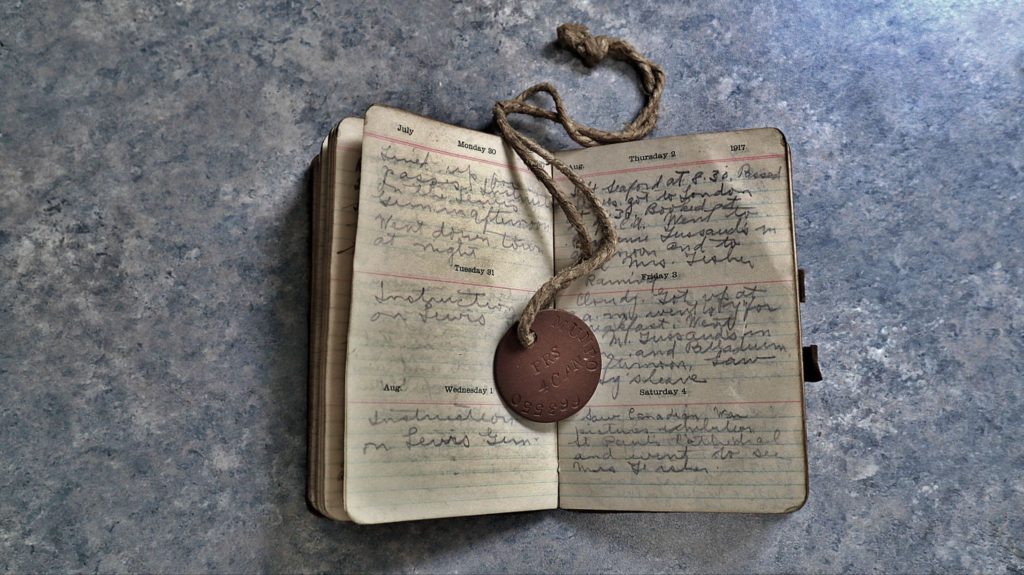
Melville Munro’s diary and dog-tag. Photo courtesy of the Oakville Historical Society.
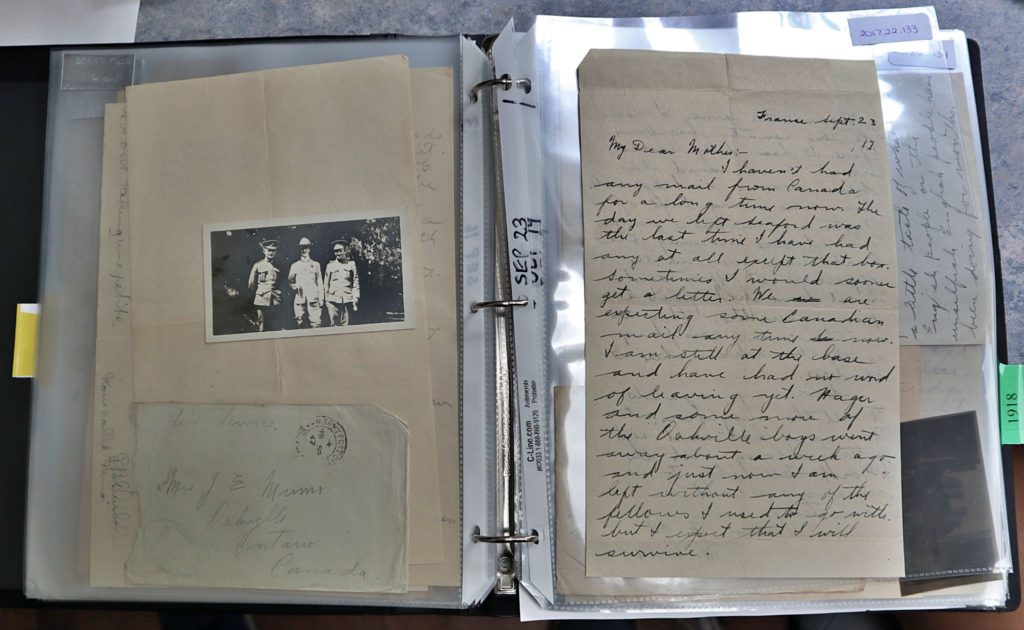
The Munro Letters. Photo courtesy of the Oakville Historical Society.
Disclaimer: Any views or opinions expressed in articles are solely those of the authors and do not necessarily represent the views of the NATO Association of Canada.
Photo Credits: https://48thhighlanders.ca/history/