Journalism’s inherent risks are heightened in theatres of war. Not only are physical threats prevalent in these contexts, including assault, kidnapping, and murder, but rapidly evolving styles of hybrid warfare, as observed in recent conflicts in Ukraine and the Middle East, pose new challenges to journalist safety. Women journalists are disproportionately more affected by these dangers, as they experience harmful stereotypes, increased susceptibility to violence, and additional barriers, especially when reporting in conflict zones. Journalism is a crucial contributor to peace and security; it is essential to support women in this space, especially considering their perspectives often differ in what is widely regarded as a male-dominated field.
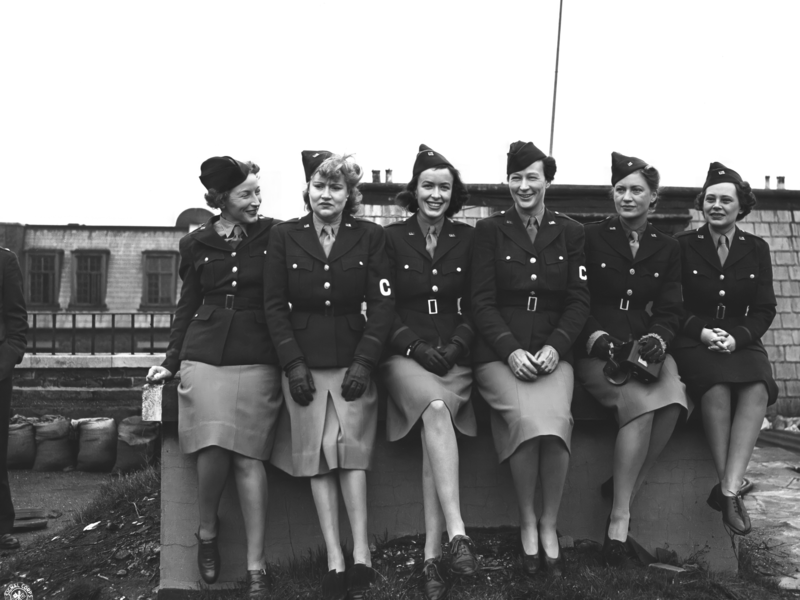
With the high level of risk and danger associated with war reporting, the role of a war correspondent has historically been ascribed to the most adventurous of men. However, during the First World War, newspapers and magazines began sending female correspondents to provide a “woman’s perspective” on the events at the front lines. This occurred in tandem with the Women’s Suffrage movement in the 20th century, where women were actively entering certain roles and achieving feats that surpassed conventional expectations. After the Second World War, the number of female journalists, specifically those reporting in conflict zones, spiked throughout the Cold War and into the 21st century following 9/11. Scholars consider the Vietnam War a turning point for female war journalists. As regular front-line battlefields seen in previous conflicts shifted to guerrilla-style warfare, access to war zones could not be regulated by military permits and press credentials.
Notably, Oana Lungescu has been a trailblazer in modern journalism and reporting. Originally from Romania, Lungescu grew up under the authoritarian regime of the Romanian Communist Party in the 1960s. In 2010, she was the first woman and person from the former Eastern Bloc to be appointed NATO’s spokesperson. She held this tenure for 13 years, during which she led NATO’s communications during significant milestones and NATO’s most turbulent period since the Cold War.
Charged with leading NATO messaging, press conferences, and engaging with international media, Lungescu guided the crisis communications during Russia’s illegal annexation of Crimea in 2014, to its eventual full-scale invasion in 2022. In 2010, appointing a woman to a highly visible role, in what was a male-dominated space at the time, would have been considered unusual. But Lungescu’s appointment signalled NATO’s concrete commitment to implementing the WPS agenda and gender inclusivity, which emphasizes gender-responsive leadership and accountability, participation, prevention, and protection.
In general, women in journalism face more barriers and challenges, and this is exacerbated in conflict-ridden areas and war zones, where additional safety concerns arise. Women journalists are more likely to experience prejudicial behaviour, such as sexism and sexual harassment. Some scholars attribute this hostility to the negative depictions of female journalists in popular media, which reinforces unfavourable stereotypes and undermines their public perception and legitimacy in real life. As one female journalist notes, there exists “a special vulnerability [of being] both a journalist and a woman.” Moreover, women remain underrepresented in visible leadership positions and in political news reporting, despite the large number of women working in the journalism industry. This is reinforced by the lack of leaders and role models for young female journalists to feel represented by, where opportunities for mentorship and guidance in the profession are lacking.
In addition to these barriers in regular newsrooms, female journalists reporting in conflict zones experience similar challenges. Varying safety concerns and physical considerations, such as the need to address the effects of menstruation, present further hindrances. Furthermore, there is a constant threat of sexual assault, and cases of rape often go unreported, as female journalists often do not disclose cases of sexual violence in fear of losing employment or credibility.
War, conflict, and journalism are subjects that carry certain gender connotations and social biases, but often, gender can be an asset in a conflict environment. Women journalists strategically “shape shift” and draw upon varying identities or gender roles to help them address different obstacles or situations in conflict zones. They might address male colleagues differently than they approach potential sources in the field, by drawing from or emphasizing certain aspects of their gender identity. For example, emphasizing their femininity to gain access to female sources, in regions where cultural or religious rules would not have allowed a male journalist in that space. This practice allows female journalists to adapt to varying situations and use ideas of gender to their advantage. Similarly, women journalists offer a distinctive perspective on war correspondence, as they can access a broader range of information than men. At the front lines of World War I, soldiers responded differently to female reporters who presented in more nurturing and maternal positions, which encouraged more thoughtful disclosures.
Journalism plays a significant role during times of conflict and war, where the provision of accurate and representative information can contribute to conflict resolution and peace processes. With the challenges that female journalists face, even before entering theatres of war, it is pertinent to empower and support their efforts in a field with high barriers for women. This includes exploring avenues to increase female leadership in newsrooms and in war reporting. Not only do women journalists provide a missing perspective, but their visibility encourages participation and engagement. Moreover, providing comprehensive safety training programs that account for the diversity of journalists, including language and culture, is crucial when war and conflict have no borders. Recognizing that women are disproportionately affected by conflict and have vital roles in peace and security processes, the inclusion of women’s voices is essential for a free press.
Photo: Six female war correspondents who covered the U.S. Army in the European Theater during World War II appear together in this 1943 photograph: Mary Welch, Dixie Tighe, Kathleen Harriman, Helen Kirkpatrick, Lee Miller, Tania Long. Source: U.S. Army Center of Military History, U.S. Army Official Photograph, Public domain, via Wikimedia Commons.
Disclaimer: Any views or opinions expressed in articles are solely those of the authors and do not necessarily represent the views of the NATO Association of Canada.