China’s expanding role in deep-sea mineral exploration across the South Pacific is quietly reshaping the region’s geopolitical landscape. Over the past few years, Beijing has entered seabed exploration and mining partnerships with nations like the Cook Islands, Kiribati, and Tonga, presented under the theme of sustainable development. While Beijing describes these deals as scientific and environmental collaborations, they fit a pattern of China’s larger initiative to gain access to vital minerals needed for the world’s energy transition. This expands China’s political and economic influence throughout the Pacific.
The Cook Islands’ move in early 2025 to formalize a cooperation agreement with China marked a decisive turn in the Pacific’s evolving strategic landscape. Until recently, the seabed off the Cook Islands was being explored by The Metals Company (TMC), a Canadian firm once seen as a frontrunner in commercializing the extraction of polymetallic nodules from the seabed which are essential for modern technologies such as batteries, electric cars, and renewable energy systems. TMC (previously known as DeepGreen) began securing exploration rights in early 2020 when it acquired a 74,713 km² contract area through its purchase of Tonga Offshore Mining Limited (TOML). The company had already established collaborations with Pacific Island nations like Kiribati to study nodules rich in nickel, cobalt, and manganese which are minerals vital to renewable energy technologies and modern defence manufacturing.
However, by late 2024, this deal was terminated in what was described as a mutual agreement between TMC and Kiribati. This discontinuation became effective in January 2025, clearing the way for fresh negotiations with Chinese firms. Only weeks later, in February 2025, the Cook Islands signed a sweeping strategic partnership with Beijing focused on seabed mineral research and infrastructure development. This agreement not only raised concerns over transparency but also showed a clear pivot away from Western-led projects.
Multiple factors contributed to the Canadian withdrawal, including shifting commercial conditions as TMC itself described Kiribati’s rights as less commercially favourable than alternatives. Additionally, uncertainty over international seabed mining regulations under the International Seabed Authority and the accelerating presence of Chinese state-backed ventures offering rapid financing and integrated infrastructure packages also played a part.
The narrative around deep-sea mining has now shifted to focus more on state-led resource control and bilateral funding than on environmental stewardship and corporate transparency. Involvement of Chinese state-linked companies is one the major causes for this change. More than 6 billion tonnes of polymetallic nodules rich in nickel, cobalt, and manganese, which are all elements essential to electric car batteries, renewable energy systems, and defence technologies, are thought to be present on the seafloor of the Cook Islands alone.
A similar pattern has unfolded across Kiribati and Tonga. In 2024, Kiribati withdrew from its collaboration with the Canadian firm and initiated new discussions with Chinese entities over joint seabed exploration. Meanwhile, Tonga has permitted Chinese oceanographic research vessels to conduct operations within its exclusive economic zone. Collectively, these developments reflect a regional shift in which Chinese financing and infrastructure are steadily supplanting Western-backed ventures. For many Pacific Island states grappling with economic fragility and limited external investment, such partnerships promise short-term development gains but risk deepening structural dependence on Beijing’s capital and technological ecosystem.
China’s involvement in deep-sea mineral projects in the Pacific reflects a consistent pattern of economic engagement seen in other regions. In Africa, Latin America, and Southeast Asia, Chinese investment often begins framed as development assistance, later expanding into infrastructure, trade, and debt linkages that can increase dependence on Beijing. In the Pacific, this approach is subtler but still significant as participation in seabed mining provides China with influence over resource supply chains and technologies critical for emerging energy and industrial needs.
New Zealand has highlighted potential risks associated with this expansion, noting that the South Pacific’s developing “blue economy” could become a focus of broader international competition. These concerns extend beyond environmental issues, as resource development could affect regional strategic balances, particularly in a context where multiple external actors, including China, the United States, Australia, and Canada, maintain interests. The increasing presence of Chinese-backed projects in Pacific resource sectors may have long-term implications for regional economic and geopolitical dynamics.
Canada faces both economic and strategic considerations from these developments. Its Indo-Pacific Strategy, unveiled in late 2022 with a CAD 2.3 billion five-year plan, aims to strengthen Ottawa’s role in regional infrastructure and resilience. The reduction of Canadian involvement in projects like the Cook Islands’ seabed mining initiative highlights how Western engagement can quickly be displaced when the nations that possess the resources shift their strategic focus. Canadian expertise in mining and environmental governance could have offered a framework for responsible resource development, but its retreat has opened space for Chinese firms to define new terms of engagement.
For NATO, the implications extend beyond economic concerns. Minerals such as nickel, cobalt, and rare earth elements are essential to modern defence manufacturing, advanced communications, and clean energy technologies. China’s growing influence over both land and deep-sea mineral supply chains introduces strategic vulnerabilities for allied nations. NATO’s Defence Production Action Plan has already highlighted overreliance on external sources for critical materials as a structural risk. Should China consolidate control over Pacific seabed resources, the alliance could face additional pressures in sectors crucial for both defence capabilities and broader economic stability. Moreover, this further raises a conversation over the economic sovereignty of Pacific states, which are now being used as actors in a globally competitive resource market.
China’s expanding presence in the Pacific reflects its broader global strategy. The Belt and Road Initiative is not limited to building roads and railways but also includes investments in port infrastructure across countries such as Sri Lanka and Pakistan, as well as resource extraction projects in Africa and Central Asia. Beijing has established a network of ports, terminals, and logistics hubs at key maritime “choke-points,” giving it strategic leverage over global trade routes. Chinese companies now hold operational stakes in over 95 ports worldwide, including locations near the Strait of Malacca, the Red Sea, and the Panama Canal. These investments provide China with indirect control over global supply chains and fast access to critical waterways, allowing it to shape shipping corridors to its advantage.
The Pacific seabed deals fit into this larger pattern. For Canada and NATO, these developments suggest that Pacific mineral projects should be seen not as isolated business transactions but as part of China’s broader strategy: coordinated maritime and resource influence that affects trade security, alliance interoperability, and rules-based access to strategic materials.
Major Western actors are increasingly positioning themselves to counter China’s expanding influence in the Pacific. The United States is strengthening its maritime presence, including enhanced access to Palau’s exclusive economic zone, to maintain security and safeguard critical sea lanes. Canada is set to expand its Indo‑Pacific engagement through its Indo-Pacific strategy, increasing naval deployments, participating in joint exercises, and coordinating with NATO and U.S. networks. By leveraging the U.S. presence in the Pacific through intelligence sharing, joint operations, and economic collaboration, Canada and NATO can assert a stronger influence in regional maritime security and trade. Looking forward, such coordinated efforts will be essential not only to preserve freedom of navigation and open markets, but also to ensure that the Indo-Pacific remains a region governed by a rules-based order and sustainable access to critical resources.
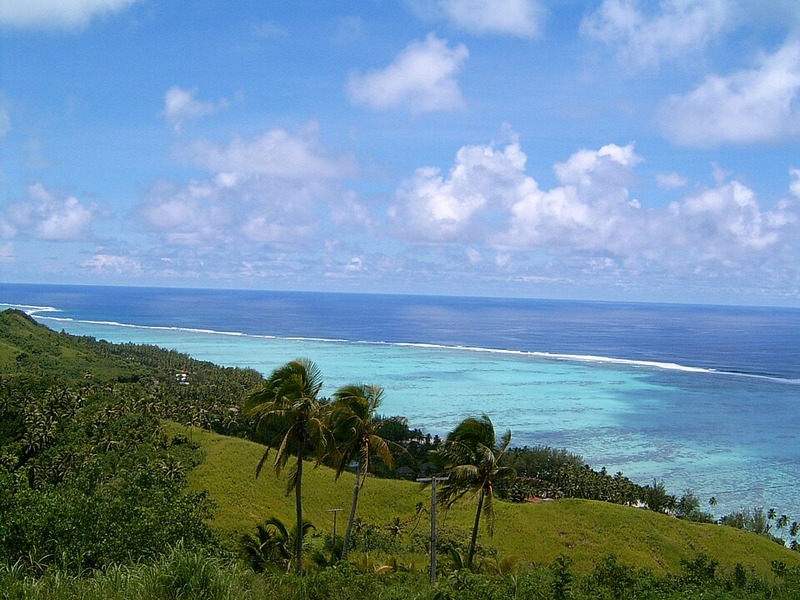
Photo By Mr Bullitt – Photo taken by Mr Bullitt from Sweden, CC BY 2.5, accessed via
Wikipedia Commons
Disclaimer: Any views or opinions expressed in articles are solely those of the authors and do not necessarily represent the views of the NATO Association of Canada.