With the war in Ukraine raging, NATO’s role in Europe is still of the utmost importance. With the further deployment of German troops on the eastern flank of NATO countries, primarily in Lithuania, there is no question that NATO is digging-in as a show of major military deterrence. Yet, while Europe stands at the forefront of security concerns, it is crucial that NATO also look outside of Europe to defend the rules-based international order.
NATO’s investment in the Indo-Pacific region would serve a number of purposes that would benefit the alliance. First and foremost, it would allow NATO to build deeper relations with the democracies in the region and those that have specifically begun working with NATO including Japan, South Korea, Australia, and New Zealand. This signals a deepening of relations, as seen in the 2022 Madrid Summit where NATO invited the heads of each country to participate, ultimately helping NATO achieve its security goals. Those security goals are largely derived from China’s increasing influence and activity in the region.
NATO rhetoric concerning China has increased in recent years, specifically focusing on how China seeks to upend the current international order much like Russia. As such, NATO’s involvement in the Indo-Pacific would be the direct result of China’s actions there and an attempt to contain them. For example, China’s assertiveness in the South China sea has caused tension between countries in the region. Tensions in this economically rich area not only stands to destabilize the region itself but the world more broadly. The areas that China lays claim to have numerous, exploitable resources that fuel economic growth, largely oil and natural gas. Not only that but nearly a quarter of global trade goes through the region, making it an attractive target to assert control over. A similar subject of such assertions is China’s attitude towards Taiwan.
China’s aggression towards Taiwan stands in opposition to NATO’s interests as such a war would result in $10 billion USD being removed from global GDP. The same would be true if a conflict broke out on the Korean Peninsula. Analysts have remarked that if a conflict were to break out on the Korean Peninsula an estimated $4 trillion USD would be removed from the global economy. In either instance, a conflict in the Indo-Pacific would result in a disruption to the global economy that would be disastrous. Such a disruption would allow China to fill the vacuum left by destabilized economics and further cement its economic dominance.
Shifting global alliances also exacerbate this threat. China and North Korea have been shifting closer to Russia throughout the Russia-Ukraine War. This is well illustrated by the fact that North Korea has been supplying Russia with soldiers in addition to China making diplomatic signals that it supports Russia, such as not condemning the invasion of Ukraine as well as declaring an increase in strategic cooperation before the invasion of Ukraine. In any event, some have speculated that previous Cold War dysfunctions in prior communist alliances would make it difficult for these three countries to effectively align. Still, the fact of the matter is that each of those nations are deepening their ties. The question of long-term alliance is always tenuous in international relations, however it cannot be denied that the current alignment between China, North Korea, and Russia pose a threat to the Indo-Pacific and broader NATO interests.
To defend those interests, NATO must work with the democracies in the region who align with its values. Not only would that show NATO’s commitment to the values of freedom and democracy for all, but it would also give the tools needed for Indo-Pacific countries to curb the influence of China, Russia, and North Korea. If those countries knew that NATO was backing democracies in the Indo-Pacific, it would deter them from acting aggressively as they would know aggravating those democracies would aggravate NATO. From an economic standpoint, the South China Sea represents a massive resource opportunity that could be harnessed by the democracies in the Indo-Pacific and then circulated in the global economy. If China is successful in monopolizing that region, then it will gain even more economic power then it already has, which directly threatens NATO’s interests.
The road to building these relationships in the Indo-Pacific will not be easy. NATO will have to navigate each nation’s individual agenda along with being careful not to upset any balance of power in the region. Similarly, some members of NATO may question why the alliance is getting involved in a region so far away from Europe. Yet, building these relationships are crucial to curtailing the rise of authoritarian powers and to help ensure the rules-based international order. Without having a full picture view of the world, alliances risk not anticipating problems in certain regions spilling over into their sphere of influence. By getting involved in the Indo-Pacific now, NATO will be setting itself up for future success.
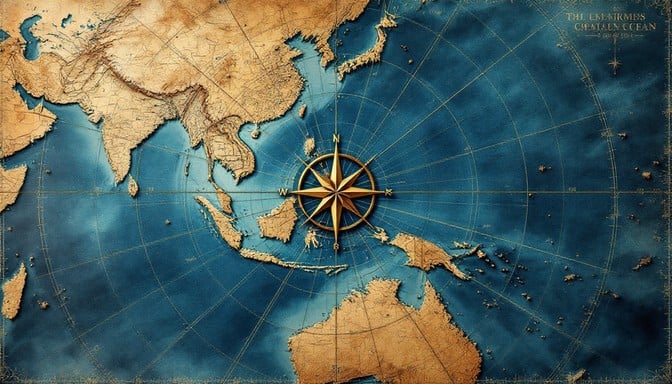
Any views or opinions expressed in articles are solely those of the authors and do not necessarily represent the views of the NATO Association of Canada. Article Image is AI generated and courtesy of Stock Cake. https://stockcake.com/i/vintage-pacific-map_1759460_1243826.