With rapid technological innovation, it can be tempting to make technology the central focus of the defence industry by assuming that superior advancements alone could secure victory on a potential battlefield. A dangerous assumption in this current political climate is to assume that war is unlikely and that defence funds would be better allocated elsewhere. In this period of geopolitical instability, is Canada prepared to defend itself if an armed conflict ensues on its territory?
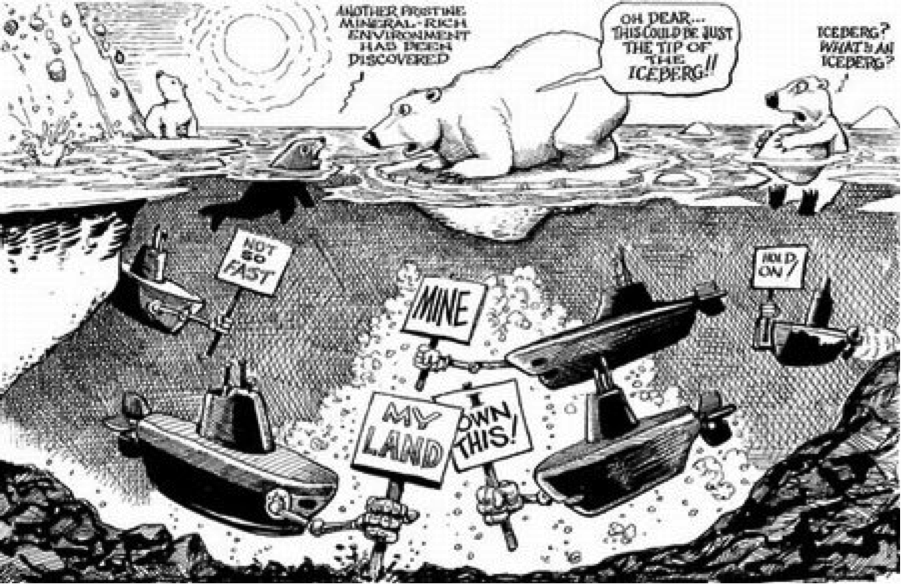
Even without an armed conflict on Canadian territory, there are multiple reasons for Canada to strengthen its defence. Arctic security and sovereignty, as well as Canada’s economic resilience, would benefit from increased domestic defence production, which would serve as a credible deterrent in the eyes of potential threats. As a NATO member, Canada would be obligated to help defend other NATO states if an armed conflict were to break out. This is likely to take the form of Russian aggression against Baltic and other NATO states in the east of Europe.
Given the premise that Canada should invest more in defence and military-related production, an important question arises: should Canada focus on quality or quantity when producing hard power assets such as fighter jets, tanks, drones, air defence systems, and other kinetic capabilities? Although diversifying capabilities to fit various needs is important, it is also important to understand which weapons one needs more of. An example can be shooting down Shahed UAVs. Ukraine needs to shoot down roughly 140 Shaheds a day, which would be too costly and inefficient to shoot down with Patriot missiles, but are way more efficiently shot down with Ukraine’s P1-Sun drone interceptors. However, ballistic and cruise missiles are best intercepted with a Patriot. Should Canada, therefore, prioritize modern, highly capable systems that are expensive and slow to produce? Or should it invest in simpler, cheaper systems that can be mass-produced quickly? The same questions are relevant to its NATO allies, especially those in Europe. Although traditional systems should not be dismissed, there is a limited defence budget, the funds of which should be invested and allocated in the most effective and strategic way.
While Canada produces some ammunition and certain components domestically, major systems such as jets are typically bought from foreign manufacturers. This practice of acquiring most weapon systems from foreign suppliers creates critical dependencies that make a state vulnerable in times of crisis, since its security becomes contingent on the willingness and ability of supplier countries to maintain and replenish those weapons. It is possible that they may not provide support if they choose to prioritise their own defence or if political alignment has shifted. This problem exists in most NATO countries, especially European nations, as they rely on the US to close gaps in their defence production in the event of an armed conflict. For example, by depending on highly capable yet expensive F-35 fighter jets, some NATO countries risk losing full control over their weaponry, as the US maintains a monopoly over maintenance and other support. Many NATO countries also rely on the US to quickly scale production and resupply munitions when needed, as they are unprepared to meet these demands independently.
In response to these vulnerabilities, Canada has begun to reorient its defence policy and spending priorities. Canada released its 2025 federal budget, which allocates $81.8 billion to the Canadian Armed Forces over five years. Of the $81.8 billion, $17.9 billion will go directly to expanding Canada’s military capability, including kinetic defence, and $6.6 billion to strengthen Canada’s industrial base to produce more domestically. This budget aims to bring Canada into compliance with its NATO defence spending commitments, strengthen a more self-sufficient defence industry, and reduce Canada’s reliance on trade with the United States.
Although this represents considerable growth compared with Canada’s previous spending, it is still a relatively limited amount given the country’s GDP and the vast physical territory that requires adequate protection. Poland, whose GDP is about half the size of Canada’s, allocates 4.48% of its GDP to defence, while Canada spends only 2.1%. As a result, Poland spends approximately the same amount on defence despite Canada’s economy being twice as large.
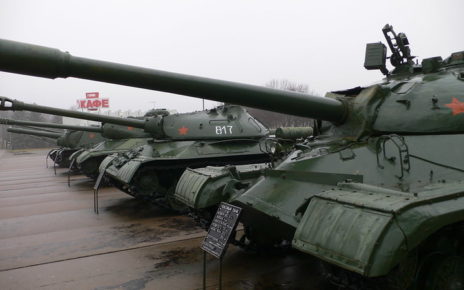
NATO countries, including Canada, tend to focus on conventional firepower such as tanks and aircraft, which are expensive and difficult to produce at scale. At the same time, over 65 percent of Russian tanks were destroyed by low-cost Ukrainian drones, easily produced at scale. Yet, even when it comes to drones, NATO countries focus on producing them as specialized and highly capable, such as some of the US military drones, which cost up to hundreds of millions of dollars. In comparison, Ukraine’s use of much cheaper commercial drones allows them to be used more freely, at scale and like munitions, allowing for more tactical innovation on the battlefield.
Having a range of various assets in terms of usage, cost, and value can give commanders more freedom when planning operations, as they can tailor the systems they use based on the risk aspect. At the same time, domestic production would ensure complete control over the weapons and faster decision-making ability without needing to consult or ask permission from a third party.
Considering the capabilities of your enemy is also key to understanding the kind of defence that will be needed. For instance, in October 2025, Russia launched 5,300 Shahed UAVs, 74 cruise missiles, and 148 ballistic missiles at Ukraine. A US Patriot (surface-to-air missile defence system) battery costs over $1 billion, while the missile interceptors cost approximately $4 million each. In this scenario, being able to produce air defences at scale at a low cost, especially as the production cost of a Shahed is an estimated $35,000 per drone, makes them easy to mass produce but not affordable to shoot down.
It is easy to forget that a strong defence is always reliant on soldiers, the infantry, and artillery shells, and that cannot be replaced by drones or tanks. Therefore, the artillery ammunition shortage within NATO should also be promptly addressed. Overall, having a strong industrial base with the ability to build massive amounts of ammunition at a moment’s notice is essential in ensuring a readiness to defend without losing ground. For example, the US produces as much artillery in a year as is used in Ukraine in around ten to fourteen days. Although producing such quantities in peacetime may not be feasible or necessary, the ability to reach that level fast is essential.
Canada should aim to become more self-sustained in its military production, and although a balance between quantity and quality is important, it is essential to be able to scale domestic production quickly and to do so within a limited budget. One of the action items in NATO’s
Updated Defence Production Action Plan of February 2025 was to develop a framework to, “focus on increasing production volumes in the short-term and ensuring sustainability and scalability in the long-term.” As Hegel expressed in his second law of dialectics, a gradual increase in quantity can eventually reach a point where it becomes a qualitative change. The same applies to defence capabilities. In a chase after more advanced, precise, and faster technologies, it is important not to forget to develop and produce simpler, albeit easier to develop and scale, technologies, though they are just as necessary in the holistic picture of a country’s defence.
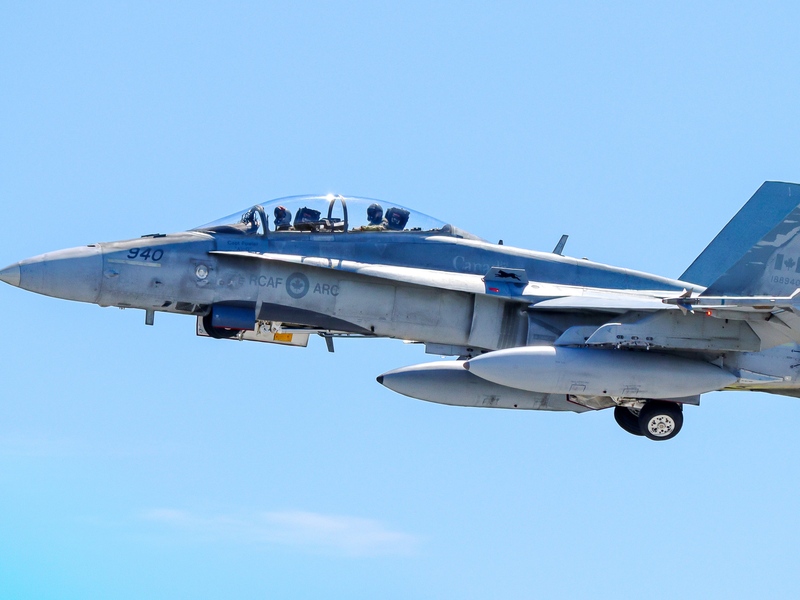
CF-18B (dual-seat) variant (2023), by MarkjF31 via Wikipedia Commons. Licensed under CC by 4.0
Disclaimer: Any views or opinions expressed in articles are solely those of the authors and do not necessarily represent the views of the NATO Association of Canada.