NATO has just launched its first-ever leadership accelerator for women in defence and security, LeadInSecurity. The 10-month mentorship program runs from October 2026 to July 2027, and connects emerging women leaders with established professionals through mentoring, workshops, and in-person networking events. Applications, now closed, were open to women aged 25 to 35 from NATO-allied countries working in defence and security or related fields such as STEM and international relations. The program gives NATO a genuine opportunity to close the leadership gap facing women in the sector. This would reaffirm its commitment to the Women, Peace and Security (WPS) agenda, including women’s full, equal, safe and meaningful participation in the Alliance, while also strengthening decisions by diversifying who shapes them. But as NATO’s first initiative of its kind, LeadInSecurity has no internal track record to measure its success. To ensure it is generating real impact, NATO should look to comparable programs run by member states and relevant sectors to help build outcome-tracking mechanisms and set numeric targets, rather than treating the program’s existence as an achievement in itself.
The gender gap this program targets is persistent and well-documented. Defence and security are male-dominated sectors worldwide: as of 2022, women made up 12% of army personnel, 15% of air force personnel, and 12% of navy personnel, with 97% of senior officers in the defence sector being men. In 2023, 13% of defence ministers in the world were women. This imbalance is mirrored globally in STEM, where women face steady barriers to full participation from early education to the workforce, such as limited mentorship and exclusionary cultures. NATO’s own structures reflect these same patterns. Among Permanent Representatives to the North Atlantic Council, Permanent Representatives to the Military Committee, and the NATO civilian workforce, women make up a significantly lower share of positions than men. Throughout the Alliance’s 75 year history, a woman has never held the role of NATO Secretary General.
At a time when security threats facing the Alliance are growing more complex, NATO cannot risk overlooking the talent, perspective and knowledge that broader representation brings. Beyond being a human right, gender-equal representation for women is a strategic imperative for NATO defence: only when institutions let women’s voices meaningfully shape their decisions can they truly protect and empower women. NATO has embedded this duty into its WPS agenda’s pillar of participation, and argued that a more diverse alliance is better equipped to address its security challenges, since decision-making shaped by a wider range of perspectives more accurately reflects the society it protects.
Leadership programs like LeadInSecurity target individual capacity rather than dismantling institutional barriers directly, but evidence shows they chip away at these barriers indirectly through visibility. Research on women’s integration into NATO navy leadership positions shows that senior women who serve as role models for junior officials gradually erode skepticism about women in combat leadership. Visibility, therefore, has a compounding effect: programs that showcase women’s success in a field inspire younger women to enter the field. Mentorship programs like LeadInSecurity both support the women who participate in them and help inspire the next generation, building a more diverse and representative force over time.
Because an Alliance-wide program of this kind for women is new territory for NATO, LeadInSecurity has no internal precedent to draw upon, so the Alliance can look to comparable programs for guidance. The Women in Defence UK Mentoring Programme offers a close structural parallel: a nine-month model pairing mentors and mentees for regular meetings, which has run for six consecutive years. Over that time, it has matched more than 1600 participants from 32 organizations and reports that 52% of mentees went on to secure a promotion, take on expanded responsibilities, or move on to new roles. In the U.S., Women In Defense has run its WID Scholar program since 1988, awarding more than $1,000,000 to over 200 recipients pursuing degrees related to national security and defence. Additionally, through training, coaching, personal mentoring, and networking, the European Innovation Council’s Women Leadership Programme has run nine cohorts supporting more than 300 female researchers and entrepreneurs since its 2021 launch. The organization has tied the initiative to a rise in women-led companies receiving EIC Accelerator funding. Together, these programs show the far-reaching results that come from sustained, consecutive cohorts and long-term outcome tracking.
These comparisons point to a set of policy recommendations for LeadInSecurity. First, outcome tracking and data collection are fundamental to measuring progress and refining strategy over time, as the accomplishments from these other programs make clear. NATO can integrate LeadInSecurity outcomes into its existing Summary of National Reports on gender perspectives, the Alliance’s largest compilation of gender statistics and a key mechanism for sharing progress and best practices on gender integration across NATO and beyond. Embedding LeadInSecurity within this existing accountability structure would draw on resources NATO has already built and tie the program to the Alliance’s broader WPS agenda. Second, following the model set by these longer-running programs, LeadInSecurity should run as a recurring, multi-year initiative to build its impact over time. Next, instead of measuring success by participation numbers alone, NATO should commit to concrete, numeric targets; for instance, tracking the career progression of graduated participants or how many move through the program over time. Finally, outcome tracking should extend past the conclusion of each cohort, so NATO can demonstrate it is measuring career impact for the long term. Implementing these mechanisms would advance progress on closing the gender gap, building a more equal workforce within the Alliance and in turn, a security institution better equipped to protect the society it serves.
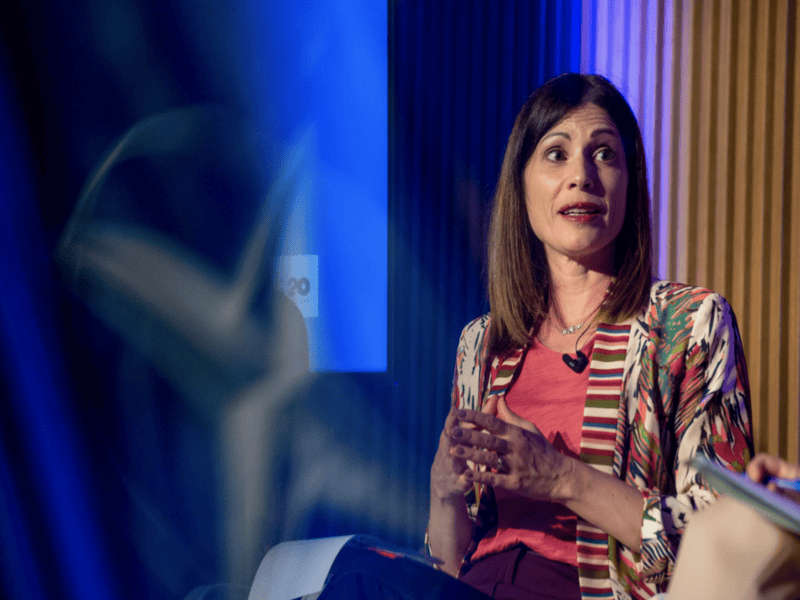
Photo: Irene Fellin, NATO Special Representative for Women, Peace and Security (2022), by NATO via Flickr. Licensed under CC BY-NC-ND 2.0.
Disclaimer: Any views or opinions expressed in articles are solely those of the authors and do not necessarily represent the views of the NATO Association of Canada.