By Joel Sawyer
Modern warfare is increasingly being conducted in the opaque space between peace and war. In the European theatre, Russia has flooded information environments with disinformation, conducted cyber-offensive operations, and tested the alliance’s collective resolve with repeated airspace violations with drones. In the Indo-Pacific, China also uses air intrusions and aggressive shows of force to test red lines and make incremental strategic gains in areas such as the South China Sea.
What NATO faces in Europe, and what its partners in the Indo-Pacific also face, are coordinated grey zone campaigns by revisionist powers seeking to change the strategic status quo. In light of the deepening strategic alignment between Russia and China, the security landscapes of the Euro-Atlantic and Indo-Pacific are increasingly intertwined. This necessitates a strategy to support regional cooperation and preparedness against the grey zone threat in the Indo-Pacific. So, what might that look like, and what value does NATO bring to the regional allied response framework?
Defining the grey zone is an important first step for a comprehensive defence strategy. Grey zone operations, activities and actions (OAA) are sub-threshold levers of statecraft that exist between peaceful diplomacy and direct armed conflict. Actors may employ grey zone tactics in areas where there is (1) an absence of strong normative architecture governing state behaviour, and/or (2) an expectation that an opponent will not be able to credibly escalate, creating a fait accompli. A major systemic risk of grey zone OAA is that they may ultimately increase the likelihood of inadvertent or accidental escalation, as unchecked behaviours lead to greater boundary-pushing, making future confrontations significantly more dangerous.
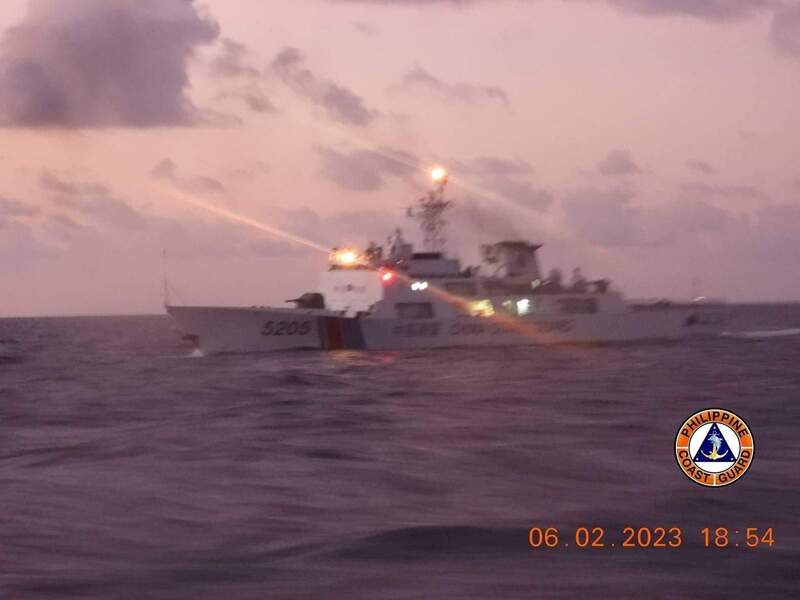
The multi-domain character of grey zone OAA spans the political, economic, military, and cognitive dimensions of statecraft. China’s maritime territorialization in the South China Sea has been operationalized through a decades-long combination of domestic legal claims, A.K.A. ‘lawfare’, the construction of tactical infrastructure in disputed territories, and the use of the Chinese Coast Guard (CCG) to harass maritime vessels in what China claims is its maritime jurisdiction. The PRC’s ‘salami slicing’ seeks to tacitly normalize its unrecognized claim to rights afforded to archipelagic states, which would render all waters enclosed by the ‘nine-dash line’ as a territorial sea, conferring total sovereignty over the airspace, subsoil and natural resources contained within.
Whilst China’s position flagrantly breaks with established international legal doctrine, its multi-modal asymmetric strategy has created a coordination problem for other claimant states and NATO partners in the Indo-Pacific. To this end, the example highlights how grey zone OAA can be used to create strategic leverage through gradual, opaque subversion of established normative and legal frameworks.
Because grey zone OAA are gradualist and place an intended target in a position where it must either concede or risk escalation, the burden of risk is shifted to the respondent state. Without an ability to respond ‘in-kind’ to asymmetric and multi-modal coercion, it matters not if a state has less, equal, or more conventional capacity to wage conflict, simply because any conventional short-scale military response risks going above threshold into the zone of conflict. This ‘shaping power’ short of war applies to both lesser and more powerful military adversaries. This is particularly useful for revisionist powers dissatisfied with the status quo, as they may seek incremental gains against weaker states whilst avoiding confrontation with equivalent or greater powers. China’s ongoing harassment of Philippine fishery vessels through its CCG and militia fleet allows Beijing to flex its paramilitary muscle against Manila, making strategic gains whilst avoiding broader entanglement with the Philippines’ treaty ally, the United States.
A NATO anti grey zone strategy in the Indo-Pacific should focus on two key areas. First, it must invest with purpose and pace in activities that ‘shape’ the cognitive environment. In simpler terms, this means signalling collective intent and solidarity in the ‘steady state’, A.K.A. the pre-war phase, to both allies and potential adversaries. This could involve strengthening intelligence-sharing with the NATO-IP 4 partners, regularizing joint military training exercises, and expanding investments in regional defence industries. These activities strengthen military and strategic advantage in the pre-conflict state, whilst also complementing NATO’s diplomatic engagement in the region.
The second area is supporting investments in appropriate deterrence capabilities to effectively respond to grey zone OAA when they occur. This is about signalling and developing credible sub-threshold escalatory capacity with partners to reverse the burden of risk onto an aggressor. To be sure, this recommendation does not advocate for an active NATO military presence in the region. Rather, NATO should support allied capability-enabling initiatives through knowledge diffusion and technology sharing. This keeps essential decision-making over response type and intensity the sole prerogative of the individual state.
For example, extending intelligence, surveillance, and reconnaissance (ISR) training and systems to regional allies would significantly enhance domain and threat awareness, reducing the potential effectiveness of grey zone OAA by increasing information saturation. In turn, this enhanced sub-threshold capacity to respond should, in theory, reduce expectations of grey zone OAA success, all without drawing NATO into the region militarily.
The goal of this strategy is to be proactive, shaping favourable conditions for NATO and its allied partners. By ex-ante diminishing an adversary’s expected gains from grey zone OAA, the risk of an incident triggering a broader conflagration in the region is reduced. This follows a ‘deterrence by denial’ logic, which focuses on defensive preparations rather than offensive build-up of military capability for retributive purposes (deterrence by punishment).
The stakes in the Indo-Pacific are high. The presence of a Chinese PLAN warship in a recent incident in the contested Scarborough Shoal between the CCG and the Philippine Coast Guard suggests an increasingly assertive, aggressive, and ultimately dangerous strategy of coercion and boundary-pushing by Beijing. NATO can, and should, play a defensive role in strengthening the deterrence by denial capabilities of its IP 4 partners and other nations seeking to dissuade and limit offensive grey zone OAA in the region.
Credit: Philippines Coast Guard (2023). Licensed under Wikimedia Commons/Public Domain. The attached image shows a Chinese Coast Guard vessel in the disputed South China Sea. Original URL link.
Disclaimer: Any views or opinions expressed in articles are solely those of the authors and do not necessarily represent the views of the NATO Association of Canada.