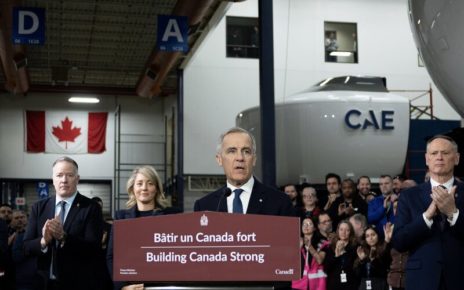
In April 2026, Canada’s Foreign Affairs Minister Anita Anand announced plans to name a new Women, Peace, and Security (WPS) ambassador after the position had been vacant for over a year. This signals a renewal of Canada’s commitment to incorporating WPS into its foreign policy, despite previous comments from Prime Minister Mark Carney at the G20 summit in 2025 that he wouldn’t “describe Canada’s foreign policy as feminist.” These moves are significant given the broader need for member states to present a united front on issues concerning the Alliance’s core values, especially considering the challenges arising in the global security environment. Specifically, Canada is at a vital moment where it can revitalize its Feminist Foreign Policy (FFP) and emerge as a champion of WPS within the Alliance and on the global stage.
Whereas traditional foreign policy is concerned with ensuring state security pertaining to state diplomacy, FFP elevates priorities that are “aimed to protect women’s rights, enhance female participation in public life, and empower women economically.” In this context, FFP recognizes that women and girls experience and contribute to contexts of conflict, peace, and security differently. This is highlighted in NATO’s WPS policy, where working towards gender equality and inclusion is a key pillar throughout the Alliance’s operations and activities. FFPs have often elicited backlash due to controversial associations with past political and feminist movements. Despite its title, FFPs are largely non-ideological and have pragmatic goals that seek to support and elevate women. Ultimately, the WPS agenda and FFPs are mechanisms which serve strategic purposes, where certain values of member states and the Alliance are emphasized and projected in interstate relations, diplomacy, and security contexts.
Under the government of Justin Trudeau, Canada was among the first NATO countries to introduce its FFP in 2017, as articulated in the Feminist International Assistance Policy document. France, Germany, Luxembourg, the Netherlands, Slovenia, and Spain are other NATO states that have adopted similar FFPs. Notably, Sweden, widely considered a pioneer of FFP, had adopted the policy in 2014. Sweden’s longstanding engagement with gender equality and justice and its history of international connections with WPS values made it a valuable resource and a de facto leader in the implementation and development of NATO’s WPS agenda. While Sweden only formally joined the Alliance in 2024 as a response to Russia’s continued aggression against Ukraine and its threat to European continental security, Sweden and NATO’s cooperation on WPS prior to its formal entry into the Alliance contributed to its bid for membership.
Though the Russian threat prompted Sweden’s entry into NATO, a conflict in which gender-specific violence remains prominent, a change in Sweden’s government in 2022 saw the simultaneous abandonment of its FFP. At the same time, messaging of military strength and cohesive power was amplified while the WPS agenda was sidelined across the Alliance. Considering the opposing values base of NATO’s adversaries, member states demonstrating a continued public commitment to upholding the Alliance’s values is not merely idealism but a strategic tool and pragmatic tactic.
Importantly, WPS and FFP are a reflection of Canadian values as champions of peace and multilateral cooperation. Domestically, not only does it portray a strategic narrative that has been posited since Lester B. Pearson’s contributions to global peacekeeping and the United Nations, but also presents a critical opportunity for Canada to emerge as a leader of FFP, amongst NATO allies, and globally. Canada’s plan to name a new WPS ambassador after the position had been vacant for over a year is a positive signal, as Canada has the potential to step up and fill the space in NATO’s WPS that was left vacant by Sweden.
Critics have identified gaps in Canada’s broader policy and institutional frameworks, which present systematic bottlenecks that would hinder FFP implementation. Vague definitions harm policy coherence and shelters governments from achieving real social justice when progress is not made. Additionally, priorities should be echoed by the domestic population; in this context, Canadian responses to the new WPS appointment have been positive, with community members urging the government to re-engage with the agenda. In Canada, FFP involves six ministries and various governmental bodies. It is essential to indicate specific entry and exit points for FFP policy goals and results, and strengthen institutional capacity through an integrated approach to execute these targets.
Considering the rapidly evolving international security landscape and threats to the Alliance, member states can strengthen the Alliance by demonstrating a continued public commitment to upholding NATO’s core values while maintaining flexibility and adaptability to respond to emerging challenges. Ultimately, FFP implementation rests with each nation, where domestic contexts largely impact policy success; however, comprehensive, Alliance-wide support of the WPS agenda can be projected through member states by implementing their respective FFPs. FFPs and the WPS agenda are also relevant to current conflicts in Ukraine and in the Middle East, where the occurrence of gender-based violence and human rights violations is extremely prevalent. Not only is it crucial to NATO’s security and military priorities to project a united front on this matter, but the ideologies of the perpetrating regimes are directly contradictory to NATO’s commitment to upholding peace through cooperative security. Given this environment and also Canada’s current “middle power” strategy in its foreign policy, Canada can step forward as the new champion of FFPs and WPS, enhancing its position on this matter within the Alliance and on the international stage.
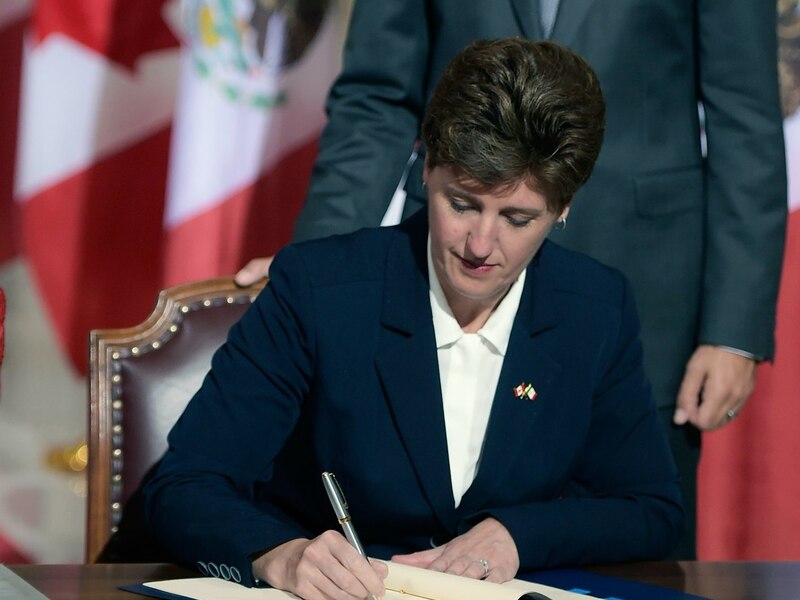
Photo: Canadian Minister of International Development Marie-Claude Bibeau. Source: Presidencia de la República Mexicana, CC BY 2.0 via Wikimedia Commons.
Disclaimer: Any views or opinions expressed in articles are solely those of the authors and do not necessarily represent the views of the NATO Association of Canada.