Conventional scholarship argues that the costliness of war generally serves as an inherent deterrent against waging or participating in them. As warring parties require sufficient capital, industrial power, and military capacity to initiate and sustain armed conflict, popular willpower plays an enormous role in securing adequate resources. Specifically, participation in armed conflicts for developed democracies ought to be accepted by the general population. When war is costly, the citizenry has greater reason to oppose it or only endorse it given specific circumstances.
The declining cost of war, driven by cheap first-person-view (FPV) drones, commercially available components, and rapidly diffusing battlefield innovation, is lowering the financial barriers to enter conflicts, both for state and non-state actors. This risks increasing the frequency and territory impacted by armed conflict and, by extension, expands the risk of entrapment to NATO countries. Simultaneously, conflicts may become less predictable as smaller actors (e.g., non-state entities, less conventionally powerful states) exercise greater capacity to sustain and succeed in war as cheap, innovative weaponry erodes traditional asymmetric tactics.
Throughout the recent war in Iran, the interception and destruction of an Iranian Shahed (an Unmanned Aerial Vehicle, or UAV) has constituted an American success – despite costing the U.S. millions and Iran mere tens of thousands. Generally, Shaheds cost about $20-50,000 each while US defense systems can cost 200 times as much; namely the Patriot costing $4 million and the Terminal High Altitude Area Defense (THAAD) system costing $12-15 million. During the Iran war, the US and its allies burned through over 800 Patriot interceptor missiles within three days. The AN/TPY-2 radar (the sensor systems underpinning the THAAD missile defense system) can cost upwards of $1 billion, yet two were disabled by Iranian drones valued at approximately $30,000 each.
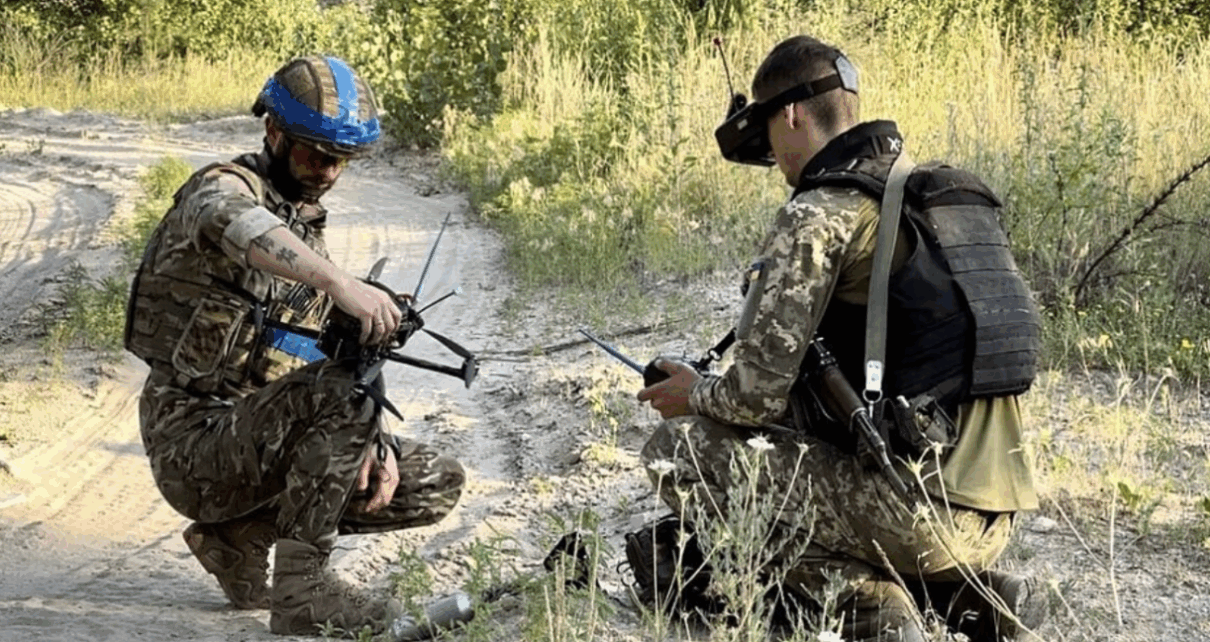
The same story can be told in Ukraine, where a Ukrainian FPV drone, approximately $400, assembled from commercial parts is believed to have severely damaged a $4.5 million Russian T-90M tank. About 50% of T-90M losses and 65% of Russian tank losses generally have reportedly been caused by FPV drones. The cost-per-kill for FPV’s, accounting for missed shots, is only $1,300. Adversarial capability to succeed in and sustain armed conflict at a cheaper relative cost highlights the room for improved procurement and production models amongst allies, but more fundamentally suggests ‘sophisticated’ weaponry is no longer necessarily scarce or expensive.
Indeed, these cheap weapons have also proven scalable. Ukraine’s FPV production increased from approximately 3-5,000 units in 2022 to about 3 million in 2025. As of December 2025, Ukraine began producing nearly 1,000 interceptor drones per day. Beyond Ukraine’s ‘drone Keynesianism’ in which the Ukrainian state purchase of drones has upheld constant demand and prompted 500 companies to manufacture drones in Ukraine, Ukrainian scalability is further enabled by its modular approach and commercial and open source inputs.
The declining financial costs to initiating conflicts expands the appeal of military force to a broad range of actors, not only limited to states. Houthis have used drones to attack commercial ships in the Red Sea, racking up approximately $1 billion in defensive costs for the Americans. The US has been mocked for the price discrepancy between the $2 million defensive missiles launched to defend against $2,000 drones. Houthis have potentially achieved the greatest drone-usage success, often combining commercial, multi-use drones with one-way attack drones. Other actors including ISIS, al-Qaeda affiliate Al-Shabaab, Boko Haram, and the Islamic State’s West Africa Province (ISWAP) are also drone-equipped. ISWAP is believed to have started experimenting with modified attack drones since 2022/2023 and, in December 2024, carried out two drone attacks against military installations in Wajiroko, Damaturu (Yobe State) and Abadam (Lake Chad), attempting a third in Buni Gari. JNIM, an al-Qaeda affiliate, has also weaponized drones, launching at least 17 armed drone attacks since September 2023. On the continent, at least nine African states have acquired and used drones, including Burkina Faso, Mali, Mozambique, Congo, Kenya, Libya, Nigeria, Somalia, and Sudan. In Myanmar, ethnic armed groups – especially the Brotherhood Alliance – have adopted weaponised drones as a primary warfare approach, evolving to integrate 3D printing technology. During October-November 2023, ethnic armed forces used drones to drop over 25,000 bombs on military bases. Though drones are not necessarily new to these actors, technological innovations rapidly diffuse through strategic alliances (e.g., Ukraine allegedly backing drone attacks against Wagner in Sudan), their adoption increases alongside the pace of their iterations. Cheap commercial and open-source procurement models may enable non-state actors to act independently of state sponsors. Cheaper, accessible weaponry gives non-state actors’ greater autonomy by diminishing their reliance on sponsors for extensive financial backing and connections to complex supply chains traditionally required to strike and sustain conflicts. Meaning, these actors would no longer be beholden to the political constraints or whims of state sponsors, who are more feasibly influenced by the US and NATO allies through international political forums.
The declining costs to entry and ongoing sustainment of combat operations challenges conventional asymmetric tactics. While traditional assumptions that conventional military powers will quickly defeat smaller opponents have been challenged in Vietnam, Iraq, Afghanistan, and many more arenas, emerging warfare economics challenge them further. The US and Russia predicted that waging war in Iran and Ukraine would respectively result in quick, easy victories. In reality, Russia has locked itself into fighting for over 4 years, while the conflict in Iran has well surpassed Trump’s initially predicted 4-5 week timeline. This demonstrates that smaller,resource-constrained actors can sustain defensive conflicts beyond what their GDP would historically permit as cheap innovative weaponry shrinks the daily costs of war. Here, fighting becomes more feasible for smaller actors but harder to sustain for conventional superpowers; particularly those with outdated approaches to procurement, like NATO.
The existence of cheap and scalable drone procurement and production models (i.e. those used by Ukraine) contrast against that of NATO, which is still reflective of the Cold-War era approach to weapons as indivisible platforms. This thinking undermines flexible, lowest-cost development by requiring near complete redesigns of systems, as opposed to allowing improvements, tweaks, or swap-outs to individual components. Further, as the NATOmodel is still structured around expensive, low-volume platforms, the alliance risks being drawn into more conflicts while being less structurally suited to fight them.
Increased conflict enabled by growing non-state actor independence and cheaper costs of weaponry impacts NATO through trade dependencies (e.g., Strait of Hormuz), support paid to allies (e.g., NATO supporting Ukraine), opportunities for proxy tactics (e.g., Ukraine backing anti-Wagner groups), geographic spillover (e.g., Eastern Europe and Russia), and more. Amidst these emerging capabilities, increasingly independent non-state actors, and the decline of armed conflict’s costs to entry, NATOs procurement model remains outdated.
As one NATO procurement official told CNN, the alliance’s acquisition systems are “still in the 80s.” To modernize, better enabling the flexible and adaptive procurement and production models championed by innovative militaries, NATO’s model ought to shift towards allied component acquisition and decenter entire-platform acquisition. Allied component acquisition promotes both the modular approach that flexibly enables iterations and the development of supply chains independent of China – whose dominance in the cheap drone market grants them leverage over dependent states.
Image Citiation: Ukrainian 25th Sicheslavska bde showing their improvised FPV strike drones (2023), by АрміяInform via WikiCommons
Disclaimer: Any views or opinions expressed in articles are solely those of the authors and do not necessarily represent the views of the NATO Association of Canada.