Disinformation is often framed as a problem of misleading or deceitful content. For democratic states, the challenge is twofold: addressing the effects of disinformation while ensuring that responses remain consistent with the principles of open societies. Open societies rely on principles of freedom of expression, pluralism, and limited state intervention in the information space. These same principles also narrow the range of available responses, as efforts to counter disinformation must be weighed against the risk of infringing on those freedoms. As a result, countering disinformation is rarely just a technical exercise; it is a political one. The challenge becomes more complex when responses must be coordinated across multiple democratic states.
From a NATO perspective, the challenge is particularly difficult. As an alliance of democratic states, NATO must consider information threats while operating across different legal systems, political cultures, and institutional frameworks. Measures that may be acceptable for one member can be politically or legally unacceptable for another.
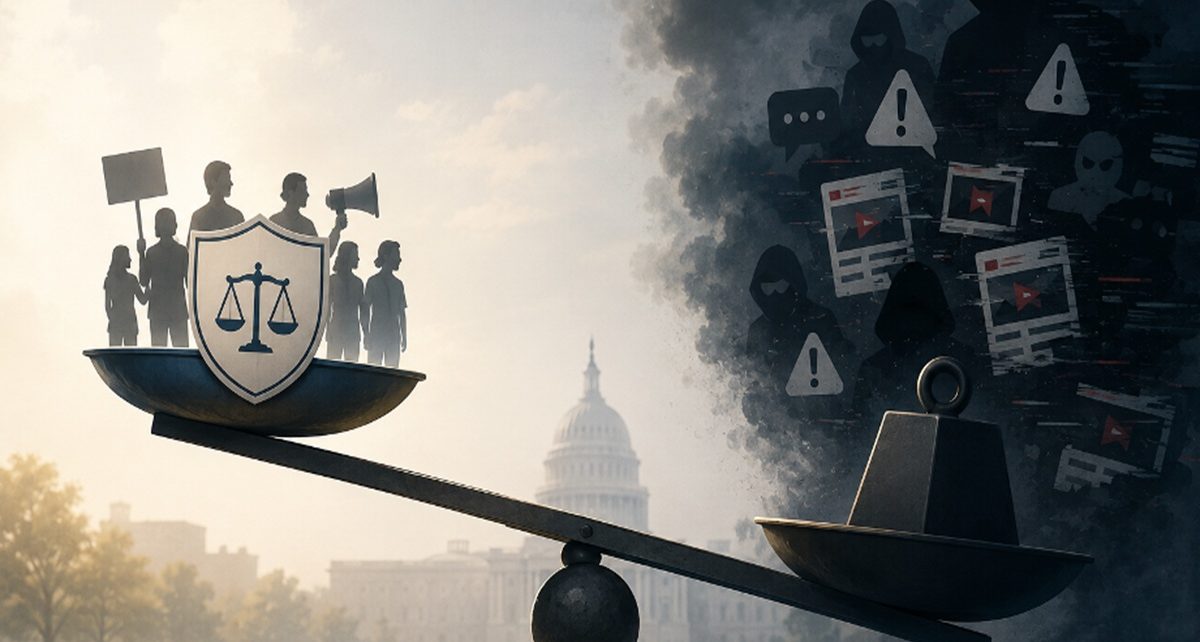
This dynamic creates a structural imbalance in the information environment, as democratic responses are constrained by principles that adversarial actors are often free to ignore. Any response by democratic states must be weighed against the need to preserve their institutional legitimacy. Measures designed to curb disinformation quickly and decisively often rely on censorship, centralized information control, or broad content restrictions. Responses that avoid these measures do so to remain faithful to democratic values. As a result, they tend to operate more slowly and indirectly. The challenge, therefore, is not whether democratic states can respond to disinformation, but how they can do so without undermining the principles they seek to protect. The main constraints faced when democratically addressing disinformation can be grouped into three broad categories: legality, legitimacy, and speed.
Legality sets the outer limit on how democratic governments can respond. Responses to disinformation must comply with protections for freedom of expression and established legal thresholds. In principle, legal systems allow harmful and demonstrably false statements to be addressed; in practice, institutions usually face high legal thresholds before they can act.
Legitimacy raises a different concern. Unlike legality, which concerns formal authority under the law, legitimacy relates to public trust, institutional credibility, and the perceived justification of state action. Measures viewed as overly intrusive, politically motivated, or lacking transparency can erode confidence in democratic institutions and may even reinforce the narratives disinformation seeks to promote. This is particularly true where governments are perceived as monitoring political speech or influencing content moderation, creating a legitimacy challenge.
Speed adds another layer by limiting how quickly democratic systems can respond, often due to procedural requirements and coordination between institutions. False or misleading information can spread rapidly and at little cost, while democratic responses often require time to verify information, attribute activity to specific actors, determine whether it is coordinated or state-backed, and establish sufficient confidence in those assessments before action can be taken. As a result, early or preventive intervention is often difficult.
These categories overlap and often compete. Efforts to respond more quickly to disinformation may come at the expense of legitimacy, particularly where due process or transparency is reduced. Conversely, maintaining legitimacy through careful and accountable processes often sacrifices the speed and decisiveness of the response. Measures that expand the scope of intervention may also challenge legal protections, while strict adherence to those protections can narrow available options. Democratic responses depend not only on capability, but also on how governments navigate trade-offs between competing constraints.
Democratic states rarely rely on direct control over the information environment. In the European Union, measures such as the Digital Services Act emphasize platform accountability and transparency over state-directed content removal, reflecting the legal and normative limits within which democratic governments operate. Speed presents a different challenge in practice. In the United States, responses to foreign information interference often involve multiple institutions, including intelligence agencies, law enforcement, and private platforms, all of which require time to assess, attribute, and respond to emerging threats.
In practice, this can produce uneven or decentralized responses. In Canada, for instance, efforts to counter disinformation involve coordination between federal agencies, provincial authorities, media organizations, and civil society. While this reflects the pluralism and institutional legitimacy of democratic societies, it can lead to fragmented messaging and less coherent responses. When these constraints interact across multiple countries, coordination becomes even more difficult. In NATO, differences in legal authorities, political norms, and institutional arrangements can make coherent responses to disinformation harder to achieve. As a result, NATO has generally reinforced resilience, public awareness, and strategic communications rather than centralized information control, reflecting both the strengths and limitations of a multinational democratic alliance.
Together, these examples highlight a broader reality: democratic responses to disinformation are shaped not only by democratic values, but also by institutions, procedures, and competing authorities that sustain them.
The contrast becomes even clearer when democratic systems are compared with states that operate with fewer limits in the information environment. Russia and China, for example, are able to respond to information threats with a level of speed and coherence that democratic systems often struggle to match. Centralized control over media, fewer limits on state intervention, and tighter coordination across institutions allow for more unified narratives. This reflects a fundamentally different operating environment. That coherence, however, comes with its own risks. Concentrated control over the information space can reduce transparency and limit the ability of media, institutions, and the public to question or challenge official narratives, weakening accountability and limiting the societal resilience that comes from open public debate. The point, then, is not that one system performs better than the other, but that different constraints create different trade-offs and degrees of flexibility in how states respond to disinformation. In democratic systems, those constraints are both more visible and more binding.
Legality, legitimacy, and speed impose limits on how quickly and forcefully democratic states can respond to disinformation. Understanding these trade-offs does not resolve the problem, but it clarifies why democratic responses can appear slower or less decisive. It also highlights why democratic states and alliances such as NATO increasingly emphasize resilience, transparency, strategic communications, and public trust when responding to information threats. More broadly, this raises the question of whether preserving liberal democratic values is worth the risk of those same principles being weaponized against the societies they seek to protect. For democratic states, preserving these principles is not separate from the challenge of countering disinformation; it is part of it.
Photo: “Democracy and Disinformation” (2026), generated by OpenAI based on author direction.
Disclaimer: Any views or opinions expressed in articles are solely those of the authors and do not necessarily represent the views of the NATO Association of Canada.