Transnational repression on Canadian campuses is an emerging threat distorting information environments and exposing NATO vulnerabilities. Using a two‑tier framework, Ji Young Kim shows how foreign coercion silences dissent and can lead institutions to reinforce false consensus.
Tag: Democracy
Democracy and Disinformation, Part 3: The Cost of Comfort
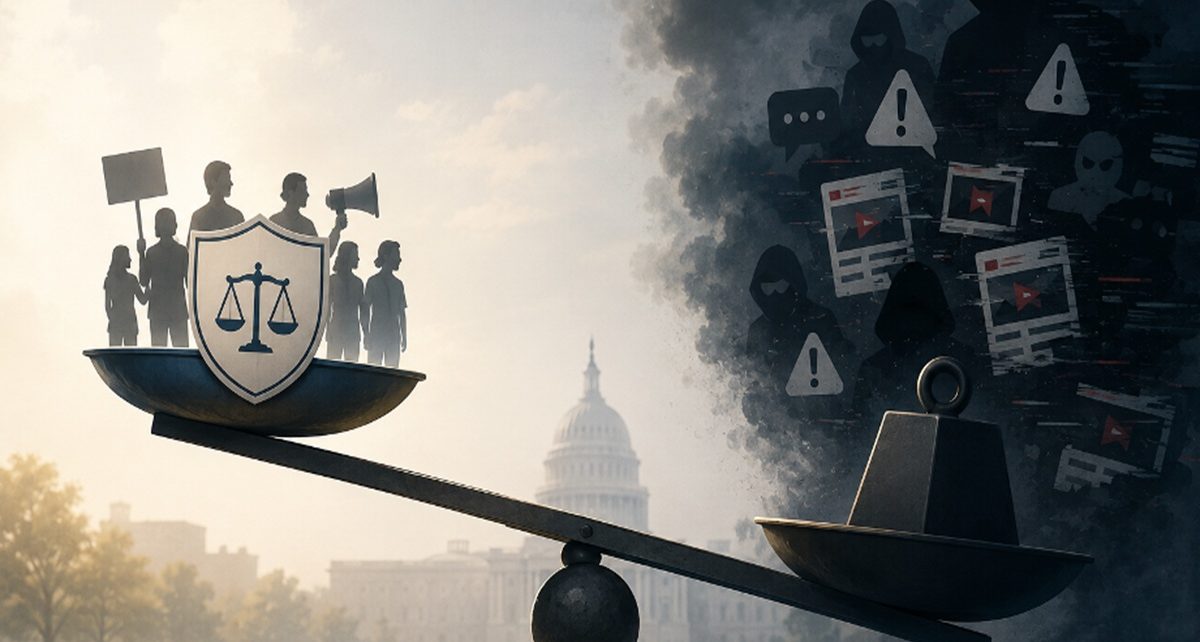
Canada has the institutions, the reports, and the warnings about disinformation. What it lacks is a population that feels the threat. In this article, Dominique Arseneau-Bruneau looks at how Canada’s lack of urgency affects its response to disinformation through the lens of legality, legitimacy, and speed, and what the cost of that comfort may ultimately be.
Democracy and Disinformation, Part 2: The European Case
The European Union has come to treat disinformation not as a problem of false information, but as a threat to democracy itself. In this article, Dominique Arseneau-Bruneau examines how legality, legitimacy, and speed shape the EU’s response to information confrontation and what its experience reveals about the limits of democratic defence.
Democracy and Disinformation, Part 1: A Structural Disadvantage
Can democratic states effectively counter disinformation without undermining the principles they seek to protect? Dominique Arseneau-Bruneau examines how legality, legitimacy, and institutional complexity shape democratic responses in the information environment.
Disinformation and the Collapse of Shared Reality: Lessons from the Venezuela–Maduro Crisis
On January 3, 2026, the United States announced that its forces had captured Venezuelan President Nicolás Maduro and flown him to New York to face charges. Within minutes of President Donald Trump’s message breaking across social media platforms, an array of AI-generated images, recycled footage, and outright false claims began circulating widely. Some purported to Read More…
For Shame Upon the World: Lessons from the Crushing of Hong Kong
In June of 2025, Hong Kong Youth Activist Joshua Wong was brought in front of West Kowloon court to face more charges under China’s 2019 ‘National Security Law,’ which caused the 2020 protests so brutally repressed by the Chinese Communist Party. Accused of conspiring with fellow activist, and exile, Nathan Law to promote sanctions against China, Wong, Read More…
How Disinformation Is Eroding the Skill of Democratic Conflict
Democracies survive on the ability of people to disagree without destroying the social fabric that binds them. However, in an era marked by rising mis- and disinformation, our collective capacity to navigate disagreement is deteriorating. While polarization is often viewed as a problem of belief, the deeper issue is that disinformation is changing the very Read More…
Algorithmic Profit Disclosure Regulation: Corporate Responsibility for Disinformation
Increasingly, NATO countries have begun to describe digital media disinformation not as a discrepancy in communication between formal and informal state actors, but as a risk to national security. This shift is reflected in the Cyber Threat Assessment for Canada 2025, which notes that foreign state actors are using artificial intelligence (AI) to manipulate information, Read More…
Democracy, Discontent, and the Digital Age: Lessons from Nepal for the World
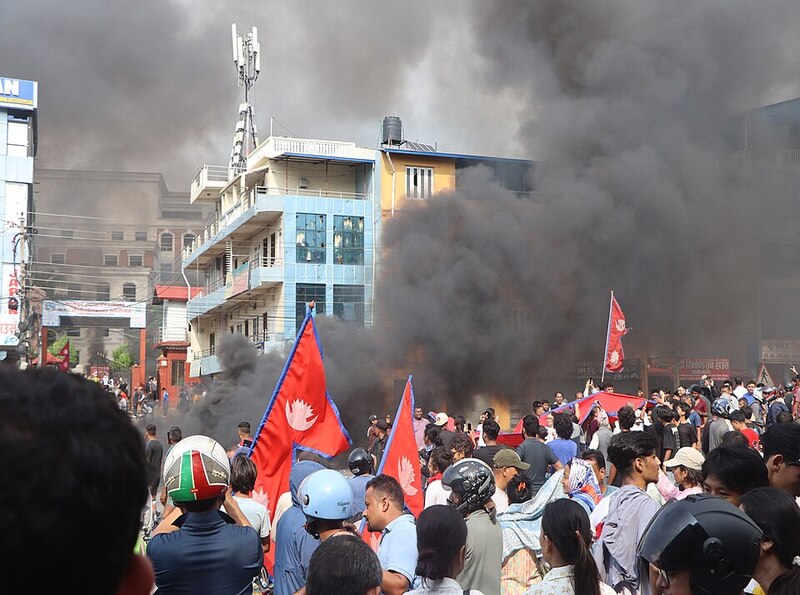
Narayan Srivastava examines Nepal’s 2025 political upheaval as a warning signal for democracies worldwide.From a sweeping social-media ban to youth-led protests that brought down a government, Nepal reveals how digital connectivity, declining trust in institutions, and demographic pressures are reshaping political power. This article situates Nepal within a broader global pattern from South Asia to Europe where digitally mobilized citizens are challenging elite governance structures. The piece argues that these movements are less about ideology and more about systemic failure, offering critical lessons for democratic resilience, international security, and the future of governance in the digital age.
From Kyiv to Taipei: Why the Russian-Ukrainian War Matters in the Indo-Pacific
Alexander Morrow and Nataliia Dikalchuk explain why Ukraine’s fight matters far beyond Europe. The war is reframing deterrence in the Indo-Pacific, prompting Taiwan to prioritize self-reliant defence and pushing China to reassess Western unity. Their analysis highlights how democratic resilience in one region shapes security calculations in another.