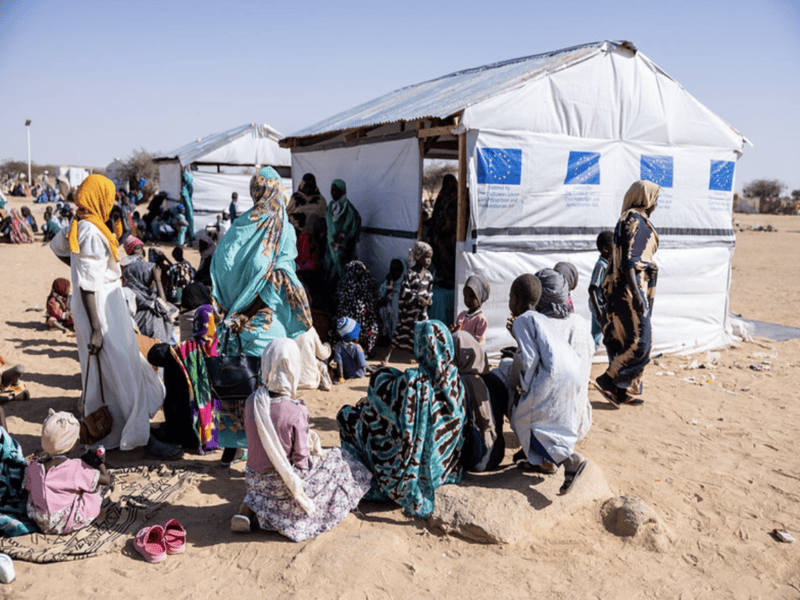
More than 17.1 million women and girls in Sudan are estimated to be in need of assistance, since fighting broke out between the Sudanese Armed Forces (SAF) and the Rapid Support Forces (RSF) in April 2023.The conflict has evolved into one of the world’s most severe humanitarian crises. However, this is not only a humanitarian crisis, but also a security concern. The conflict in Sudan demonstrates how the erosion of civilian protection, governance, and accountability during war can create a security vacuum that increases women’s vulnerability to conflict-related sexual violence (CRSV). The consequences of CRSV extend beyond individual survivors, contributing to displacement, social fragmentation, and weakened civilian resilience. Sudan, therefore, demonstrates why protecting women from CRSV should be understood not only as a Women, Peace, and Security (WPS) obligation for NATO, but also as a broader component of conflict prevention, civilian protection, and human security.
The Security Vacuum and Women’s Vulnerability to CRSV
When conflict breaks out and law enforcement is weakened, this often creates a security vacuum, a situation characterized by inadequate security measures and increased civilian vulnerability. In Sudan, the erosion of civilian protection, accountability, and access to justice has created an environment in which women and girls face increased vulnerability to conflict-related sexual violence (CRSV). The UN Human Rights Office has confirmed 546 cases of CRSV across 16 of the 18 states of Sudan from the onset of the conflict to mid-April 2026. This impacted at least 838 victims, the majority of whom were women and girls. Most of the verified cases were committed by men in RSF uniforms and its affiliates, as well as members of the SAF and other affiliated security actors.
According to the report, these figures represent only a fraction of the true magnitude of incidents, as underreporting has obscured the true scale of sexual violence committed. In such crises, not only are civilians targeted, but the systems put in place to protect civilians and enforce the law can also collapse. Insecurity, limited protection mechanisms, disrupted communications, fear of retaliation, stigma, and a non-functioning justice system have all contributed to underreporting. When these protective structures weaken, perpetrators can act with greater impunity while survivors have fewer avenues to seek protection or justice.
Women’s vulnerability to CRSV also does not end when they flee active fighting. The UN report finds that sexual violence has accompanied both the geographic spread of the conflict and displacement journeys. As civilians are displaced, the lack of access to essential services, justice, and protection mechanisms can leave women and girls vulnerable to sexual violence not only in their areas of origin but also along displacement routes. The security vacuum therefore does not simply expose women to violence; it also removes many of the mechanisms that could prevent, report, or respond to that violence.
How CRSV Deepens Insecurity
The implications of CRSV do not end with the immediate violence survivors experience. CRSV can have consequences for families, communities, displacement, and social cohesion, meaning its effects can extend into the broader civilian security environment. Gender based violence is both a catalyst for displacement and a consequence of it. A 2024 study of migrants crossing from Sudan to South Sudan found that Sexual Gender Based Violence (SGBV) was a significant driver of migration, with 53.1% of participants identifying it as a major factor in their decision to migrate. This demonstrates how gender-based violence can both result from and contribute to displacement, creating a cycle in which insecurity drives women from their homes while displacement exposes them to new risks.
CRSV also causes social fragmentation, as perpetrators aim to destroy community bonds, using rape as a tool of domination and control. Survivors are shunned from their communities, and many are forced to raise children born out of rape. They often get excluded from education, employment, and other essential aspects of life. As a result, many women are pushed into poverty further increasing their vulnerability.
Why This Is a NATO Security Concern
Sudan demonstrates why NATO’s WPS agenda should be understood as part of a broader security analysis, particularly regarding civilian protection, conflict prevention, and resilience. NATO’s WPS Agenda considers CRSV a security issue, as it can threaten societal resilience and regional stability. Therefore, the alliance is committed to preventing and responding to CRSV as part of its broader security policies.
For NATO, this means looking beyond individual incidents of sexual violence and considering the conditions that allow CRSV to occur and the consequences that follow. NATO’s WPS policy recognizes the importance of integrating gender perspectives to identify security risks and vulnerabilities, understand conflict environments, and develop effective responses. In Sudan, the increased displacement, vulnerability to CRSV, and erosion of civilian protection are interconnected indicators of a deteriorating security environment. Therefore, protecting women from CRSV is not separate from broader efforts to prevent conflict and strengthen civilian resilience; rather, it is part of them.
This connects directly to two pillars of NATO’s WPS agenda: prevention and participation. Women’s participation in peace and security processes can strengthen conflict prevention by ensuring that vulnerabilities affecting civilian populations are identified in the first place. Women should not be viewed merely as vulnerable populations to protect but also as important security actors who possess the knowledge of risks within their communities. At NATO’s July 2026 Ankara Summit, the WPS agenda was reaffirmed, highlighting the importance of women’s participation in peace and security. This is particularly relevant in contexts such as Sudan, where women can provide perspectives on threats that may otherwise be overlooked.
For example, during ceasefire talks regarding Sudan that took place in Switzerland in 2024, a group of women identified an issue that had been overlooked: access to telecommunications infrastructure. Many telecommunications hubs in Sudan were occupied by armed groups that asked for sexual favors in exchange for access. Despite this example demonstrating the importance of women’s participation in peace and security processes, the Executive Director of UN Women, Sima Bahous, stated that “in Sudan, not a single Sudanese woman took part in the peace negotiations.”
Meaningful participation also depends on whether Women-Led Organizations (WLOs) have the means to continue their work during conflict. In conflict-affected countries, less than 0.5% of international development aid goes to women’s organizations. In Sudan, WLOs play a crucial role in responding to SGBV, yet they continue to face barriers including limited funding, a lack of donor flexibility, exclusion from strategic decision-making, and limited coordination mechanisms. One WLO stated, “We contribute essential local knowledge, established trust, and firsthand experience from the front lines (…) However, we are frequently excluded from critical decision-making spaces.” This creates a gap between the vulnerabilities women face during conflict and the actors who have the local knowledge and established relationships to identify and respond to them.
For NATO, Sudan demonstrates why women’s participation should be considered part of conflict prevention, rather than a separate humanitarian concern. Women’s organizations can help identify emerging vulnerabilities, support civilians affected by violence, and provide information that may otherwise be missed by security actors. Strengthening these organizations can therefore contribute to NATO’s prevention efforts while also supporting the protection of women from CRSV. Protecting women from sexual violence and ensuring their meaningful participation in conflict prevention should not be treated as separate objectives. Both contribute to NATO’s broader goal of preventing insecurity, protecting civilians, and building resilient societies.
Photo: “Darfur’s survivors: healing their invisible scars” (2026), by Joris Bolomey via EU Civil Protection and Humanitarian Aid. Licensed under Creative Commons.
Disclaimer: Any views or opinions expressed in articles are solely those of the authors and do not necessarily represent the views of the NATO Association of Canada.