In 2018, our Editor-in-Chief wrote an article titled “What’s the Deal with the F-35”, examining the fraught acquisition of the F-35 Lightning II and concluding that it was a missed opportunity for Canada and its allies. Now, eight years later, Canada again finds itself in a dilemma over the procurement of the same platform. This time, however, the cost of Ottawa’s indecision is much higher. Prime Minister Mark Carney has asserted a vision of Canada as a beacon of multilateralism in a changing international order, yet his administration runs the risk of developing a say-do gap within NATO. Without a material commitment to the capabilities that underpin deterrence, Canada’s middle power ambitions become declarative rather than deployable, as multiple other NATO allies such as Finland and Denmark have effectively procured and operationalized advanced fighter jets such as the F-35. Recent indications that Ottawa may opt for a mixed fleet that includes the Swedish Saab JAS 39 Gripen exemplifies Canada’s strategic hesitancy, reopening a settled decision that continues to delay the modernization of Canadian airpower and deepens the gap between Canada’s intent and its actions.
The CF-18 Hornet has proven itself to be a reliable, adaptable, and effective aircraft over the course of its forty-six-year tenure as the backbone of the RCAF. From the Gulf War to the prosecution of ISIS in Syria, the Hornet has served the needs of Canada and its allies long past its expected shelf-life. As early as 2010, the Stephen Harper Government decided to retire the aging platform and opted to purchase the new and advanced F-35 from Lockheed Martin. This decision was reversed in 2015 by Justin Trudeau, who campaigned against the aircraft’s high-costs and pledged to conduct a thorough review of alternatives. However, in 2022, Canada completed the review and announced that it would indeed purchase 88 F-35A fighter jets.
Unfortunately, this was not the end of Ottawa’s fighter-jet woes. As a result of President Donald Trump’s willingness to wield American economic power as a tool of persuasion, the Carney administration decided to once again review the acquisition of the F-35 fleet. In doing so, Ottawa has taken a strategic step backward by prolonging the modernization of its military capabilities. While many Canadians are indeed reluctant to support American industry, the reputational and operational cost of continued indecision will be counterproductive for Canada; a country that until recently, has lagged behind its NATO allies in terms of defence-spending by GDP. While Canada has taken steps to remediate this issue under the leadership of Mark Carney, the lack of a material commitment to the capabilities that underpin deterrence threatens to dilute the value of Canada’s word.
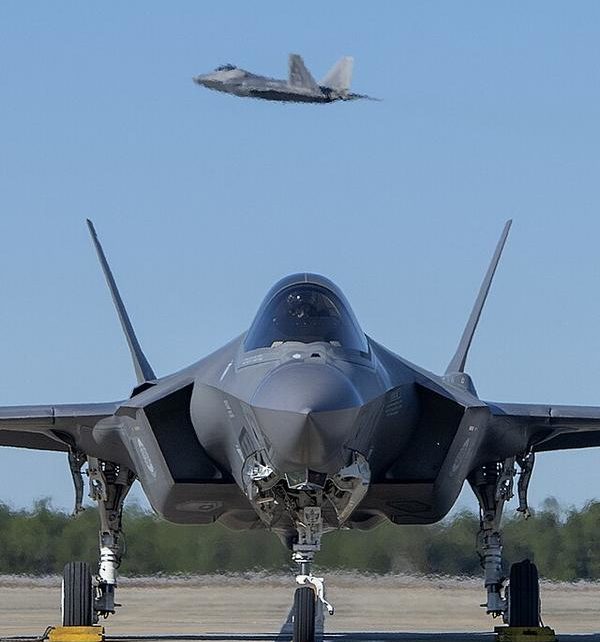
The rhetoric in question was displayed to the international community at the 2026 Davos Economic Forum where in his Special Address, Prime Minister Carney spoke quite poignantly about a “rupture in the international order” which Canada has responded to “not by relying on the strength of [its] values, but the value of [its] strength”. If this is indeed the mindset of Ottawa, the current F-35 review is counterintuitive, as it is inherently a political reaction to the changing values of Washington which may lead to the acquisition of a less-advanced aircraft that undermines Canadian airpower. The JAS Gripen, unlike the F-35, is not considered fifth-generation and is therefore a step-backwards in terms of technological abilities, specifically when it comes to data fusion and radar absorption. The F-35 is designed to serve as a node within a network of battlefield information, meaning the aircraft can synthesise, interpret, and display data from drones, ships, and ground sensor systems, enhancing the pilot’s operational awareness. By jettisoning these technological advantages due to political optics, Canada is effectively prioritizing values over strength.
The unpredictability of the Trump administration is not irrelevant to Canadian decision-making. However, the 2022 agreement requires the purchase of at least 16 F-35s, making this a question of whether to adopt a mixed fleet. A recent report in the National Post suggests that Ottawa is seriously considering purchasing the Swedish Saab JAS-39 Gripen to augment the F-35, diversifying Canada’s defence portfolio in light of tensions with the United States. The Swedish proposal would allow for the aircraft to be produced and maintained in Canada, which is in line with the Prime Minister’s emphasis on improving Canada’s domestic defence industry. At a time when reliance on the United States is politically unattractive, a mixed fleet exemplifies the strategic pivot of Canada, at least at the surface level.
There is a reason, however, that Ottawa has twice chosen the F-35. In 2021, Radio Canada published leaked results from the Trudeau government’s aforementioned review, where on military capabilities, the F-35 received a score of 57.1 points out of 60, or 95%, while the Saab JAS-39 scored 19.8 points out of 60, equivalent to 33%. The question therefore becomes, are the optics of a diversified fleet worth the purchase of an inferior aircraft? To answer this question, it is necessary to understand what exactly these jets will be doing. As the Arctic continues to draw international attention, friendly or otherwise, Canada must be able to protect North America while enforcing the sovereignty of both itself and NATO allies. The F-35 is the most interoperable aircraft for this task, seamlessly fitting into the bilateral architecture of NORAD, and with fellow Arctic NATO states such as Finland and Denmark, enhancing the ability to share data and conduct joint-exercises. Moreover, the technological sophistication of the F-35 seamlessly integrates with advanced sensors and radars, strengthening Canada’s ability to detect, track, and respond to advanced air and missile threats.
At a time when Canada seeks to emerge as a leader amongst its allies, it is necessary to make strategic decisions that ground credibility in capability. A mixed fleet challenges the interoperability of the Canadian military with itself, by complicating maintenance and training structures while creating the strategic dilemma amongst military leaders over “when to use the good planes”. While the argument for diversification rests upon Canada’s commitment to multilateralism, the reactionary purchase of a less effective aircraft ultimately signals strategic indecision and a willingness to prioritize political appearances over concrete commitments to defence.
Photo Credits: https://commons.wikimedia.org/wiki/File:F-35A_Lightning_II.jpg
Disclaimer: Any views or opinions expressed in articles are solely those of the authors and do not necessarily represent the views of the NATO Association of Canada.