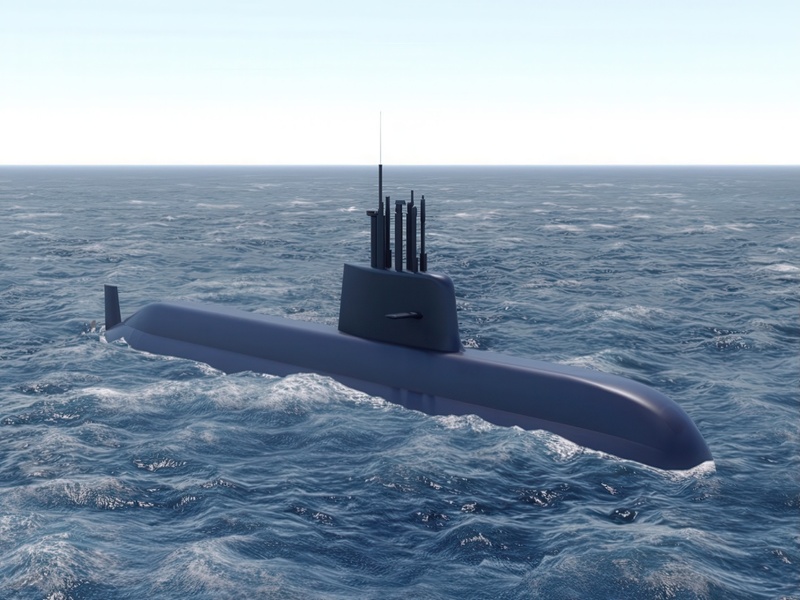
Canada’s upcoming submarine replacement decision will shape the country’s maritime strategy for decades to come. Under the Canadian Patrol Submarine Project (CPSP), Ottawa is evaluating proposals to replace the four aging Victoria-class submarines that currently constitute the Royal Canadian Navy’s entire undersea capability. While the competition may be framed narrowly as a technical procurement decision, the implications extend far beyond fleet modernization. As the Royal Canadian Navy’s (RCN) own doctrine Leadmark 2050 states, submarines are the “ultimate warfighting capability” shaping how a state monitors its maritime approaches, contributes to allied operations, and projects influence across distant theatres. In this context, South Korea’s bid, led by Hanwha Ocean and centred on the KSS-III submarine, represents more than an industrial proposal. It presents Canada with a rare opportunity to deepen bilateral and defence ties with one of the Indo-Pacific’s most capable middle powers while also allowing Canada to embed itself more firmly within the region’s evolving security architecture. If approached strategically, this procurement could anchor a long-term Canada-Republic of Korea (ROK) defence partnership.
In order to understand the urgency of Canada’s submarine replacement, it is necessary to examine the condition of the existing fleet. The Victoria-class submarines were originally built for the British Royal Navy between 1986 and 1992 before being acquired by Canada in 1998. Since entering Canadian service, the fleet has struggled with chronic maintenance issues and limited operational availability. Although the Victoria-class Modernization Project has extended their lifespan (to about between 2034 and 2040), these upgrades have not resolved the structural limitations of vessels designed more than four decades ago. The practical consequence has been a fleet whose readiness remains severely constrained, with typically only one submarine available for deployment at any given time. For a country with the world’s longest coastline and maritime interests spanning the Atlantic, Pacific, and Arctic, this situation is increasingly untenable. Submarines can track foreign naval activity, monitor critical shipping routes, and operate undetected in regions where surface vessels would be exposed. These functions are becoming more important as the strategic environment deteriorates. Russia has significantly expanded its activity across the Arctic and North Atlantic, while China has declared itself “a near-Arctic state” and continues to militarize the Western Pacific. In this context, maintaining an effective undersea capability is central to Canada’s ability to monitor its own waters and contribute meaningfully to allied deterrence. As climate change accelerates the opening of northern sea routes and geopolitical competition intensifies across both the Arctic and Indo-Pacific, the challenge is how quickly a replacement fleet can be introduced before Canada’s existing capability declines beyond recovery.
Within this context, South Korea’s KSS-III submarine becomes particularly significant. The platform represents the culmination of South Korea’s indigenous submarine development program and has been in operational service with the ROK Navy since 2021. Hanwha Ocean has indicated that it could deliver four submarines to Canada before 2035, a timeline that aligns closely with the window in which Canada must transition away from the Victoria-class fleet. In practical terms, this reduces the risk that Canada will experience a “capability gap” in its undersea capabilities.
Technically, the KSS-III is among the most advanced conventional submarines currently in production. The platform combines fuel-cell air-independent propulsion with advanced lithium-ion battery systems, enabling extended submerged operations while maintaining a low acoustic signature. These technologies allow the submarine to remain underwater for more than twenty days without surfacing, significantly improving endurance compared with earlier diesel-electric designs. The submarine also incorporates modern sensors and combat systems designed to support a broad range of missions, from anti-submarine and surface warfare to intelligence collection and special operations. This versatility would enable Canada’s submarine fleet to monitor northern waters, support Atlantic operations, and integrate with allied naval forces in the Pacific.
Perhaps even more important is the scale and ambition of the industrial package accompanying South Korea’s proposal. Major defence procurements rarely involve the acquisition of platforms alone; they also determine where maintenance expertise, technological knowledge, and industrial capacity will reside over the decades-long lifespan of those systems. Hanwha Ocean has proposed an extensive network of partnerships with Canadian companies designed to integrate the submarine program into the country’s defence-industrial base. These arrangements include a sustainment partnership with Babcock Canada alongside agreements with firms such as Algoma Steel, MDA Space, Telesat, and CAE. The proposal also includes research collaborations with Canadian universities and technical institutions, suggesting a longer-term effort to cultivate expertise within Canada. According to KPMG, the industrial package could also generate roughly 200,000 job-years of economic activity across Canada’s defence sector over the coming decades.
Moreover, the submarine competition has already begun to produce effects beyond the procurement process itself. Over the past year, the CPSP appears to have accelerated the development of a more structured defence relationship between Canada and South Korea. In October 2025 the two governments launched the Canada-ROK Security and Defence Cooperation Partnership, a framework designed to expand military cooperation and institutionalize bilateral defence dialogue. The partnership establishes regular “2+2” meetings between foreign and defence ministers while creating mechanisms for joint research, defence materiel cooperation, and expanded military-to-military engagement. More recently in February of 2026, Canada and South Korea signed a classified information-sharing agreement. Together these initiatives suggest that the submarine competition is catalysing a more institutionalized defence relationship between Ottawa and Seoul.
For Canada, this evolving partnership aligns well with the ambitions outlined in its 2022 Indo-Pacific Strategy. Ottawa has repeatedly emphasized the importance of strengthening security partnerships across the region. In this sense, the Korean submarine proposal offers Canada an opportunity to anchor its Indo-Pacific strategy in a tangible defence relationship.
Skeptics will understandably raise questions about integrating a non-NATO submarine platform into Canada’s alliance framework. Familiarity is valuable in defence procurement, especially where interoperability and logistics are concerned. However, it does not necessarily prevent the adoption of systems developed outside the alliance. In practice, NATO interoperability depends far more on compatible communications systems, weapons integration, and shared operational doctrine than on where a platform was built. These requirements can also be incorporated into procurement contracts from the outset. To highlight this point further, NATO allies already operate equipment produced outside the alliance’s traditional industrial base. Poland, for example, has recently integrated South Korean K2 tanks and K9 artillery systems into its armed forces while remaining embedded within NATO’s framework. Selecting a South Korean submarine would therefore not require Canada to abandon its Atlantic alliances. Instead, it would reflect an acknowledgment that Canada’s security interests increasingly extend beyond the Euro-Atlantic region and that its defence posture must adapt accordingly.
For these reasons, South Korea’s bid for the Canadian Patrol Submarine Project should be evaluated not only as a procurement proposal but as a strategic opportunity. The KSS-III offers a credible path toward renewing Canada’s undersea capabilities within a realistic timeframe while supporting the development of a stronger domestic sustainment ecosystem. At the same time, the diplomatic momentum surrounding the proposal suggests that the submarine project could serve as the foundation of a deeper Canada-ROK defence partnership. At a time when Canada is attempting to establish a more credible presence across the Arctic, Atlantic, and Indo-Pacific simultaneously, opportunities to align operational requirements with broader strategic objectives are rare and this submarine decision arguably represents one such opportunity.
Defense Acquisition Program Administration (DAPA), KSS-III Batch-II, 12 July 2024, Wikimedia Commons, Korea Open Government License (KOGL) Type 1. https://commons.wikimedia.org/wiki/File:KSS-III_Batch-II.jpg
Disclaimer: Any views or opinions expressed in articles are solely those of the authors and do not necessarily represent the views of the NATO Association of Canada.