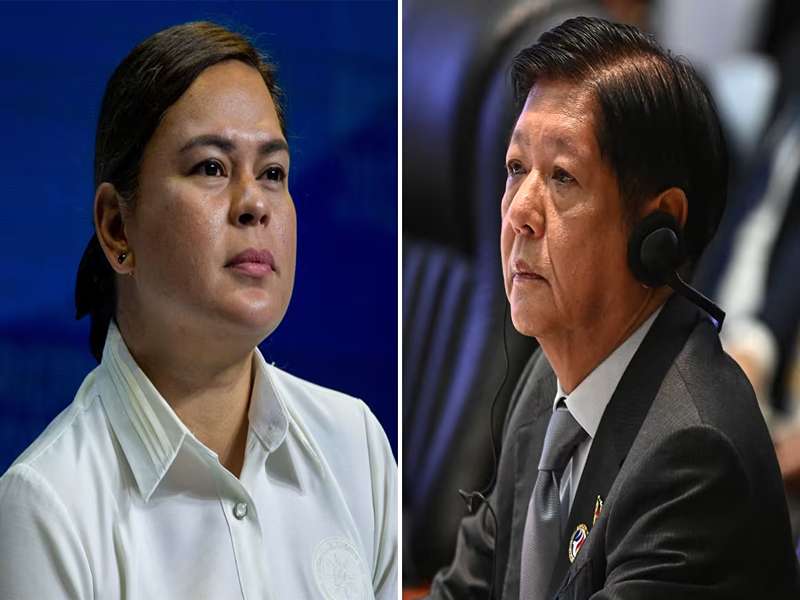
Amidst the growth of an increasingly assertive China, exemplified by its illegal annexation of territory in the South China Sea and heightening military and political pressure on Taiwan, the Philippines is stuck between territorial disputes within the Indo-Pacific and great-power competition. The Philippines’ political trajectory has implications not only for its own maritime security, but for both regional and global stability. Within this high-stakes environment, the political tensions between President Ferdinand ‘Bongbong’ Marcos Jr. and Vice President Sara Duterte-Carpio have taken on geopolitical significance. Duterte and Marcos’ joint campaign in 2021 demonstrated what many experts call a “marriage of convenience”, where, beyond interests in obtaining power, the two shared little in common, including foreign policy. As their personal rivalry plays out domestically, the strategic orientation of the Philippines towards China and its Western allies lies in the balance. Understanding these domestic political dynamics is increasingly crucial for the Philippines’ regional partners.
Continuing her father’s legacy on foreign policy, Vice President Sara Duterte has been described by experts as “populist, without the aftertaste”. Under the Presidency of her father, former President Rodrigo Duterte, the Philippines’ relationship with the U.S was consistently undermined in favour of relations with Beijing. His hands-off approach to the South China Sea allowed hundreds of Chinese boats into the Philippines’ claimed exclusive economic zone and enabled China’s increasingly aggressive use of fleets to turf Philippine fishers off rich fishing grounds during his presidency. While Sara Duterte has denied “pro-China allegations”, critics point to her continued refusal to support the country’s legal victory in the West Philippine Sea, her silence about China’s aggression and incursions in the region, and criticisms of Marcos’ foreign policy direction, as contrary to Philippine sovereignty. As House Deputy Majority Leader Ortega V put it, “As China violates our territory, the vice president’s voice is often silent. And if there is a statement, it is blaming the leadership. That’s not neutrality; that’s evasion.”
In contrast to his predecessor and vice President, President Marcos strengthened the Philippines’ relationship with Western allied countries to push back on Chinese influence. He has launched transparency initiatives that expose China’s illegal aggression in the South China Sea, strengthened defence cooperation with the U.S, and began exploring military arrangements with Western allied countries. Despite ASEAN’s neutrality and non-alignment norms, the Philippines, under Marcos, has undertaken something that no other ASEAN member has dared to do: undermine ASEAN neutrality and actively enforce the norms of a rules-based maritime order in light of China’s aggression.
The cracks within the Philippines’ presidential alliance grew larger over the course of two years of disagreements over power sharing and foreign policy. While Duterte wanted the influential defence portfolio; Marcos gave her education, an early sign he was wary of letting his Vice-President build up her power base. Duterte later resigned from the Marcos cabinet in June as Education Secretary and head of an anti-insurgency body. Very quickly, tensions escalated with the detentions of Duterte’s chief of staff on charges of interfering in corruption investigations against Duterte.
With Duterte remaining in office after a failed impeachment bid the direction of the country’s alignment remains unclear. Marcos’ pivot towards the West is proven through his decisions to expand the Enhanced Defence Cooperation Agreement (EDCA) to boost American military presence, increased joint military exercises with the U.S, his participation in minilateral security arrangements with the “Squad” (U.S, Australia, Japan), and his raising concerns about China’s destabilizing actions. Marcos’ actions have created greater opportunities for Western allies to deepen coordination with the Philippines on Indo-Pacific security, despite ongoing political divisions. The Philippines is a centre for regional and global trade and exchange. It is a critical gateway of international shipping and air lanes as a result of its vast inland straits and numerous harbours, making it strategically and economically important. Just as China’s rising assertion as a global power has systemically threatened NATO members through coordinated disinformation campaigns with Russia to erode trust in democratic institutions, so too the internal fragmentation in the Philippines as a key Indo-Pacific nation directly affects NATO’s strategic vulnerabilities.
NATO has long had concerns over the South China Sea, has done Freedom of Navigation Operations (FONOP), and signed deals with Japan to address them. These actions have been challenged by China, but NATO allies have pushed on regardless, in spite of the fragmentation of the Philippines’ leadership. Key members of NATO, such as France and the United Kingdom, have already begun undertaking increased initiatives to patrol the South China Sea. The Franco-English joint patrol has demonstrated these NATO members’ intention to uphold its engagement with the Philippines and the Southeast Asian region more broadly. They have demonstrated their continued commitment to protecting the free passage through the strategic sea lines of communications in Southeast Asia pursuant to international maritime law. Moreover, the U.S and Japan have also formulated a defence pact based on shared concern for China’s destabilizing actions in the region. Both actions by NATO members faced scrutiny from Beijing, ranging from vocal warnings to military warship and fighter jets patrols to shadow the operations. Despite resistance from China and a complicated fragmentation of Philippine leadership, more engagement with the Philippines is necessary to deter further aggression.
With Duterte and her family dynasty’s interests retaining strong support across the Southern Philippines, combined with her open challenge towards President Marcos’ foreign policy direction, a reversal of the Philippines’ historically Western-leaning alignment cannot be ruled out. For NATO members, this has stirred up uncertainty regarding the continuity of joint security initiatives, and increases the risk of China exploiting intra-elite conflict to regain influence in the Philippines, weakening regional resistance to its territorial claims, or framing Western alignment poorly. Already actively engaged in political interference across NATO countries, China seeks to frame Western engagement as unstable, ultimately inhibiting Philippine sovereignty over its territorial waters. Moreover, the ability of NATO members to engage effectively may be burdened by the potential for the Trump administration to disengage from Southeast Asia, leaving the region without a counterweight to China. However, regardless of political dynamics in the West, strategic engagement by NATO depends on open cooperation from Philippine leadership – one that has been significantly challenged amidst the Duterte-Marcos fallout.
Ultimately, it is the Philippines’ internal conflict that will shape the extent to which NATO members can continue to uphold the Indo-Pacific’s rules-based order, especially as China’s assertiveness has raised concerns for both the Philippines and NATO members alike. Thus, the Philippines’ domestic political stability has now become increasingly significant for NATO’s broader strategic considerations – insofar as Western allies want to maintain alignment with the region.
Philippine Vice President Sara Duterte and President Ferdinand Marcos Jr. (2024), Reuters/Getty Images
Disclaimer: Any views or opinions expressed in articles are solely those of the authors and do not necessarily represent the views of the NATO Association of Canada.