During the Wales summit in 2014, NATO members formalized a commitment to move toward a 2% spending target within a decade. The Russian illegal annexation of Crimea was a key factor in this decision. It was also an attempt to address America’s disproportionately large investment in the alliance. 10 years later, in 2024, 8 countries, including Canada, have failed to reach this goal. Defence has remained a neglected sector of public spending among several allies. In the meantime, the Russian threat augmented, as evidenced by the full-scale invasion of Ukraine. American frustration with low European and Canadian defence spending did not disappear. During his second presidential term, Donald Trump claimed he would not defend NATO allies unless they increased their defence spending. He has also repeatedly cast doubt on the American commitment to Article 5 – a foundation of NATO’s collective security, which guarantees that an attack on one member will be considered an attack on all. Now more than ever, the future of the alliance is contingent upon a collective prioritization of defence. The question is: are NATO members ready to match their rhetoric with resolve, or will they risk watching the alliance lose its preeminence?
Defence sector has regained government attention over the past three years. The Russian invasion of Ukraine in 2022 was a key factor in this shift. Canada and Europe stepped up their capabilities and increased aggregate military expenditure from 1.66% to 2.02% of GDP. Notably, the U.S. responded to the Russian threat with its already existing resources. American defence spending as a share of GDP has actually decreased since 2021. Another milestone came with the consideration of Donald Trump’s rhetoric. Following his re-election, the U.S. president’s complaints about insufficient financial contributions of NATO members prompted the alliance’s agreement to achieve 5% spending goal before 2035. This decision reflects a strengthened commitment to defence and security on the part of all allies, but especially those who currently spend the least on defence. They will need to undergo the largest relocation of public funds toward military expenditure.
Europe and Canada appear determined to strengthen their militaries. In June 2025, Canada’s Prime Minister Mark Carney committed to reaching the 2% defence spending target in 2025. It is an improvement on the Trudeau government’s promise to achieve the same result by 2032. In May 2025, Chancellor Friedrich Merz announced that Germany intends to build the “strongest conventional army in Europe”. The country will increase its standing force, modernize aging military equipment, and develop defence infrastructure. Other European leaders and the EU as a whole have made similar commitments in recent months. These are bold decisions and, if executed, will make Europe and Canada less dependent on American security guarantees. They will also foster a more balanced cost-sharing within the alliance.
This task is, however, is much easier said than done. Both Canada and Europe are highly reliant on the American defence manufacturers. In the last five years, the EU imported 64% of its military equipment from the U.S. Mark Carney recently claimed that American firms produce about 80% of Canada’s defence procurement. This dependency creates two main vulnerabilities. First, defence money leaves the importing countries without generating opportunities for domestic economic growth. As a result, investment in defence equipment and machinery remains unprofitable. Second, reliance on America leaves Europe and Canada without domestic replacements for critical defence equipment. This means that the European and Canadian ability to defend themselves and their allies is contingent upon American production of military equipment and permission to use it in the way the EU and Canada deem necessary.
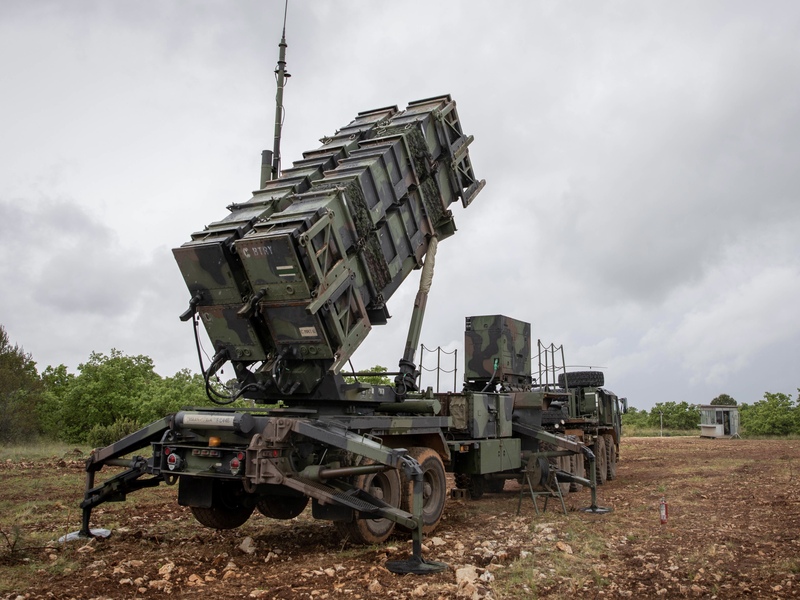
One example of such technology is the American MIM-104 Patriot – the only air defence system capable of intercepting ballistic missiles. It has been instrumental in minimizing civilian casualties in Russian attacks against Ukrainian cities. Neither other NATO members nor Ukraine produce systems with comparable capabilities. The U.S. itself is running low on them. In July 2025, this prompted the American decision to halt deliveries of Patriots to Ukraine. Europe and Canada could not substitute the U.S. and were unable to protect millions of civilians from intensifying Russian attacks. That even the U.S. does not possess sufficient Patriots to deter attacks in both Ukraine and the Middle East indicates that NATO as a whole lacks the capacity to respond effectively to adversary attacks.
The European and Canadian lack of self-sufficiency has implications beyond Ukraine. Senior military officials from several NATO countries have warned about the possibility of a Russian invasion of the EU. Estimates vary, but most experts agree it could happen within the next few years. Even if Russia does not resort to conventional invasion, hybrid warfare remains probable. NATO is not prepared for either scenario. Russia outcompetes the alliance in drone and missile production – critical instruments of modern-day warfare. None of the NATO members are effectively integrating the technology that dominates the battlefield in the Russo-Ukrainian war. If attacked, Europe would lack adequate defensive capacity. Canada is also not shielded from the Russian threat. Russia actively militarizes the Arctic and seeks to expand its territorial holdings in the region. If granted, these claims would overlap with Canada’s continental shelf and border the country’s exclusive economic zone. Hence, Canada should not dismiss Russia as a remote threat, given the risks it poses at Canada’s doorstep.
Europe and Canada must respond by boosting their production of defence equipment. The growth of Ukraine’s defence industry in the last three years demonstrated that it is possible to achieve rapid progress, especially in less time-consuming and more affordable sectors such as drone manufacturing. NATO should cooperate with Ukraine’s technological defence sector and foster mutually beneficial partnerships with the country’s defence companies. Ukraine has up-to-date knowledge of modern warfare needs and can test new technology in action. NATO should take advantage of it to uphold its military preparedness. Projects such as Canada’s involvement in Security Action for Europe (SAFE), the EU initiative aimed at boosting European industrial defence production, are also promising. Such agreements diversify procurement and enable an increase in the manufacturing of military equipment in the alliance. This ensures that greater defence spending translates into meeting NATO’s operational goals without causing cost inflation.
The increase in EU and Canada’s defence spending is a necessary response to a climate of heightened global insecurity and America’s growing scepticism about multilateralism. It is a way to ensure peace through deterrence, not a road toward war. Undoubtedly, greater investment in the military will require making trade-offs in other sectors of the economy. These could be minimized by developing domestic capabilities. It will yield higher returns on investment and long-term economic growth. It may also lead to the development of dual-use technologies with civilian applications and create export potential beyond the military realm.
Photo: U.S. Army Patriot Missile System – the only air defence system globally capable of intercepting ballistic missiles. Photo by Sgt. Alexandra Shea, U.S. Army Europe and Africa. Accessed via Wikimedia Commons.
Disclaimer: Any views or opinions expressed in articles are solely those of the authors and do not necessarily represent the views of the NATO Association of Canada.