


NATO Association of Canada
The mission of NATO Association of Canada is to promote peace, prosperity, and security through knowledge and understanding of the importance of NATO.
We strive to educate and engage Canadians about NATO and NATO’s goal of peace, prosperity and security. NATO Association of Canada ensures that we have an informed citizenry able to contribute to discussions about Canada’s role on the world stage.
As a leading member of the Atlantic Treaty Association (ATA), NATO Association of Canada has strong and enduring ties with sister organizations in many of the alliance countries, as well as members of NATO’s “Partnership for Peace” and “Mediterranean Dialogue” programmes. The NAOC has had a leading role in the recent transformation and modernization of the ATA, and helped to create and develop the Youth Atlantic Treaty Association (YATA).
The NAOC has strong ties with the Government of Canada including Global Affairs Canada and the Department of National Defence. We are constantly working to create and maintain relationships with international organizations such as the World Bank Group, the European Bank of Reconstruction and Development, NATO Headquarters, the International Criminal Court, and other prominent international NGOs and think tanks.
Related Articles
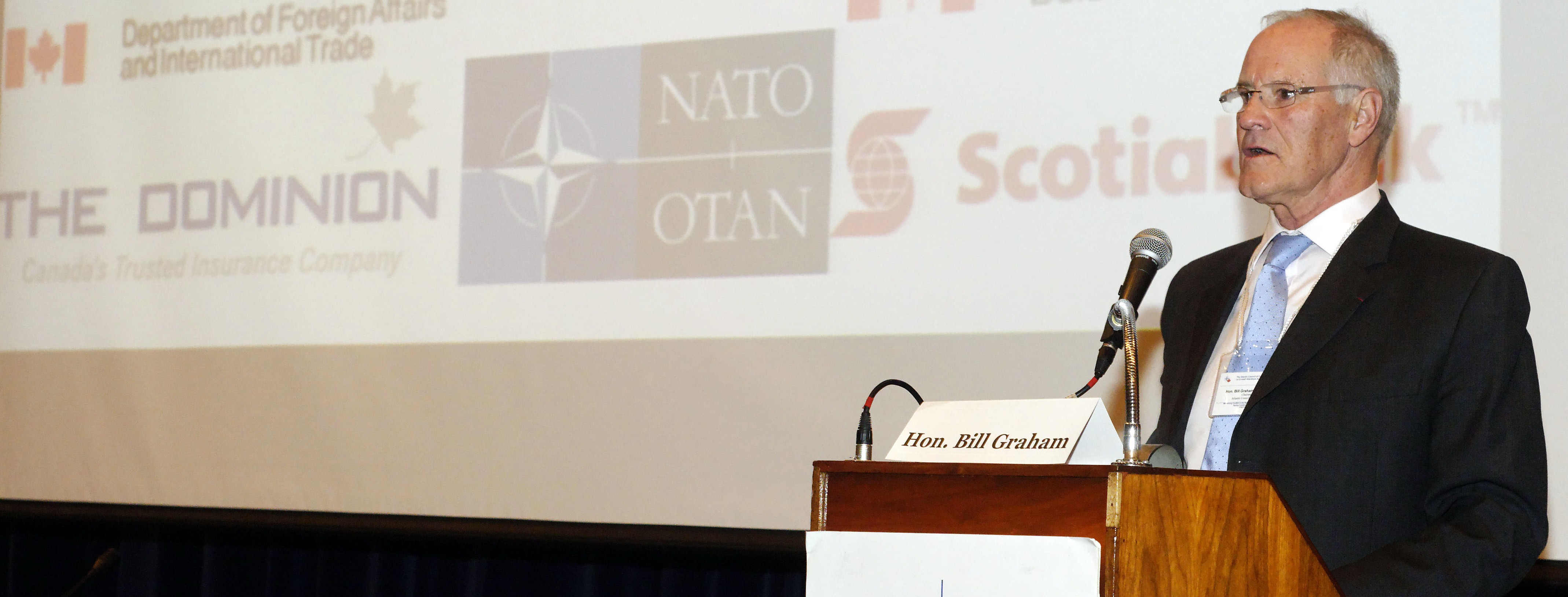
Conference: Minimizing Conflict in the Race for Natural Resources
Posted on Author NATO Association of Canada
The NATO Council’s annual Spring Conference was held on April 8, 2010. This year’s topic was ‘Minimizing Conflict in the Race for Natural Resources: Securing Economic Stability in the 21st Century’, looking at different issues pertaining to energy security from geopolitical, economic and military standpoints. Conference attendees were offered an in-depth look at many different Read More…

Strange Bedfellows, Real Consequences: What do Moscow-Beijing-New Delhi’s SCO Optics Mean for NATO and Canada?
Posted on Author Narayan Srivastava
Narayan Srivastava highlights how NATO’s relevance in today’s multipolar world depends on engagement with the Global South. From safeguarding maritime chokepoints to strengthening resilience in energy and trade, actors like India, Brazil, and the Gulf states are emerging as indispensable partners. By expanding its partnership models and leveraging shared interests, this article explores how NATO can reinforce its role as the global custodian of stability, ensuring that the Alliance not only adapts to new realities but leads in shaping them.
Canada’s Stance on NATO Enlargement
Posted on Author Emma Zhang
Introduction Since its inception in 1949, NATO has grown from 12 to 32 members, a process formally known as enlargement. In accordance with Article 10 of the North Atlantic Treaty, membership is open to all European countries so long as they commit to NATO’s principles and meet the Alliance’s requirement for defence spending, along with Read More…