Following the 2025 NATO summit in The Hague, Canada joined allies in pledging that 5% of its annual GDP by 2035 would be allocated to defence, which led to an immediate injection of capital into defence-related spending. The geopolitical reality of the day, marked by the fading of the international rules-based order, has exposed a profound capability gap. This gap is the main driver of the DIS, as Canada seeks to establish a more robust role with NATO. While Canada’s projected $180 billion investment in defence by 2035 is historic, the Canadian Armed Forces (CAF) currently lacks the domestic industrial capacity to quickly and effectively increase its operational readiness. Decades of complicated, slow-moving procurement have left the CAF highly reliant on volatile international suppliers.
The release of the Defence Industrial Strategy on 17 February 2026 represents an ambitious strategy to strengthen Canada’s strategic autonomy by prioritizing domestic suppliers, material and innovation. Centred on a mandate to award 70% of defence acquisitions to Canadian firms, the DIS represents a fundamental shift in how Canada conceives of its military-industrial complex. By mandating this 70% threshold, the government is signalling its desire to use procurement as a tool to build self-sustaining security infrastructure. This mandate envisions a future where domestic industry provides the essential backbone, and international production is reserved for highly specialized platforms. It is not simply an economic plan, but rather a concerted effort to transform the CAF from a security-dependent into a partner of choice for NATO allies and the wider market.
The fundamental challenge that the CAF faces is that its hard power hinges on a fragile global logistics network, leaving it vulnerable to even minor disruptions. While the CAF has significant equipment on order, its domestic capability to outfit and sustain high-end military capabilities is incredibly limited. The DIS aims to correct these shortcomings by identifying and domestically sourcing critical supply chains.
The DIS labels this strategy as the “Build–Partner–Buy” framework: build domestic capabilities, partner with like-minded nations to co-develop and co-produce, and buy from international markets when appropriate to bolster long-term domestic capabilities.
The aerospace sector illustrates how this framework goes from theory to practice.
The DIS identifies several key supply chains for essential[MS1] inputs and goods at the centre of domestic capability growth. Its initial area of focus is to support Canadian businesses in expanding their defence production capacity for ammunition and explosives,including components and materials. A critical component of this is nitrocellulose, an essential raw material for all propellants, combustible components and explosives, essential for artillery ammunition. By making initial investments now in the new Canadian Defence Industry Resilience (CDIR) program, the CAF will develop domestic nitrocellulose production capabilities, scheduled to start in 2029. Similar emphasis was placed on the production, stockpiling, and procurement of defence-related critical minerals, aligned with NATO stockpiling efforts. These priorities are directly correlated to the war in Ukraine, which has exposed the alliance’s lack of capacity for sustained, high-intensity deterrence. Where NATO requires a minimum of 30 days of supply, the CAF would only have the artillery capacity for a few days if it were required to fire rounds at the same rate as Ukrainian forces. Without sovereignty over these critical materials, any attempt to increase defence spending remains rhetorically driven, rather than real combat readiness capability.
Prime Minister Mark Carney’s speech at the 2026 Davos summit signalled to the world that Canada is open to and willing to diversify its trade relationships and is a reliable partner. A critical piece of this is Canada becoming more self-sufficient. A Canada that can produce its own munitions and minerals, as well as collaborate with like-minded partners (such as the Gripen program, and potential to do a similar program with German submarine manufacturers), is a much more effective NATO partner because it reduces the logistical burden of being primarily reliant on international markets, particularly the US.
Ultimately, the DIS functions as a signal to the international community that Canada is open for business, and is reinforced by a credible, self-reliant defence industrial base. By signalling that strategic autonomy does not necessitate isolationism, Canada could become a specialized provider for other partners while cultivating competitive, effective sovereign capabilities. The time to do so is now, and the Gripen project, in particular, is paramount for signalling that this strategy goes beyond the rhetorical promises of previous administrations[MS2] and that Canada is committed to improving its sovereign capabilities.
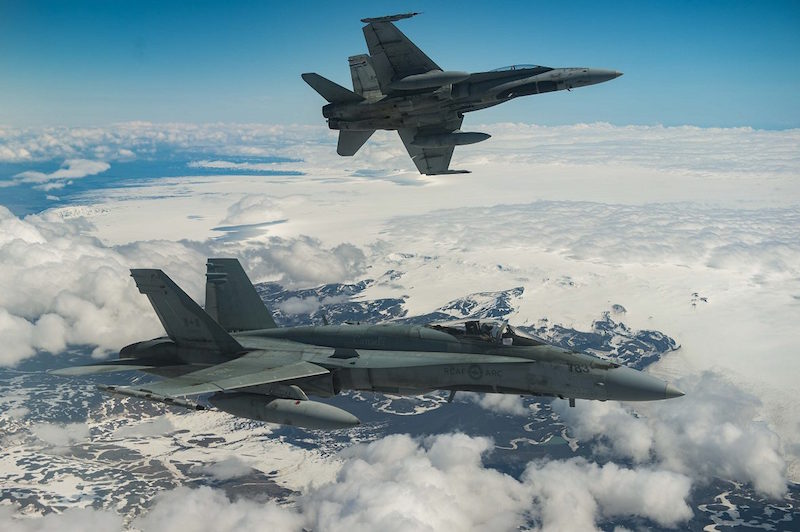
However, the shift towards domestic manufacturing risks creating interoperability issues among key Canadian allies. The Gripen, for example, offers greater domestic industrial participation than the F-35, but critics have long argued that it would not be interoperable with American aircraft and the North American Aerospace Defence Command (NORAD). While recent NATO joint exercises in Iceland suggest that these systems can work well together, their interoperability relies on the predominantly U.S.-owned Link 16data–sharing system.[MS3] Therefore, the CAF must not only prioritize domestic capabilities but ensure that building Canadian is synonymous with the interoperability of its forces with critical allies. Despite recent rhetoric, the U.S. remains a critical ally for Canada in patrolling critical spaces.
The strategy must confront the risk that the 70% domestic procurement target may shield Canadian firms from the global competition that drives innovation in the defence sector. This creates a paradox in which the public demands economic sovereignty, but rejects the higher consumer prices and tax–funded subsidies required to achieve it. However, this economic tension is not only a domestic concern, but it also directly challenges the DIS’s primary objective of operational readiness, as inefficiency in the market leads to front–
Ultimately, the success of the DIS will be measured by its contribution to the CAF’s combat readiness and NATO commitments, rather than its impact on the Canadian labour market. By domestically securing critical ammunition, energy, and production supply chains, Canada aims to demonstrate that strategic autonomy can advance allied strategic objectives. To assert itself in this era of declining international rules-based order, Canada must show that a self-sufficient industrial base makes it an increasingly vital partner, not the opposite. The shift from purchasing to producing is a historic step, but it is the only way to turn rhetorical promises into credible hard power.
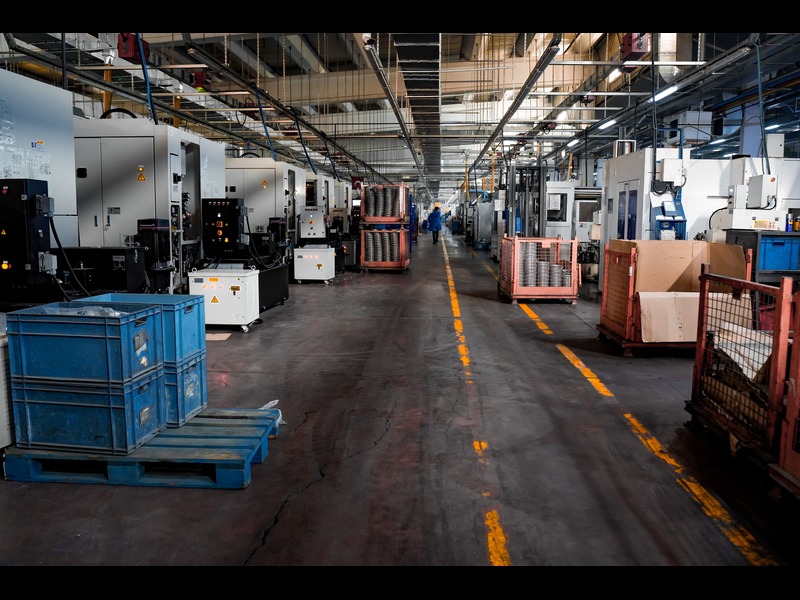
Photo Credits: https://www.pexels.com/photo/industrial-factory-floor-with-machinery-and-crates-34718922/
Disclaimer: Any views or opinions expressed in articles are solely those of the authors and do not necessarily represent the views of the NATO Association of Canada.