On January 3, 2026, the United States announced that its forces had captured Venezuelan President Nicolás Maduro and flown him to New York to face charges. Within minutes of President Donald Trump’s message breaking across social media platforms, an array of AI-generated images, recycled footage, and outright false claims began circulating widely. Some purported to show Maduro in custody alongside U.S. agents, while others presented exaggerated scenes of celebrations or violence that had no basis in verified reporting.
Fact-checking organizations quickly identified multiple circulating visuals as fabricated or repurposed from unrelated contexts, with some being confirmed as AI-generated. Yet before platforms could consistently flag or remove these posts, millions of users had seen and shared them, often without clear signals about their authenticity. This flood of conflicting content did not simply misinform; it saturated the public sphere in the first hours of a major geopolitical event in ways that made establishing a common baseline of facts extraordinarily difficult.
This episode points to a deeper problem in contemporary informational environments — one that extends beyond individual errors, platform policies, or the regulatory challenges of AI-generated content. It highlights how disinformation, particularly in moments of political rupture, can erode shared reality itself. To understand the full stakes of this dynamic, we must revisit a classical insight from Hannah Arendt: when factual truth collapses, so does the groundwork of political judgment.
In her most influential work, The Origins of Totalitarianism, German-American philosopher Hannah Arendt argued that the distinction between truth and falsehood is not merely an epistemic matter, but a political one. For Arendt, totalitarian domination does not depend solely on terror or brute force; it begins with the destruction of the common world, the shared sense of facts that makes collective judgment and action possible. Arendt observed that when lies accumulate, and the boundary between truth and falsehood dissolves, people lose their bearings in political and social life, making them vulnerable to domination.
Arendt did not argue that individuals must believe every falsehood for the collapse of reality to matter. What concerned her was something deeper: when lies are repeatedly substituted for facts, the foundations of political life, orientation, trust, and the capacity for collective judgment begin to erode. The danger, she warned, is not simply that falsehoods replace truths, but that the distinction between truth and falsehood itself disappears, leaving what she described as a “trembling, wobbling motion” in everything we rely on for a sense of direction in the world.
The Maduro case exemplifies this dynamic in the age of AI-enabled digital platforms. The sudden eruption of AI-generated content, competing narratives about celebrations and violence, and recycled visuals from other contexts did not simply add noise to the information ecosystem, they undermined any chance that audiences could quickly align on what was happening. In this space, collective judgment, the capacity to agree on the basic outlines of events, was effectively suspended.
The Venezuela example differs from conventional propaganda in important ways. Classical propaganda, whether state-run or ideological, tended to promote a consistent narrative that a target audience was encouraged to believe. Modern disinformation, especially in digitally mediated environments, often works by flooding the informational space with contradictory claims, AI-generated media, and sensational content optimized for engagement rather than coherence. The effect is not uniform belief in a single false narrative; it is fragmentation and confoundment.
After the announcement of Maduro’s capture, the rapid circulation of fabricated visuals and misleading clips created multiple competing “versions” of reality. Some users encountered dramatic scenes of supposed Venezuelan celebrations; others saw images that bore no trace of the actual operation. This is not merely a problem of accuracy. It is a political condition in which the social infrastructure of shared reality is debilitated at precisely the moment when society most needs a common factual foundation. In such moments of crisis, rapid disorientation across digital platforms potentially outpaces the capacity for coordinated response and public deliberation.
Why This Matters for Democracy
If political life depends on a shared world of facts, a world in which citizens can broadly agree that events happened and assess their meaning, then disinformation of the sort seen in the Venezuela-Maduro episode presents a profound challenge. It is not simply that viewers might be misled about details; rather, the multiplicity of competing realities makes it difficult to establish any stable consensus about what is true.
This condition has two key implications:
First, it weakens the ability of the public to exercise collective judgment. Democracies rely on the possibility that citizens, even when they disagree about policy, can at least agree on basic factual premises. When this common ground erodes, political discourse becomes detached from reality, making meaningful debate and accountability challenging.
Second, it normalizes a kind of informational ambiguity that can be exploited by powerful actors, whether states, political or business elites. Disinformation need not be centralized or coordinated to have a chilling effect. When misleading content spreads quickly and in large volume, it can overwhelm fact-checking and make confusion feel normal. Over time, this encourages cynicism and disengagement: people stop trying to sort truth from falsehood because the effort feels pointless.
The Venezuela case shows this clearly. AI-generated images and videos circulated alongside recycled footage and unverified claims so rapidly that the question of what was real became as contested as the event itself. Instead of one false story dominating, many competing stories crowded the space at once. The result was not persuasion, but disorientation. It grew out of a media environment that rewards speed, emotion, and visibility more than accuracy.
Toward a New Understanding of Disinformation
Episodes like this suggest that disinformation is not just a problem of “wrong information” that needs better fact-checking or stronger platform rules. It is increasingly a condition of contemporary political life. It shapes how quickly reality becomes unstable during moments of crisis and how difficult it is to rebuild a shared understanding afterward. This does not mean that technology is inherently harmful, or that correction and verification no longer matter. But it does mean that technical fixes alone are not enough. What is at stake is whether societies can maintain a common factual ground when information spreads faster than trust can be built.
In the aftermath of the Venezuela episode, the central question is not simply whether individual false claims can be corrected. It is whether democratic societies can preserve a shared sense of reality in an environment saturated with AI-generated content, viral imagery, and conflicting narratives. Seen through an Arendtian lens, the challenge is not only to fight misinformation, but to protect the basic conditions that make political judgment and collective decision-making possible in the first place.
This is what Arendt helps us see. Disinformation does not threaten democracy only because it lies. It threatens democracy because it weakens the world of shared facts that democracy depends on to function at all.
Any views or opinions expressed in articles are solely those of the authors and do not necessarily represent the views of the NATO Association of Canada.
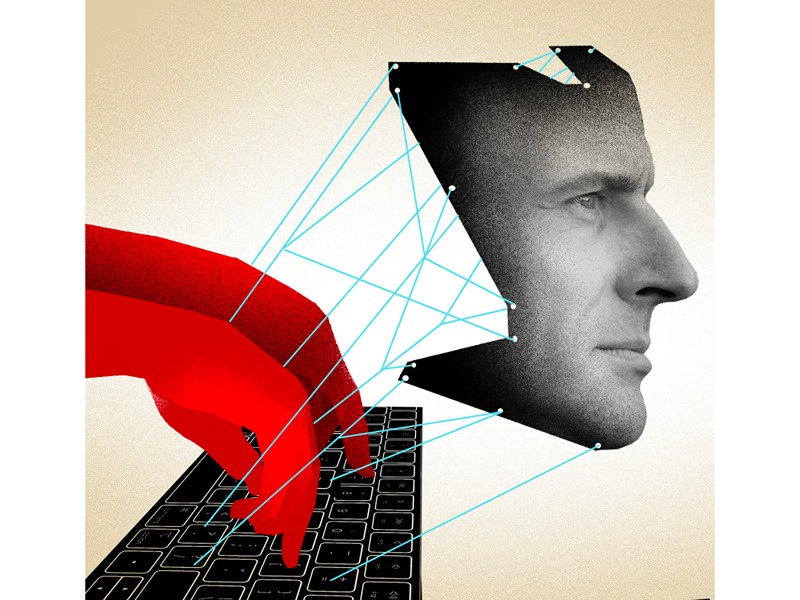
Photo retrieved from Wall Street Journal.