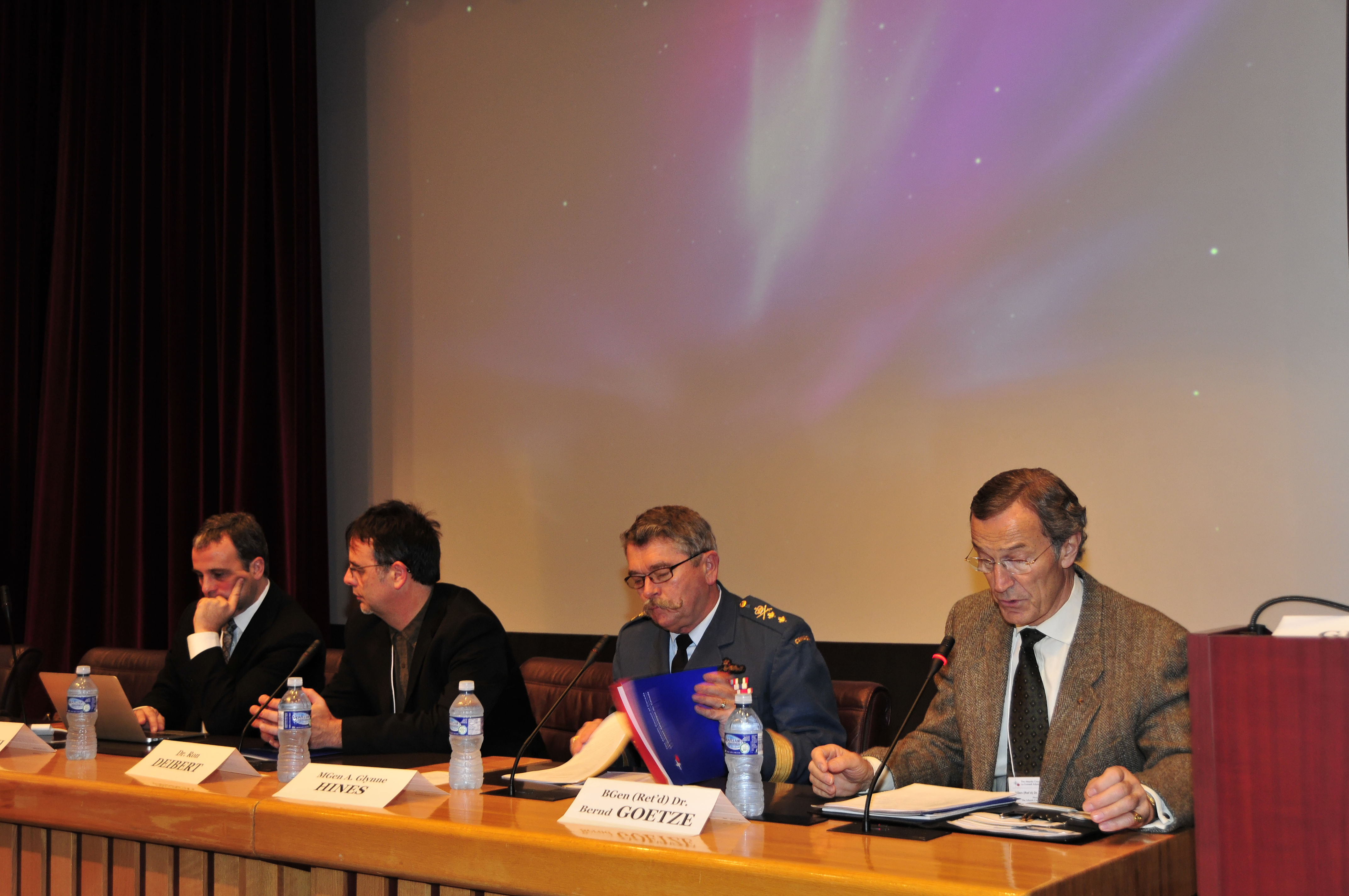
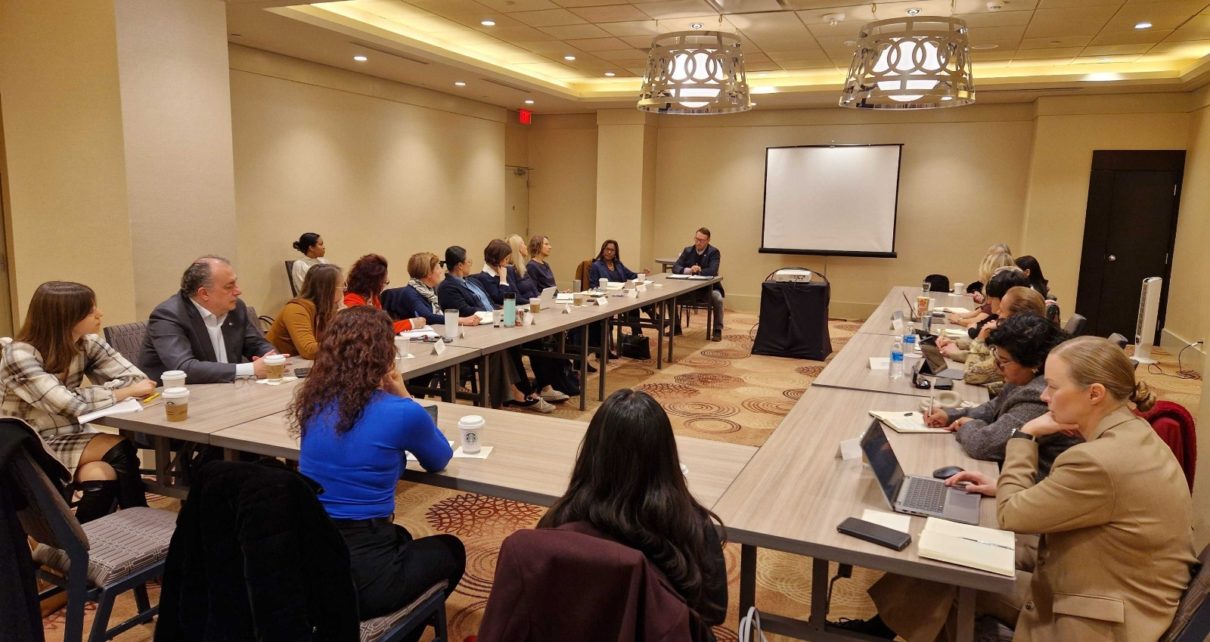
On November 18, 2025, the NATO Association of Canada hosted the 2025 Peace with Women Fellowship for a roundtable held in partnership with the Halifax International Security Forum. The event was moderated by Ted Opitz, a member of the NAOC Board of Directors. It brought together senior female leaders from the armed forces of thirteen NATO states and their partners. The event was a unique and open discussion about the growing threats posed by authoritarian regimes and what that means for the security of NATO allies.
Speaking on behalf of all fellows, Lieutenant Colonel Sungyeon Yi of the Republic of Korea described the experiences of the group over the past three weeks. Their program, she explained, had been a mix of discussion of professional experiences and candid debate, which sparked a renewed belief that strong alliances are built on trust, openness, and democratic values. The Fellows continued the conversation by reflecting on how Russia’s full-scale invasion of Ukraine has overturned long-standing assumptions about European security. Several participants noted that the stability once taken for granted is gone, and that democracies now face pressure from Russia, China, Iran, and North Korea not only on the battlefield but in the technological and informational space.
Officers from thirteen armed forces, joined by members of the NAOC’s board, staff, and student cohort, highlighted the breadth of perspectives in the room. Artificial intelligence was a major discussion point. Drawing on her background in military intelligence, Lieutenant Colonel Yi explained how authoritarian states use AI to sift data and support public and social media surveillance, enabling them to develop more sophisticated disinformation campaigns. No single democratic country, she argued, can match that pace alone. She stressed the need for deeper cooperation among NATO members, more shared intelligence data, and promoting greater alignment in technological standards.
From there, the discussion shifted to the Russian threat in NATO’s airspace. Officers who have served in Baltic air policing described numerous encounters with Russian aircraft and drones. They outlined how strict rules of engagement require pilots to take multiple de-escalatory steps, even when Russian violations are explicit. When asked whether NATO should respond more forcefully, several Fellows cautioned that a single miscalculation could fracture allied unity. They said much of the response rests on the decisions of sovereign states rather than NATO as a whole, and individual members have varying opinions on the use of force. They, however, reiterated that unity is NATO’s centre of gravity and warned that Russia closely watches any sign of division.
This naturally led to a broader examination of the growing coordination among authoritarian regimes. Fellows pointed to how Russia and China are reshaping media environments, creating confusion among the general public within democratic states about what narratives to believe in thus weakening cohesion from within. The discussion turned to how democracies can better defend their information space. Colonel Pernille Undén of the Swedish Air Force emphasized the importance of clear, steady communication with citizens and ensuring defence institutions are transparent and trusted. Lieutenant Colonel Annukka Ylivaara of the Finnish Security Committee described Finland’s long-standing investment in preventing the spread of disinformation. Children begin learning media literacy skills in preschool and continue throughout secondary education. Other fellows agreed that this is an effective way of targeting disinformation and concurred that their countries should learn from Finland. Lieutenant Colonel Ylivaara stressed that resilience in an open society stems from critical thinking and trusted public institutions rather than from the enforcement of a single narrative.
Throughout the event, participants repeatedly emphasized the role of education and public understanding of the government’s defence policies. Indira Naidoo-Harris, former Ontario Minister of Education and former Minister of the Status of Women, reflected on how school systems designed for a world of limited information struggle to prepare students for the constant flow of digital content. She argued that the ability to evaluate information and question its origins has become an essential part of modern national security.
The conversation expanded beyond NATO’s geography as participants considered the influence of Russia and China in the Global South. Several Fellows noted that Russian media outlets, including TASS, have expanded across Africa following the Russian invasion of Ukraine. This expansion has coincided with shifts in UN voting patterns on Ukraine, with African states increasingly aligning with Russia’s position. Others highlighted the economic role of private military corporations, such as the Wagner Group, which has drawn extensive resources from the continent. Cuts to Western development and broadcasting programs, particularly USAID, have created gaps that Russia and China quickly filled. Participants agreed that information campaigns alone are insufficient to counter the large-scale economic engagement made by NATO’s adversaries. Democracies must reconsider their involvement in the Global South to build more sustained partnerships that reflect local priorities.
A New Zealand perspective helped place these issues in a different context. Colonel Emma Thomas noted that in Oceania, many citizens see climate change and economic vulnerability as more immediate threats than great-power competition. She stressed that Western countries must pay close attention to regional concerns and refrain from assuming that their threat assessments are universally applicable.
The discussion concluded with questions from NAOC interns and closing remarks from Mr. Ted Opitz. He thanked the Fellows for their openness and insight, noting that the roundtable shed light on how modern defence needs extend across technology, communication, education, and long-term partnerships.
The meeting left one conclusion beyond doubt. As authoritarian regimes deepen their cooperation, democracies must strengthen their alliances, invest in societies’ resilience, and maintain open, honest communication with their citizens. The presence of senior female leaders from around the world made the conversation especially compelling and underscored the importance of diverse perspectives in shaping the future of international security.
Disclaimer: Any views or opinions expressed in articles are solely those of the authors and do not necessarily represent the views of the NATO Association of Canada.