For most travellers, checking a bag at the airport is a small act of trust: you tag it, and assume the label will quietly follow your luggage to its destination. The recent baggage‑tag switching scandal at Toronto Pearson International Airport has shattered that sense of security for many Canadians. Investigative reports and police statements describe how corrupt ramp and baggage workers allegedly removed tags from innocent passengers’ bags and attached them to suitcases filled with drugs, turning ordinary travellers into unwitting “owners” of narcotics when those bags arrived overseas. Several Canadians were detained abroad, including in countries with severe penalties for drug trafficking, simply because the data on a luggage tag said the suitcase was theirs. It’s a small failure with outsized stakes — a textbook example of a hybrid threat exploiting the critical infrastructure NATO‘s resilience agenda is meant to protect.
At first glance, this looks like a narrow crime story: organized groups exploiting a busy airport to move contraband through gaps in supervision. But look closer, and the Pearson case also exposes something deeper about modern airports. Baggage handling today is not just a matter of belts and bins; it is a cyber‑physical system. Every printed tag encodes a flight, a passenger record, and a route through scanners, sorters, and databases. Each bag’s journey relies on software that decides where it goes, sensors that detect its presence, and interfaces that share data with airlines and border agencies. When insiders tamper with tags in the physical world, they are also rewriting the record that the digital system retains on bag ownership and destination.
This matters beyond one airport because it shows how easily threat actors with baggage-area access can weaponize the link between identity, luggage, and data. Travellers were not at fault, yet the moment a tag was swapped, the digital trail misidentified them as owners of someone else’s suitcase, and they landed to find officers waiting to arrest them for trafficking drugs they had never seen.
From a security perspective, this poses an insider-threat problem as much as a simple smuggling scheme. Airports already invest heavily in perimeter security, passenger screening, and surveillance of public spaces. Baggage workers and ramp staff, however, often operate in zones that are out of sight to passengers and relatively opaque to the public. Their work is essential and time‑critical, but the Pearson scandal suggests that in some cases, oversight and integrity checks did not keep pace with the risk of collusion between insiders and criminal groups. The scam happened at Pearson airport because of its scale, not because of the technology. When insider‑threat programs are weak, the very people who keep the system running can quietly override its assumptions about safety and trust.
There also exist some clear digital vulnerabilities. The baggage system must trust that a tag attached to a suitcase actually belongs on that suitcase. Routing decisions are made based on what scanners read and what databases store. If a tag is moved, the system continues to operate as if nothing is wrong, silently associating the new bag with the old passenger record. No alarms go off, because from the perspective of the software, a tagged bag is simply proceeding through the expected path. This is fundamentally a data‑integrity problem: the system’s inputs have been compromised, and everything built on those inputs—who is linked to which bag, which security checks apply, which customs declarations are relevant—is now misleading.
That mix of physical access, digital dependence, and transnational consequences is exactly what makes this kind of incident relevant to NATO and NATO‑Canada. Over the past decade, NATO has shifted a great deal of attention toward resilience, hybrid threats, and the protection of critical civilian infrastructure. Airports and their associated transport networks sit squarely within that infrastructure. They are crucial for allied mobility, humanitarian deployments, and the everyday movement of people and goods that underpins social and economic stability. When an airport’s systems can be manipulated to frame travellers or disrupt flows, it touches on more than consumer inconvenience; it affects public trust in critical nodes that the Alliance relies on in crises.
Hybrid threats, in NATO’s language, involve non‑military and often covert means—like cyber operations, disinformation, criminal networks —erode confidence in institutions. NATO and the European Union jointly established the European Centre of Excellence for Countering Hybrid Threats (Hybrid CoE) in Helsinki specifically to research these blended threats, including those exploiting transport and logistics networks. The Pearson tag‑swapping scandal sits close to this space. It begins with organized crime rather than a hostile state, but it shows how airport processes and data can be exploited to produce high‑impact consequences: wrongful detentions, diplomatic strain, and a chilling effect on travel out of a major Canadian hub. In a more severe scenario, similar techniques could be combined with cyber attacks to alter baggage records, misroute critical cargo, or inject false information into customs and immigration systems. It is not hard to imagine how such manoeuvres, scaled up or weaponised, could complicate military movements or emergency responses in an allied context.
For Canada and its partners, airport baggage systems should be part of the cybersecurity and resilience conversation, not just operational logistics. Protecting travellers from tag-switching means ensuring the link between identity, luggage, and data cannot be casually rewritten by insiders or outsiders — which requires strengthening both human and technical controls
On the human side, airports and airlines can invest in stronger insider-threat programs: better background checks, continuous monitoring for unusual tag-handling patterns, clear reporting channels, randomised audits, and tighter control over who can access tags after check-in. On the technical side, systems can be designed for integrity, not just throughput: logging tag changes in real time, cross-checking tags with automated bag imaging, flagging mismatched tags, and encrypting baggage databases through zero-trust approaches, in cooperation with national cybersecurity agencies and allied partners.
NATO’s resilience framework applies here: the Alliance pushes members beyond defence to the civil systems—transport hubs and their digital infrastructure—that keep societies functioning under stress. Article 3 of the North Atlantic Treaty formalises this, underpinning NATO’s civil preparedness agenda and the seven Warsaw baseline requirements, including resilient transportation and communications systems. Strengthening security at Canadian airports thus protects more than travellers—it reinforces allied mobility and crisis response, the link NATO’s 2022 Strategic Concept draws when naming hybrid actions against critical infrastructure a standing threat. Shared exercises through bodies like Hybrid CoE could turn Pearson’s lessons into practical improvements.
Responsibility shouldn’t simply be pushed onto travellers who can’t see what happens to their bags after check-in, even though small steps — photographing luggage and tags, using distinctive markings, keeping boarding passes and receipts — can help if something goes wrong. The Pearson scandal is a reminder that trust in airport systems is fragile: a quiet manipulation behind the scenes can lead to court cases abroad and anxiety about flying. By treating baggage systems as a key part of how we keep travel safe, Canada and its NATO partners can strengthen these systems, support affected travellers, and ensure checking a bag never becomes the starting point for a much bigger crisis.
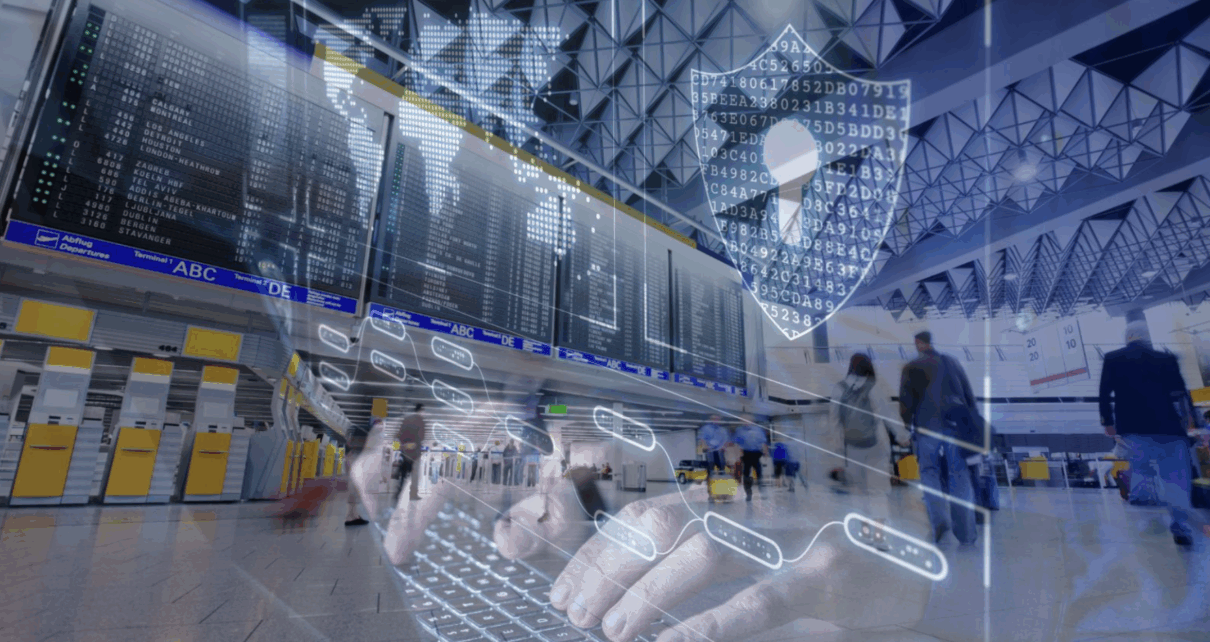
Photo: ACI World passes airport cyber-security resolution, by Gavin Pearson.
Disclaimer: Any views or opinions expressed in articles are solely those of the authors and do not necessarily represent the views of the NATO Association of Canada.