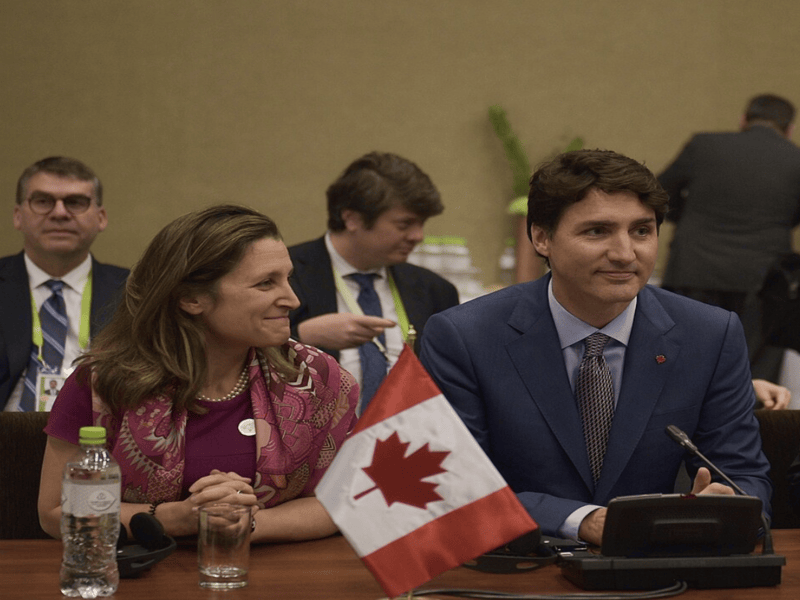
In just over a year in power, Prime Minister Mark Carney has already established a stark contrast to his predecessor, Justin Trudeau. Whereas Carney has focused on securing economic opportunity and tangible military investments, his government has simultaneously scaled back commitments to climate protections and values-based policies that were hallmark causes championed by the Trudeau government. Explicit commitments to Canada’s Feminist Foreign Policy (FFP) and the Women, Peace, and Security (WPS) agenda have been significantly reduced, although not abolished. Under Carney, Canada is clearly shifting away from ideological and soft power tactics towards economic and security guarantees; as a result, this repositioning has generated international credibility, and Canada is now in a stronger position to pursue FFP and WPS activities.
Canada’s foreign policy has shifted significantly between the Trudeau and Carney governments. The Trudeau government was criticized for governing largely through more progressive and ideological policy, highlighted by programs that increased immigration and climate protections, while prioritizing gender equality efforts. In comparison, Carney rose to the job on a platform that emphasized achieving security through hard economic and military investments in response to US unreliability. This was most evident during Carney’s 2026 speech at the World Economic Forum, which has been a significant marker of how Canada has since approached its foreign policy and relationships with other countries. In this speech, Carney posited the idea of Canada operating in a principled and pragmatic manner that reflected “values-based realism” to respond to the current geopolitical environment. This becomes apparent when considering his first year as Prime Minister; Carney has spent more time abroad than both Trudeau and his predecessor, Stephen Harper, in an attempt to shift away from the US to prioritize other economic relationships and diversify trade with new partners.
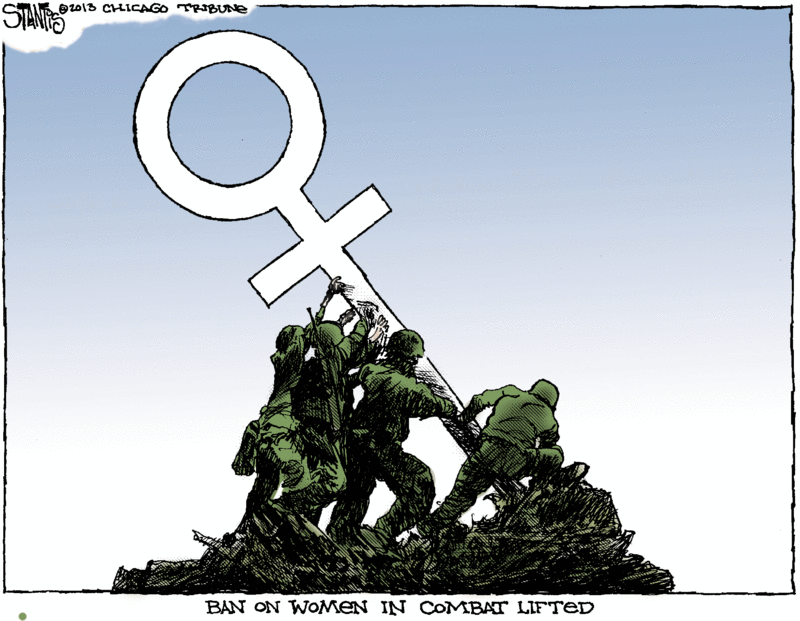
The Trudeau government leaned more towards values-based diplomacy, and came into government with a promise to make gender equality and progressive social programs a priority. When looking at his Cabinet, Trudeau was the first in Canadian history to name an equal number of women and men in ministerial positions, with key roles held by women. With this, Trudeau proudly made FFP a central pillar of Canada’s international diplomacy, which focused on gender equality and sought to empower women and girls across all of Canada’s foreign policy-related activities; as laid out in the Feminist International Assistance Policy (FIAP), Trudeau’s government set out additional support for this cause, where trade and defence policy took on a “feminist” focus.
In comparison, Carney has taken a less enthusiastic stance. Though recently, his government announced plans to name a new WPS ambassador after backlash from civil rights and feminist activists to the prime minister openly declaring that he wouldn’t call Canada’s foreign policy “feminist.” Despite this, the Carney government has reaffirmed support for combatting violence against women at home and abroad. However, critics posit that despite changes in the explicit framing of Canada’s FFP between Trudeau and Carney, there remains continuity between the two governments’ substantial policies as it pertains to gender equality. This is evident when examining the Trudeau government’s response to Russia’s invasion of Ukraine in 2022; rhetoric on WPS and FFP was drastically reduced by Canada and across NATO as an alliance, in an attempt to signal military strength and unity. Essentially, Carney has only taken an explicit stance on FFP that is not dissimilar to the policy pursued by the Trudeau government.
Under Carney, Canada has made concrete commitments to invest in hard military powers as it rebalances its strategic priorities. Notably, Canada finally met NATO’s alliance-wide target of 2% of GDP on military spending and has secured key defence contracts with allies such as Sweden and Germany to procure a fleet of surveillance aircraft and submarines, respectively. Furthermore, at the 2025 Hague summit, NATO member states committed to increase spending to 5% of GDP, comprising 3.5% dedicated towards core defence requirements, and 1.5% towards other defence and security-related spending. Therefore, considering the Carney government’s renewed commitment to strengthening its defence and security, it is also important to recognize the underlying structures that sustain these institutions, which have historically been grounded in gender inequality and systemic racism. Otherwise, this directly fractures commitments to the WPS agenda, and in turn, obligations to NATO as an alliance.
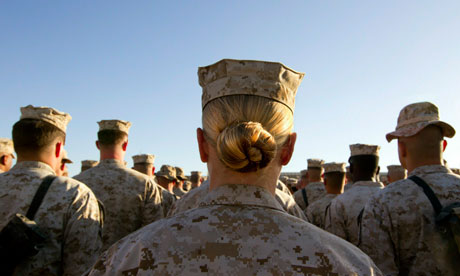
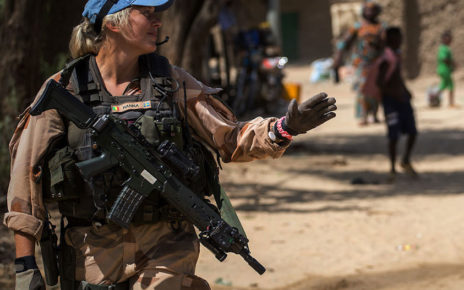
With this, the Carney government does not necessarily need to abandon its FFP to continue its steadfast commitment in bolstering Canada’s geostrategic position through pursuing hard military and economic opportunities. On the contrary, it remains imperative that Canada not completely rescind its WPS and FFP commitments, as investments into values-based causes can be woven into foreign policy objectives as part of Canada’s sustained commitment to NATO and multilateralism. For example, to meet the new 5% target, investments can be dedicated to achieve WPS objectives as part of the 1.5% focused on defence-related spending. This could include programs to ensure civil preparedness and resilience, which would respect the relief and recovery pillar of the WPS agenda. In addition, with the Canadian Armed Forces (CAF) falling short of its recruitment targets for women, funding can be directed to provide better support and incentives for female officers in the CAF to increase retention and promote recruitment, in line with the Agenda’s focus on women’s participation.
Though Canada’s foreign policy under Carney has been highlighted by starkly different objectives than those pursued by Trudeau, it can leverage its newfound global position to further support the causes championed by the preceding government. While the policy has been repackaged under a more strategic veil that appeals to the current geopolitical climate, Canada’s goals to promote the principles of human rights and gender equality should remain the same, if not pursued further. Here, the prioritization of policy that supports women and combats inequality is crucial to not contradict the objectives of increasing militarism, while also promoting the equality of marginalized and vulnerable groups.
Photo: Presidencia de la República Mexicana, CC BY 2.0 via Wikimedia Commons.
Disclaimer: Any views or opinions expressed in articles are solely those of the authors and do not necessarily represent the views of the NATO Association of Canada.