In 2026, the Lieber Institute at West Point documented that both sides in the Russian-Ukrainian war had implemented programmes rewarding soldiers for confirmed kills through monetary bonuses and redeemable points for online stores. Human lives, in other words, had been assigned a point for value. A Ukrainian prosecutor warned that soldiers risk returning from the conflict not as human beings, but as killing machines. The observation matters less as a moral alarm than as a diagnostic one: we are witnessing a structural change in how militaries manage the psychology of violence, and the consequences extend far beyond the individual soldier.
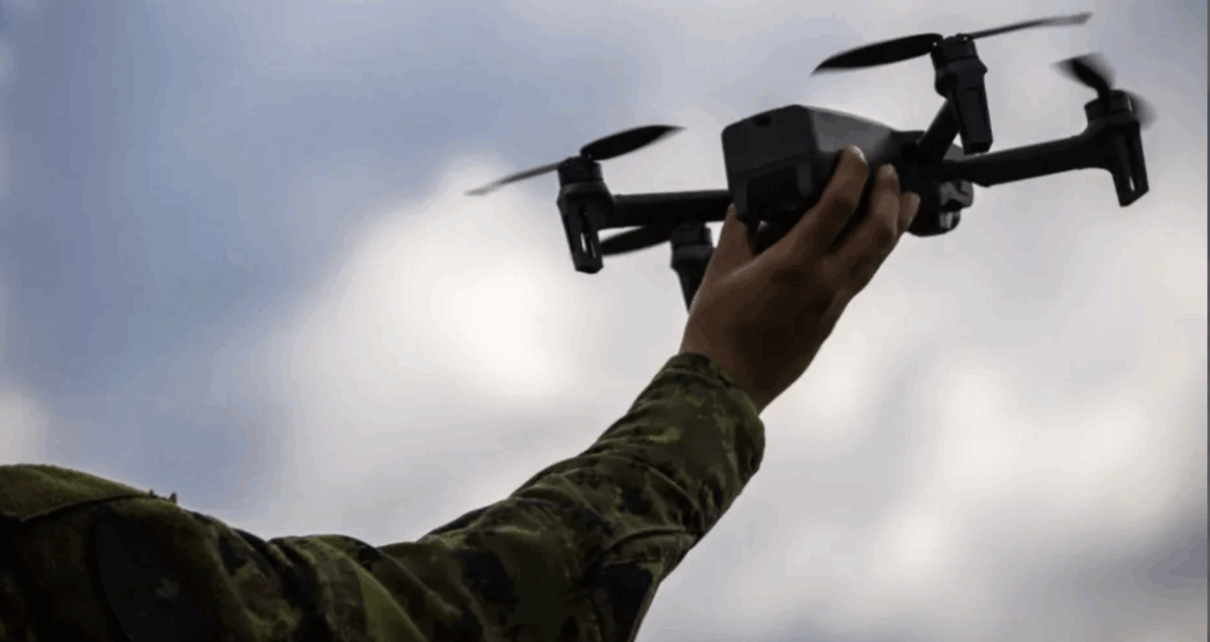
Gamification is one symptom of the broader condition. Remote warfare technologies have spent decades building the psychological infrastructure that makes point-scoring systems feel intuitive. Through drones, remote interfaces, and simulation-based training environments, combat is increasingly experienced through screens, data feeds, and targeting overlays rather than direct human encounters. Enemies and civilians alike are rendered signatures, coordinates, or blinking indicators on a display. That distance serves a specific purpose. Researchers studying drone warfare have found that the detached nature of remote operations is often a deliberate feature of interface design, engineered to lower the psychological cost of lethal decisions. The result is a compounding effect of remote systems abstracting the target, and incentive structures then rewarding the operator for treating that abstraction as a score. And while it reduces risk to military personnel, it also encourages forms of moral disengagement that abstract violence from its human consequences in ways that existing legal frameworks were not built to handle.
Militaries have always sought to make killing more efficient. The longbow, the machine gun, and the nuclear bomb all extended the distance between a soldier and a target. But what makes contemporary AI-enabled warfare qualitatively different is not its lethality, but the diffusion of accountability. When an algorithm produces a targeting recommendation based on pattern-of-life data, the decision to use lethal force is distributed across a system rather than located in a single identifiable human judgment and, consequently, legal responsibility dissolves.
International humanitarian law (IHL) provides the clearest analytical anchor for what is at stake. The Fourth Geneva Convention of 1949 and the principle of distinction, requiring all parties to a conflict to distinguish at all times between combatants and civilians, are binding legal obligations, and should not be treated as aspirational guidelines. The issue with AI-assisted targeting is that it reduces the distinction between a combatant and a civilian to a sequence of data, stripping away the context, intent, and the qualitative human judgement that algorithms cannot yet replicate. When an AI system optimised for speed and pattern-recognition encounters an ambiguous situation, it resolves that ambiguity through probability thresholds and pre-programmed parameters, not through the contextual moral evaluation that IHL requires. Consequently, a civilian sheltering in a building frequented by combatants, or carrying equipment that pattern-of-life data flags as suspicious, becomes a targeting variable rather than a protected person. Recognizing this, the ICRC has called for new legally binding rules prohibiting autonomous weapon systems that are unpredictable or capable of applying force against persons without meaningful human control, arguing that existing IHL was never designed to regulate technologies that increasingly mediate the human judgement it depends upon.
The ICRC’s concern points to a deeper problem: remote warfare does not just complicate the application of IHL; it actively widens the accountability gap that IHL depends on closing. As Dr. Joanna Wilson argued in a 2025 piece for the ICRC’s Humanitarian Law and Policy Blog, the emotional and moral dimensions of human decision-making are not obstacles to lawful military conduct, but essential aspects of what makes it possible. Empathy, hesitation, and moral discomfort are not weaknesses that should be engineered out of the targeting process. They are the faculties that IHL assumes will be present when a decision to use lethal force is made. As drone technologies and AI-enabled systems increasingly penetrate civilian spaces, the risk of IHL violations grows, not necessarily because militaries intend to violate the law, but because the technologies they deploy are not designed to apply it. When algorithmic targeting replaces human judgment with collateral damage thresholds and risk calculations, civilian harm risks becoming an administrative outcome rather than a legal and moral failure.
The Ukraine-Russian War has demonstrated how quickly cheap commercial drone technologies can be weaponized at scale, normalizing forms of targeting that outstrip the legal frameworks governing them. The gamification of those strikes — soldiers earning points per kill, violence rendered legible through the logic of a score — accelerates the psychological distance that the virtual buffer creates. Consequently, civilians become harder to see, harder to account for, and harder to protect precisely because the systems making lethal decisions are not designed to weigh their presence with the deliberateness that IHL demands.
NATO has acknowledged the problem in principle. The Alliance’s 2021 AI Strategy established six Principles of Responsible Use for AI in defence, revised and expanded in July 2024 to address generative AI risks and measurable implementation steps. However, The Centre for International Governance Innovation noted in 2026 that the 2024 NATO strategy was “more about practical applications,” shifting emphasis toward cooperation with industry, academia, and national defence agencies, rather than deepening the ethical and legal framework that preceded it; a reorientation that raises legitimate questions about whether responsible use principles are keeping pace with operational reality. It is important to acknowledge that the international system is inherently anarchic, and, consequently, there is always a trade-off between committing to rules-based conduct and preserving operational advantage when an adversary faces no equivalent constraint. In actual conflict, legal self-restraint can feel like a liability, but for NATO members, opting out is not an option. Article 2 of the North Atlantic Treaty, long regarded as the alliance’s normative backbone, commits members not only to collective defence but to the principles of democracy, individual liberty, and the rule of law. For Canada, a middle power whose international standing has historically rested on precisely that moral positioning, abandoning those commitments in the name of operational efficiency would be strategically self-defeating. The challenge for NATO, and particularly for Canada, is therefore not simply to adopt AI responsibly, but to ensure that technological innovation does not outpace the legal and ethical limits that preserve civilian protection and alliance legitimacy.
While Canada is not a leading developer of autonomous weapons, through the $38.6-billion NORAD modernization programme and the 2024 defence policy update Our North, Strong and Free, Canada is actively integrating AI and autonomous systems into its defence posture. At the same time, Canada voted in favour of UN General Assembly Resolution 80/57 in December 2025, supporting a legally binding instrument on autonomous weapons and affirming that meaningful human control over the use of force is a legal necessity, not a preference. The tension between those two positions, rapid AI integration at home, binding accountability norms abroad, is one that Canada has both the credibility and the strategic interest to resolve. Canada helped write the Ottawa Treaty on landmines and has consistently argued within multilateral forums that IHL must govern new weapons technologies. That record gives it standing within NATO to push for governance standards that are legally anchored and enforceable, rather than aspirational language that dissolves under operational pressure.
Dehumanization in warfare does not begin with cruelty. It begins with interface design, incentive structures, and the gradual diffusion of accountability across systems too complex for any single actor to own. Addressing it requires binding standards, tied to the IHL obligations states have already accepted, that bring the pace of governance into alignment with the pace of deployment. For Canada, a middle power whose security depends on the durability of international norms, that alignment is a strategic imperative. The rules-based order does not sustain itself, and requires states willing to insist, inside institutions like NATO, that even in war, limits apply.
Disclaimer: Any views or opinions expressed in articles are solely those of the authors and do not necessarily represent the views of the NATO Association of Canada.