Why Connected Vehicles Matter
When Canada and China reached a new bilateral economic arrangement in January 2026, the reaction was mixed. Some Canadians saw reopened markets for canola and seafood exports; others focused on cheaper electric vehicles, foreign investment, and implications for Canada-U.S. relations.
Canada already trades extensively with China. Government of Canada data put bilateral merchandise and services trade at $130.9 billion in 2024. The issue is not whether Canada trades with China, but what this arrangement changes, what it excludes, and where safeguards still matter. The clearest unresolved issue concerns connected vehicles: Canada has moved toward managed EV access, but has not publicly set out a data and software screening process comparable to the one adopted by the United States.
The arrangement raises security questions because some sectors, especially EVs and industrial inputs, touch supply chains, data, and allied trust. NATO’s 2024 Washington Summit Declaration said the People’s Republic of China’s “stated ambitions and coercive policies” challenge Allied interests, security, and values; it also called the PRC a “decisive enabler” of Russia’s war against Ukraine. That does not make every China trade relationship a threat, but it does mean that trade involving connected technology, sensitive data, critical supply chains, or foreign investment requires greater scrutiny.
What did Canada and China agree to?
First, this is not a Canada-China free trade agreement. The Government of Canada describes it as a preliminary joint arrangement on specific bilateral economic and trade issues, with a review after three years.
The most visible change is electric vehicles. Canada intends to allow an initial quota of 49,000 Chinese EVs per year at the most-favoured-nation tariff rate of 6.1%, Canada’s regular tariff for WTO trading partners unless a special tariff applies. Global Affairs Canada says the quota represents less than 3% of Canada’s new-vehicle market. A separate import notice says eligible EVs require shipment-specific permits and that the previous 100% surtax has been repealed for vehicles entering under the quota.
Agriculture is the other major part. Effective March 1, 2026, China reduced tariffs on Canadian canola seed to 14.9%, down from almost 85%, and suspended anti-discrimination tariffs on canola meal, peas, lobster, and crab until the end of 2026. China also resumed access for 20 meat establishments and moved on animal genetics and pet food. It also extends remissions for some Chinese steel and aluminum products, avoids proposed tariffs on selected solar products and semiconductors, and sets a goal of increasing Canadian exports to China by 50% by 2030.
Why make the deal despite the risks?
The strongest case for the arrangement is economic and diplomatic. Canadian agriculture had been hit by Chinese tariffs, and reopening access for canola, seafood, beef, and other products offers immediate relief to exporters. Ottawa also faces pressure to diversify trade when U.S. market access can no longer be taken for granted.
Still, the concessions are qualitatively asymmetrical. Tariff relief for Canadian agricultural and seafood exports largely restores market access. The concessions involving Chinese EVs and possible investment are different: they introduce questions beyond tariff policy, because connected vehicles can involve software, data, and remote access, while sensitive-sector investment can touch strategic assets. The arrangement may be economically rational, but it leaves Canada with the more complex security burden to manage. That judgment will only hold if Canada pairs the arrangement with clear domestic rules for connected-vehicle software, data flows, remote access, and sensitive-sector investment review.
What is not included?
The arrangement does not grant unlimited access to Chinese EVs, remove Canadian vehicle safety rules, automatically approve Chinese investment in sensitive sectors, or replace Canada’s North American trade relationship.
The free-trade point matters because CUSMA, Canada’s North American trade framework, sets rules for agreements with a “non-market country.” If a party seeks such a free trade agreement, it must notify the others, share objectives if asked, and allow review before signature. If one party enters such an agreement, the others may terminate CUSMA on six months’ notice. Since the current arrangement is not a free trade agreement, those provisions are not engaged.
The central security question: connected vehicles
Safety should be separated from security. Transport Canada states that all vehicles sold or imported in Canada must meet the Canada Motor Vehicle Safety Standards, so imported EVs must meet Canadian road-safety requirements.
The security question is different. Modern EVs can include software, sensors, cameras, GPS systems, and internet-linked communications. The United States treats connected vehicles as a national-security concern. In January 2025, the U.S. Department of Commerce finalized a rule restricting certain vehicle hardware and software linked to China or Russia, citing risks involving sensitive data, remote manipulation, and supply-chain security.
Canada has some tools to manage risk. EV imports under the quota require permits, and Investment Canada Act guidelines allow Ottawa to examine risks involving sensitive technology, critical minerals, critical infrastructure, defence capabilities, state-linked investors, and sensitive personal data. However, these tools perform different functions. An import permit system controls quota entry; investment review applies to transactions and acquisitions. Neither, at least as publicly set out in this arrangement, establishes a connected-vehicle screening process comparable to the U.S. rule. Software, hardware, data flows, and remote access are not resolved simply by limiting vehicle numbers.
Why allies will be watching
The arrangement is unlikely to reshape Canada-U.S. relations, but it could add friction. It is quota-based and not a Canada-China FTA. Yet Washington may still view Chinese EV access in Canada through a North American supply-chain lens. Reuters reported that U.S. officials criticized Canada’s decision while saying those vehicles would not enter the U.S. market. The issue is not only whether the cars cross the border, but whether allies see Canada’s connected-vehicle approach as aligned with wider North American security concerns.
Canada is not alone in facing this trade-off. NATO does not negotiate trade agreements or set trade policy for its members, and there is no general Allied push to eliminate trade with China altogether. The more relevant comparison is how allies manage China-related trade while protecting sensitive technology and supply chains. Eurostat reported that in 2024 the EU exported EUR 213.3 billion in goods to China and imported EUR 517.8 billion. The European Commission also imposed countervailing duties on Chinese battery electric vehicles after finding that China’s EV value chain benefited from unfair subsidies. The point is not that Canada should copy Europe; rather, it is that allies can use targeted safeguards rather than treating trade and security as mutually exclusive.
What should Canadians take away?
Canada’s China trade reset is not a simple black-and-white issue. It brings real economic benefits, especially for agricultural exporters, and may offer consumers more EV options. It also leaves a key security issue unresolved: whether Canada’s rules for connected-vehicle software, data, and remote access will match the seriousness of its tariff and import-permit controls.
The test is implementation and clear rules. Ottawa should track how many Chinese EVs enter under the quota and whether the policy affects consumer prices, domestic auto producers, and allied confidence. More importantly, it should set clear rules for connected-vehicle software, data flows, and remote access, apply investment review to state-linked or sensitive-sector transactions, and consult allies when North American supply chains are affected. Otherwise, the arrangement risks delivering short-term commercial gains while leaving its most important security question unresolved.
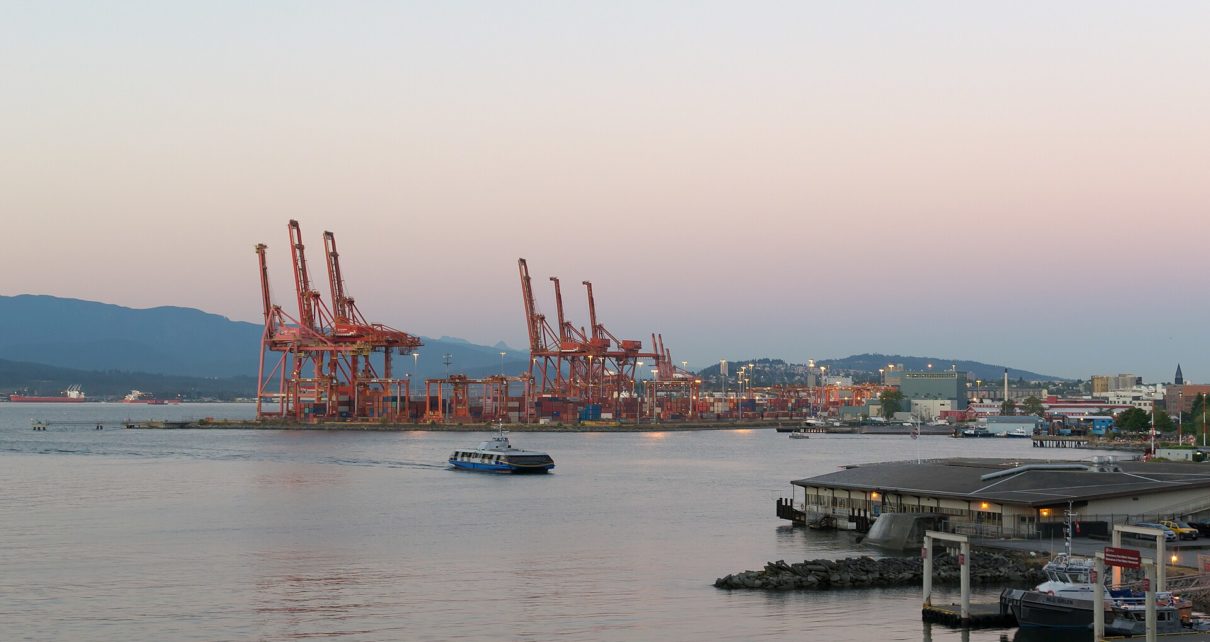
Photo: “Port of Vancouver 01” (2015), by Xicotencatl via Wikimedia Commons. Licensed under CC BY-SA 4.0. Cropped/resized from original.
Disclaimer: Any views or opinions expressed in articles are solely those of the author and do not necessarily represent the views of the NATO Association of Canada.