As Russia’s war on Ukraine tests NATO’s resolve, and a looming alliance between China and other states opposed to NATO seeks to reshape the global order in its favour, NATO and its allies find themselves facing the most dangerous challenges of the 21st century.
What does NATO mean to us?
What was NATO built for, and why did it live on after the Soviet threat imploded? Some characterize NATO merely as a defensive alliance rooted in resistance to communism, which kept most of the last century in an air of potential nuclear war. This interpretation does the organization a disservice, however, as it does not denote all that it represents, such as the role it serves in the maintenance of political and economic cooperation among its members.
Article II (the ‘Canadian Article’) is the brainchild of Lester B. Pearson, who by 1949 had positioned Canada as the diplomatic powerhouse between the Americans and the rest of the world, hence how it was able to get the 12 founding NATO members to formally commit to its text. This article enjoins non-military cooperation among member states“… toward the further development of peaceful and friendly international relations by strengthening their free institutions… and by promoting conditions of stability and well-being. They will seek to eliminate conflict in their international economic policies and will encourage economic collaboration between any or all of them.”
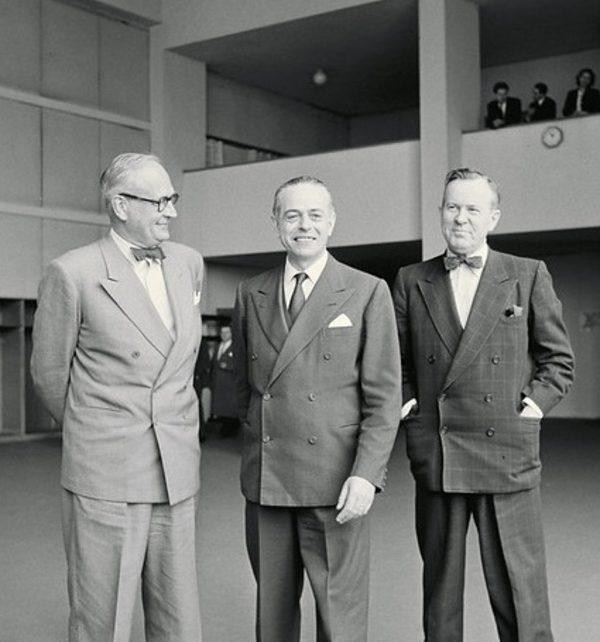
Pearson’s labour included attempts to institutionalize political consultation between larger and smaller members with the ‘Report of the Three Wise Men’ in December 1956. This was born from NATO members failing to properly coordinate their responses to the Suez Crisis, especially the United Kingdom, France, and the United States.
Despite successes in incorporating more countries beyond North America and Western Europe into NATO and the spread of liberal democracy, Pearson’s vision of the organisation as politically cohesive alongside military security has been undermined. Arguably, NATO has become an alliance too concerned with military matters to notice the weakening of the political and diplomatic fronts. At times, NATO has placed such a strong emphasis on its military dimension that the political and diplomatic aspects of the alliance risk being overshadowed. This helps explain some of the tensions created by member states such as Hungary, Slovakia, and Türkiye, whose positions have occasionally complicated consensus-building and challenged NATO’s political cohesion.
This is a conundrum that Pearson had predicted in 1951, when he evinced suspicion that the accession of Türkiye would mean a step away from non-military cooperation. Later generations of Allied statesmen have failed to put the political and economic obligations of NATO on an equal footing with its military mandate.
What to fight for?
Allied leaders have not adequately conveyed the basic political principles that the organisation exists to defend against those who oppose them. Constitutional democracy, rights-and-liberties-oriented government, and the rule of law are pounced upon when undefended, and NATO finds itself more and more at the precipice of confrontation with states that abjure these political values.
NATO members ought not to be ashamed of seeing Ukrainian victory, its home-grown push in a Western, liberal-democratic direction, and future NATO membership, as essential for Allied security, regardless of Donald Trump’s ill-advised claims that seeking a conclusive, unmistakable triumph for Kyiv amounts to “gambling with World War 3.” NATO would benefit from a decisively defeated Russia beyond just the physical security this would entail; a victory for Kyiv would signal to autocratic and proto-autocratic states everywhere that those systems are on the losing side of history.
Closing the defence deficit is the start. If Continental Europeans, Brits, and Canadians do not wish to be perceived as mere provinces of an American empire, they need to do more. Whilst Canada will never find another Pearson, it has the best chance at this juncture since the 1950s to advance its own role within NATO and reinvigorate the commitments it championed to non-military cooperation, such as political consultation.
Whether it be the same grassroots efforts with NATO allies to compile another comprehensive report to the North Atlantic Council regarding political integration among members – as was done by the “three wise men” – or by serving as an example to other NATO states by following through on the much-needed boost in defence industrial capacity, one can only see these routes as a means to boost the same fields of non-military cooperation (economic, especially), that Canada recognised as quintessential to the perseverance of NATO.
Whether it be the risks faced by key technological partners like Taiwan and South Korea or the resource-rich plains of eastern Ukraine, when those who hopefully have the privilege of viewing this era with hindsight look back on the decisions of this coming decade, one must be able to say that those of today influenced change that advanced NATO’s role. All within NATO forget what it means to be the ‘Atlantic Community,’ and not just an alliance, at great peril.
Photo: The “Three Wise Men”. North Atlantic Council Meeting at the level of Foreign Ministers, Paris, France, 4 May 1956. Licenced under CC BY-NC-ND 2.0. Flickr
Disclaimer: Any views or opinions expressed in articles are solely those of the authors and do not necessarily represent the views of the NATO Association of Canada.