While Canada’s military is often seen as a strong and modern fighting force, it also lacks many assets that are key to ensuring defensive capabilities, including Northern surveillance. Canadian ambitions to acquire Airborne Early Warning and Control (AEW&C) aircraft will revolutionize Northern intelligence gathering in order to bolster NORAD’s effectiveness and Canadian sovereignty.
The Canadian North has always been an important and inseparable part of Canada. In the Cold War, the North became an important area of defence as it could be used as a backdoor for Soviet aggression; thus, NORAD was created to monitor and deter incoming attacks. However, due to climate change, advances in technology, and renewed great power competition, Northern Canada is now facing new threats that could undermine Canadian continental defence and sovereignty. States like Russia and China continuously test international law and norms and have displayed notable interest in the Arctic. Even the US, which has been an ally to Canada and partner in NORAD, is showing worrying signs as it still fails to acknowledge Canada’s claims to its Northern waters and the new administration’s interest in Greenland.
The solution to maintaining Canadian defence and sovereignty in Canada’s North is through expanding our presence and capabilities in this region, which can only be achieved by increasing Canada’s ability to monitor and surveil the area. Situational awareness in the Arctic is the first step toward credible deterrence and defence. In Canada’s Our North Strong and Free policy paper, the government lays out numerous modernization efforts for NORAD and Canadian military presence in the North. While efforts such as ground-based radar systems, satellite, and increased maritime patrols are mentioned, the new interest in Airborne Early Warning and Control (AEW&C) aircraft looks to play a critical role in Arctic surveillance and security.
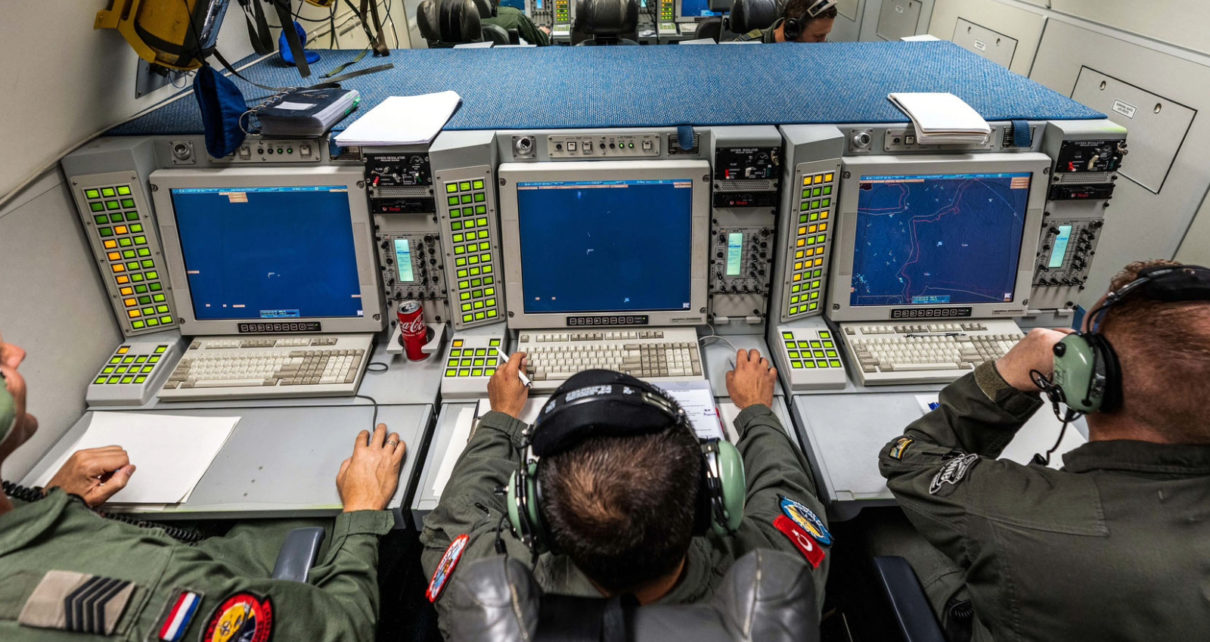
The new and exciting development in acquiring new AEW&C systems looks to revolutionize Canada’s intelligence gathering capabilities. AEW&C aircraft utilize powerful radar systems to survey large areas from the sky, allowing for increased intelligence gathering, military coordination, communication, and, in some cases, even utilize electronic warfare capabilities.
Canada currently has no AEW&C aircraft, so it relies on systems from allies such as the US and NATO. However, Canada seems well-suited to have its own fleet of AEW&C aircraft, as it is the second-largest country in the world, meaning it must monitor three massive coastlines and highly remote and large areas such as the Arctic. Most modern AEW&C aircraft can scan from 450 to 600km away, giving them a surveillance area of 500,000 to 1,130,000km². With that coverage, one AEW&C could monitor all of the Yukon in one location. Unlike satellites, AEW&C aircraft are not fixed in orbit and thus can loiter over an area of interest, allowing for more flexibility.
AEW&C aircraft can not only help with surveillance but also play an integral role in deterring threats during times of conflict. When an attack occurs, it is imperative that military forces and government actors know what the situation is on the ground. This is where these aircraft can shine, allowing for the collection of important intelligence and improved troop coordination. AEW&C aircraft have played important roles during conflicts like Kosovo, Afghanistan, and the Ukraine War. Recently, Italian AEW&C aircraft under NATO helped in the detection of Russian drones that violated Polish airspace. These systems have only improved over time and are now a key asset in any military’s toolkit that changes how militaries engage threats and how effective they can be.
Canada seeks to acquire up to six AEW&C aircraft, and will spend more than $5 billion on them and the required infrastructure such as aircraft hangars, training facilities, and other logistics. This has created a race amongst defence companies with options like the Boeing E-7A Wedgetail, the Saab GlobalEye, the L3Harris Technologies Phoenix AEW&C, and the Northrop Grumman E-2D Hawkeye all being presented as viable. Each has its own pros and cons, with factors such as cost, range/capacity, durability, flexibility, operating costs, and most recently, procurement diversification potentially away from the US all being considered.
With this brand new fleet of AEW&C aircraft, Canada will no longer have to rely on other countries like the US for NORAD-related and general intelligence gathering from the sky. This demonstrates Canada’s willingness to take control of its own Northern affairs in a time of dramatic shifts and rising threats. Canada can no longer afford to not know what is occurring in its own territory or have other countries know before they do. With this new acquisition, Canada will continue to modernize its armed forces for the modern world we currently live in.
This modernization effort not only enhances Canada’s ability to defend its Arctic frontier but also reaffirms its contribution to NATO’s 75-year legacy of collective security, especially timely as 2025 marks the 70th anniversaries of the Distant Early Warning (DEW) Line and the NORAD Agreement Renewal.
Photo: Aircrew from the Netherlands, Turkey, and the United States monitor the skies over Poland in their E-3A Airborne Warning and Control System (AWACS) aircraft. ©NATO, NATO AWACS Deploys to Lithuania, 30 September 2023. Retrieved from NATO Newsroom.
Disclaimer: Any views or opinions expressed in articles are solely those of the authors and do not necessarily represent the views of the NATO Association of Canada.