By Angus MacKellar
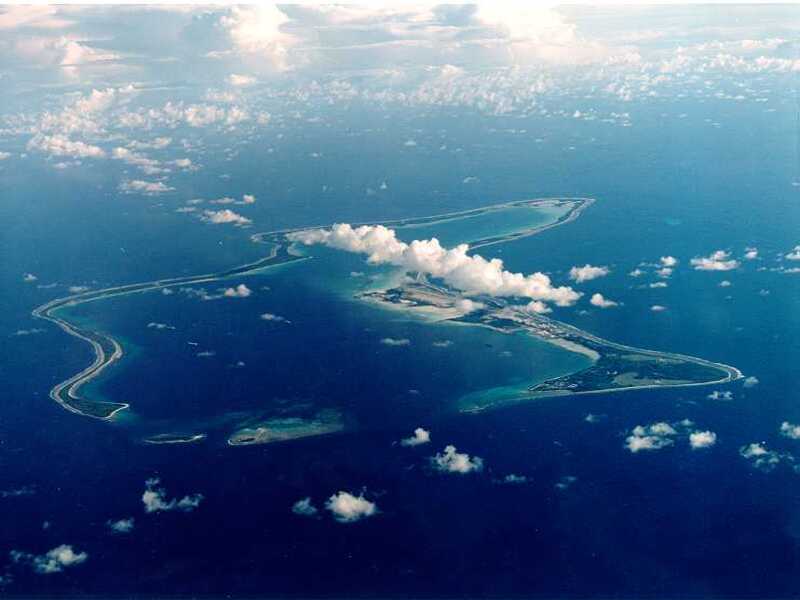
Positioned centrally in the Indian Ocean, thousands of kilometres from the Asian, African, and Australian mainlands, a crucial NATO naval installation serves as a forward base for British and American action across the Indo-Pacific. The Chagos Archipelago – part of the British Indian Ocean Territory (BIOT) – houses a joint UK-US military presence on Diego Garcia, a picturesquely tropical atoll.
But behind the clear blue waters and palm-lined shores lies a high-stakes geopolitical dilemma. British Prime Minister Starmer has agreed, in principle, to transfer sovereignty of the Chagos Islands to Mauritius, which is seeking closer ties with the People’s Republic of China, following a longstanding sovereignty dispute. While Westminster has negotiated a 99-year leaseback agreement for Diego Garcia, Mauritian sovereignty over the Chagos Archipelago complicates NATO’s presence on this unique strategic foothold.
Aside from the political debate about Chagossian sovereignty, the strategic importance of Diego Garcia is hard to understate. A linchpin in NATO’s extended deterrence and operational reach beyond Europe and North America, Naval Support Facility (NSF) Diego Garcia functions as a rare and irreplaceable platform for US and UK (and thus NATO) power projection across the Indian Ocean. The base can support the largest naval vessels in the world, including aircraft carriers, and serves as a deep-water port, airstrip, and logistics hub.
Geographically, the base is situated between three critical maritime chokepoints: the Strait of Hormuz to the Northwest, the Bab al-Mandab Strait to the West, and the Strait of Malacca to the East. These routes are lifelines of global trade and energy supply, with Hormuz and Bab al-Mandab being no strangers to geopolitical or military disruption this century. Malacca, alongside Hormuz, is a key lifeline for China, Japan, and South Korea’s energy imports.
In addition to its potential use as a base in its immediate neighbourhood, NSF Diego Garcia is well-positioned as a refuelling station and task force rallying point, making it a valuable asset across multiple theatres. The base’s utility is not just theoretical, however. In the twenty-first century, American B-2 stealth bombers have taken off from the island’s runway and launched strikes on targets in Afghanistan and Iraq, and have landed on the island for refuelling after completing long-range missions from the US mainland. This year, almost one third of the United States’ B-2 bombers were sent to the base as a show of force amidst rising tensions with Iran and Houthi rebels.
Given NSF Diego Garcia’s strategic importance, why hand over sovereignty of the Archipelago to Mauritius? The answer lies in a long-standing sovereignty dispute and related human rights concerns. Originally administered as a single colonial possession by France, Mauritius and the Chagos Islands were acquired by Britain in 1814 and subsequently split in two in 1965. The Chagos Archipelago became the BIOT, and Mauritius gained independence three years later, claiming the Chagos Islands as its sovereign territory. Whilst Britain paid Mauritius £3 million for the islands, the latter claims the deal was illegally presented as a precondition for independence. The Chagossians – whose ancestors were enslaved and brought to the islands by the French – were forcibly removed from the whole Archipelago to ‘clear the way’ for NSF Diego Garcia, and today mostly live in the UK, Mauritius, and the Seychelles.
In 2019, the International Court of Justice (ICJ) ruled that Britain violated international law by separating the BIOT from Mauritius before granting the latter its independence, and demanded that Westminster move to end its sovereignty over the Chagos Islands “as rapidly as possible.” Opting to transfer the islands to Mauritius rather than create an independent Chagossian state, London negotiated a 99-year leaseback of NSF Diego Garcia at the net cost of £3.4 billion (adjusted for inflation, with yearly absolute payments of £101 million), with the option for a 40-year extension in the twenty-second century. Under the terms of the agreement, the United Kingdom and the United States will maintain exclusive control of NSF Diego Garcia, and joint UK-Mauritian authorization will be required for any foreign security presence in the Chagos Archipelago, aside from British and American forces.
These terms must be respected by all parties – as well as foreign powers – if the deal is to be executed as intended by Whitehall. In the event of a dispute, such as one over the interpretation of “jointly” deciding on foreign military access, the deal’s Joint Commission will be asked to find a solution that satisfies both the UK and Mauritius. Ultimately, then, the deal depends on more than timely payments of £101 million annually, critically relying on the continued goodwill and co-operation of a foreign power that would otherwise have remained on the margins of Britain’s Indo-Pacific strategic calculations.
Despite these concerns, US President Donald Trump is tentatively on board – a crucial factor, given the US presence on the island. Domestically, the controversial treaty has passed both the House of Commons and the House of Lords, and is awaiting ratification once an accompanying bill is passed to integrate the terms into British law.
As NATO expands its focus to the Indo-Pacific, however, broader questions arise over how the sovereignty transfer might reshape the surrounding security landscape. Chief among the concerns is Mauritius’ growing relationship with China, with Beijing investing heavily in the island nation’s infrastructure and economy over the past two decades. Whilst Prime Minister Starmer notes that the lease agreement will prevent China from building naval installations across the Archipelago, leader of the opposition Kemi Badenoch has questioned how much the US and UK can trust Mauritius, which she claims “is an ally of China,” to uphold the deal in good faith.
While Mauritian Prime Minister Navin Ramgoolam has assured London and Washington that the deal won’t put the base at risk of Chinese interference, the possibility of geopolitical shifts – or economic pressures down the line – introduces long-term strategic uncertainty. If a future Mauritian government were to oppose Western military activity or push to renegotiate terms under Chinese (or even Indian) pressure, NATO’s only significant forward-operating base in the Indian Ocean could find itself in a diplomatically – if not operationally – constrained situation.
London has chosen to surrender the BIOT to Mauritius, making counterfactuals surrounding the maintenance of British sovereignty or the creation of a Chagossian state diminishingly relevant to the policy conundrum that is now at hand; Britain must find a way to make it work with Mauritius. Whilst respecting the ICJ’s authority and complying with international law, then, London policymakers must be wary of potential challenges surrounding the Chagos lease over the next century, at a time when they and their NATO allies are aiming to reinvigorate their Indo-Pacific positions.
To pre-empt any potential unintended consequences of the Chagos deal, NATO members must act with firmly backed vigilance, protecting the terms of the agreement and opposing any future Chinese military encroachment in the Chagos Archipelago. Furthermore, whilst the security environment a century from now is impossible to predict, the UK and NATO should think twice before assuming that the 40-year extension will be fulfilled without incident; further extensions could be even harder to come by. As Westminster surely remembers following the handover of Hong Kong, 99 years is not forever – especially when China puts its thumb on the scale.
Digegogarcia (2006), United States Department of Defense, Public Domain, accessed through Wikicommons.
Disclaimer: Any views or opinions expressed in articles are solely those of the authors and do not necessarily represent the views of the NATO Association of Canada