NATO’s 2024 Climate Change and Security Impact Assessment refers to climate change as the defining challenge of our era. Despite this, material and military readiness often serve as the primary measure of strategic and operational stability. While the conflict spectrum should remain at the crux of NATO’s agenda, climate security must be approached with equal urgency due to its uncharted complexity. Being climate secure means achieving peace and security while acknowledging climate change as a threat multiplier, producing additional challenges such as resource scarcity, livelihood insecurity, and displacement in countries or entire regions.
The consequences of climate insecurity, such as ecological degradation, are equally capable of producing humanitarian disaster. It can displace millions, exacerbate violent competition over land and food resources, and strain healthcare systems. Climate insecurity poses a threat to energy supply sources, which can gravely impact NATO’s disaster relief efforts and military activities. Weak governance in climate-insecure regions threatens to give hostile groups a competitive advantage. The harsh conditions produced by climate change impact the behaviour of armed groups and their recruitment tactics. For instance, droughts and crop collapse brought by Lake Chad Basin’s worsening ecological condition has been leveraged by Boko Haram, which recruits rebels by offering crisis relief through financial compensation. The Afghan Taliban also recruits by weaponizing resource scarcity and economic desperation. Other extremist organizations, including Al-Shabaab in Somalia and ISIS in Syria, exploit climate-vulnerable populations, resorting to resource taxation to raise funds. Climate change reshapes security environments by creating conditions that violent and extremist groups can then exploit.
NATO’s Women, Peace, and Security (WPS) Agenda offers vital insights into how gender affects how humans experience climate change. Women tend to be the first to experience the impacts of climate insecurity, as they often serve as primary caretakers of land, agro-economies, and family welfare. Indigenous women and girls also experience climate change disproportionately relative to non-Indigenous women, indicating how intersectional identities also influence the impacts of climate change.
Not only does gender affect how climate change is experienced, it can be equally fundamental for producing solutions. Canada’s Implementation Plan for the WPS Agenda specifically outlines how women act as particularly valuable contributors to climate solutions. It recognizes that women can serve in a variety of ways, from mediating conflict-mitigation negotiations to informing and designing resilience strategies both prior to and after impact, overseeing resource management, and leading boots-on-the-ground community initiatives. Achieving climate security requires women and girls’ meaningful participation, which means integrating diverse and interconnected perspectives across all WPS efforts. For instance, young people and children, particularly girls, have been at the forefront of climate awareness and resilience, and should be included in strengthening broader community initiatives. Women, notably those in developing countries, make up a significant portion of the agriculture labour force, from planting to livestock care to food processing. These women hold practical understandings of the land, water sources, and weather patterns, all knowledge which can inform NATO’s early warning systems and strengthen climate adaptation strategies.
NATO’s WPS Agenda recognizes women as agents of change who contribute valuable perspectives to climate security assessments and operational readiness. Although NATO has recognized some of these implications of climate insecurity and its gendered dimensions, there remain opportunities to further strengthen resiliency efforts. NATO’s current climate security challenge is not whether it can effectively map the intersection between gender and climate. The critical task is ensuring that its understanding of this nexus translates into a systemic approach that effectively incorporates gender-responsive measures into its climate risk security strategies, operational planning and readiness, and disaster risk and resilience protocols. To enhance long-term climate resilience, the Alliance must move beyond traditional security frameworks that regard vulnerable populations as passive victims of climate insecurity and integrate them as contributors whose lived experiences can inform planning.
NATO’s WPS Agenda and 2024 Climate Change and Security Impact Assessment recognize the gendered and socio-economic dimensions of climate insecurity, but do not expand assessments to seriously consider marginalized populations through an intersectional lens. It is integral to include their insights to better inform early warning systems and strengthen climate solutions. NATO members and allies, by extension, can develop and coordinate action plans or strategies to understand these climate-security risks.
One way to do this is through a trifecta of policy integration, operational planning and readiness, and gender and vulnerability mainstreaming. Policy integration will ensure climate security and WPS policies operate in unison and reflect the disproportionate impacts of climate insecurity on various populations. Operational planning can subsequently simulate crisis scenarios that exercise climate policy informed by gender. Gathering local expertise is essential to this. Additionally, including women and impacted populations at all levels of the process, including disaster response and early planning, can compound resilience. Establishing gender-responsive frameworks is essential to preventing these crises from becoming more costly.
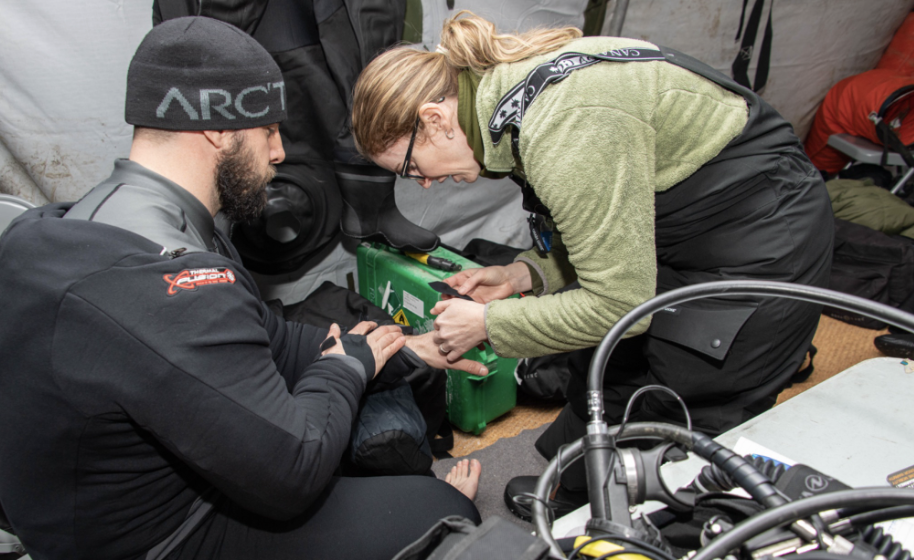
Image Source: Scientist Wendy Sullivan Kwantes can be seen installing a sensor on a soldier’s hand to detect fluctuations in the human body temperature during Operation NANOOK-NUNALIVAT – “IS05-2019-0001-030” (March 2019), by MCpl Gabrielle DesRochers via the Government of Canada. Photo courtesy of the Canadian Forces Combat Camera, Department of National Defence.
Disclaimer: Any views or opinions expressed in articles are solely those of the authors and do not necessarily represent the views of the NATO Association of Canada.