As U.S. foreign policy increasingly becomes isolationist under the Trump administration, marked by higher tariffs and reduced support for free trade, countries like Canada and members of the European Union started to reassess their economic strategies. In response, these countries have now started to reconsider how to manage and safeguard their economic security. Canada has been among the first to respond to these new developments by signing trade agreements to strengthen its position for the future. Over the past few months, Prime Minister (PM) Carney has chosen a trade diversification path for Canada, one that is aimed “to double non-U.S. exports”. This article analyses the trade diversification policy of Canada, highlighting its benefits, tradeoffs, and lessons for the rest of the NATO states.
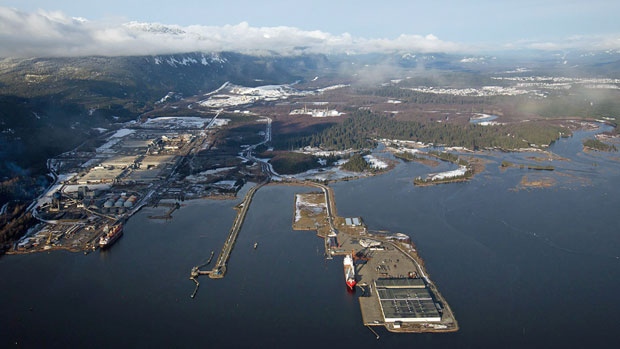
So far, China, UAE, and Qatar are among the countries with which the PM has signed strategic partnership and Foreign Investment Promotion and Protection Agreements (FIPA) respectively, to boost trade and attract foreign investment for Canada. By diversifying trade, Canada has the potential to increase its exports. Oil exports to Asian markets represent a particularly important opportunity for Canada. Between May 2024 and September 2025, these exports are expected to reach up to 5.76 million barrels of oil per month, driven by the Trans-Mountain Expansion Project (TMX). As these oil exports increase, 36,066 full-time equivalent jobs (covering roughly 2.5% of the total 1.4 million unemployed today) are estimated to be created nationally between 2024 – 2043, which could contribute towards alleviating the recent increase in unemployment in Canada, which is one of the primary challenges faced by its economy. When the revenue from oil exports starts flowing into the country, companies will start investing in their growth by expanding their workforce, purchasing new equipment and building more infrastructure to meet the increased demand. As this spending occurs and money flows into the economy, an expected $9.2 billion in GDP growth is projected between 2024 – 2043, creating a virtuous cycle of more employment and economic growth. Additionally, through the TMX project alone, as part of trade diversification policy, Canada would be able to add an additional $2.8 billion in tax revenue between 2024 – 2043. For the Canadian government, this represents progress towards addressing the federal fiscal deficit, which remains a significant challenge. Overall, through trade expansion, Canada has the opportunity to improve its GDP figures and further improve the health of its economy, moving away from the current slowdown, as the recent report from Rosenberg Research describes it.
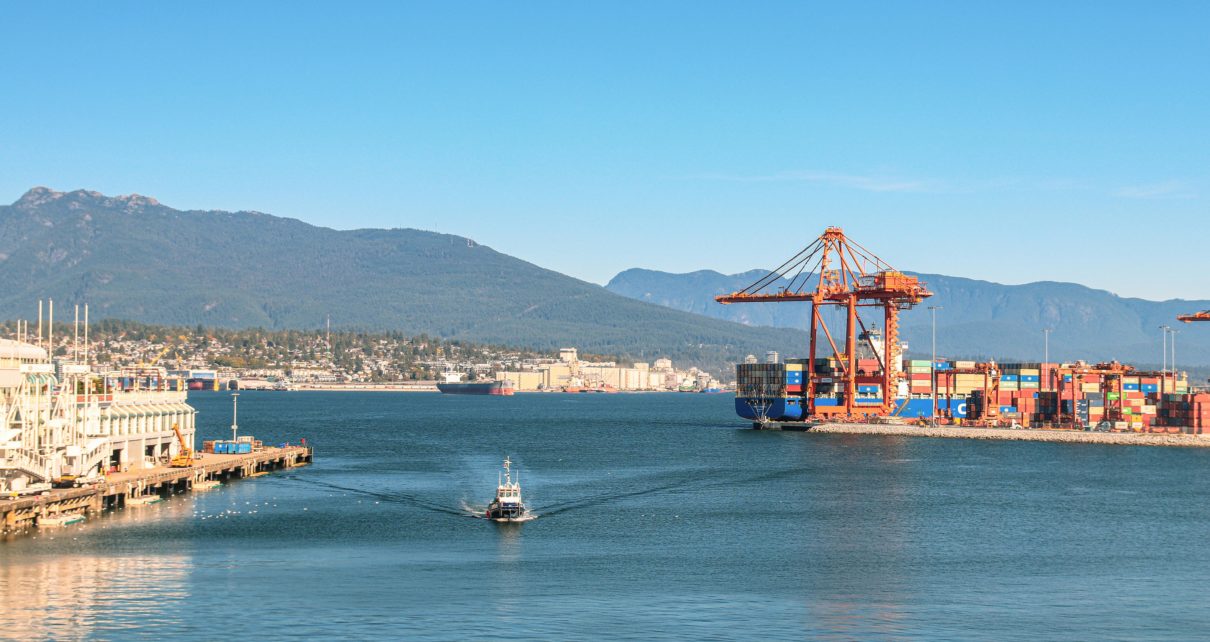
A second challenge, that could be solved through diversification, is the cost of living in Canada. As it opens trade with more partners, Canadians will have access to more affordable goods like electric vehicles (EVs). However, with this policy, there are also potential risks associated, such as the “China Shock” i.e., displacement of domestic industries by cheaper imports. Recently, Canada’s auto sector has raised similar concerns, highlighting the potential negative impacts of opening trade with China. According to the President of Unifor, Canada’s largest private sector union, Canadian auto jobs are put at risk by allowing cheap Chinese EVs into the Canadian market. To address this concern, the PM recently announced Canada’s new auto industry policy. The policy includes incentives for companies, as well as protection for Canadian auto workers in the form of a Work Sharing grant and support in reskilling up to 66,000 workers.
While easing trade restrictions with China, the UAE, and Qatar may create economic gains, it also raises concerns about shifting patterns of dependence. Beyond simple export expansion, diversification must be understood as a strategy of risk distribution. Overreliance on any single trading partner creates structural vulnerability, particularly in an era where economic tools are increasingly used for geopolitical leverage. This was also observed in Canada’s recent exposure to U.S. tariffs where overdependence on the U.S. economy for its trade ended up contributing to unemployment, loss of exports, and inflation as the tariffs were enforced by the Trump administration. With this new trade policy, decision makers should thus be careful and enforce mechanisms so that in the process of “doubling non–U.S. exports” Canada does not simply end up over-reliant on a different country for its trade. The goal here should be to diversify trade across different regions and sectors such that no one trade partner can exert disproportionate influence over national decision making.
The Canadian example serves as a great case study for other North Atlantic Treaty Organization (NATO) members affected by the shift in American foreign policy. Today, allied states (i.e., members of the NATO alliance) like the U.K. and other countries in the Eurozone face similar challenges as Canada in rising unemployment rates and stagnated growth. Trade diversification may thus offer a partial response to these pressures. Recently, the U.K. has announced plans to enhance its economic resilience through trade expansion with China. During his recent visit, the U.K.’s Prime Minister Keir Starmer signed export and investment deals worth over £ 2.2 billion, which are projected to drive economic growth and generate employment across multiple sectors of the economy, including energy, health care, and logistics. Further, there has also been a surge in Chinese EVs imported to the U.K., with sales up 880% compared to 2024, indicating significant demand for an affordable mode of transport among consumers.
Nevertheless, deepening trade ties with countries like China does carry risks, especially for certain sensitive sectors of the economy, such as automotive manufacturing. But, through carefully structured trade agreements and regulatory guardrails to shield against undesired economic shocks, as Canada has tried to achieve, the risks from diversification could be mitigated while developing broader economic security.
Image Credit: Kostas Dimopoulos
Disclaimer: Any views or opinions expressed in articles are solely those of the authors and do not necessarily represent the views of the NATO Association of Canada.