Historically, North Atlantic Treaty Organization (NATO) member states, including Canada, have relied on the overarching “nuclear umbrella” provided by the United States (US) for nuclear deterrence. The concept of the nuclear umbrella entails Washington pledging to defend NATO states against attacks from potential nuclear-armed adversaries such as Russia. But recent shifts in US defence policy and statements questioning Washington’s commitment have shaken allies’ sense of security. States such as Germany have openly voiced uncertainty about US commitments to the transatlantic alliance. At the same time, the US president has also made scathing attacks against Canada’s sovereignty. Given the changing geopolitical realities, there ought to be a way Canada addresses risk and uncertainty to its protection under the nuclear umbrella while remaining a long-running champion of non-proliferation. To consider this idea, the article examines faltering European confidence in the US nuclear umbrella and suggests reinforcing Canada’s role in North American defence and deterrence through NORAD.
Since World War II, the US has continuously sought to extend its nuclear umbrella to allies so that they do not acquire their own weapons. Non-proliferation of nuclear weapons, the idea that no more countries should acquire nuclear weapons, is what chiefly guided US policy in the past. US allies felt secure enough within the nuclear umbrella not to develop their own nuclear weapons. This is why Canada never possessed its own, domestic-made nuclear weapons, but it did host multiple US nuclear weapons systems on its soil during the Cold War. Deployment of US nuclear warheads in Canada started in 1950 and was kept secret from the Canadian public. The question of nuclear weapons caught public attention in the early 1960s during the BOMARC missile crisis. The Diefenbaker government was split on allowing Canadian BOMARC missiles to carry nuclear warheads amid the unpopularity of their deployment. Even though the succeeding Pearson administration did equip the missiles with nuclear warheads in 1963, public opinion towards nuclear weapons continued to sour.
In 1969, Canada ratified the Treaty on the Non-Proliferation of Nuclear Weapons (NPT) and began a process of nuclear disarmament. Since 1984, Canada became the first country to voluntarily remove nuclear weapons from its soil and has not hosted a nuclear warhead in its territory since then. Canada is a champion of non-proliferation of nuclear weapons across the world, advocating for gradual nuclear disarmament and eventually, a world free of nuclear weapons. At the same time, Canada benefits from NATO’s nuclear umbrella with the US as its chief provider.
Non-proliferation and nuclear disarmament movements brought a period of relative peace and stability regarding nuclear weapons, but this status quo appears to now be shattered. Provision of nuclear deterrence by the US to its allies, the reciprocal reduction of nuclear arsenals by Russia and the US, as well as the crucial agreement to stop nuclear tests by all major nuclear powers were the founding blocks of the nuclear status quo. It emerged at the end of the Cold War and lasted for about 30 years. But this period of nuclear détente has reversed in the last years, with most nuclear-armed states now looking to maintain and even increase their nuclear stockpiles. Russia and China have dramatically advanced their technological and logistical abilities to store and deliver nuclear warheads. The UK has reversed its 2010 plans to scale down its nuclear stockpile. More alarmingly, both Russia and the United States have openly stated they would resume nuclear testing. State capabilities to deliver nuclear warheads are also growing: Moscow started deploying its new hypersonic missile, Oreshnik, against Ukraine, which is capable of carrying six nuclear warheads and which Russia claims is impossible to intercept.
Moreover, there are increased doubts by NATO’s European members over the US’s commitments to mutual defence within the alliance and by consequence, to its overarching nuclear umbrella. There are high-level discussions between NATO’s EU members about creating an alternate European nuclear umbrella because of dwindling confidence in the US’s willingness to maintain infrastructural and political tools necessary for the incumbent umbrella by the US. Even more alarmingly, some US allies have clearly shifted their nuclear policy discussions towards proliferation. Poland for example has openly stated it may develop its own nuclear weapons program to base its security policy on ‘nuclear potential.’ Discussion of NATO or other US-allied states acquiring nuclear weapons threatens the very foundation of not just the nuclear umbrella but also the goals of non-proliferation of nuclear weapons. These talks also give evidence to growing doubts over the US’s continued commitments to extending nuclear or conventional defences to other countries. Communication, ambiguity, and verbal promises are essential to deterrence as a whole, almost as essential as the presence of physical weaponry and infrastructure that establishes nuclear deterrence.
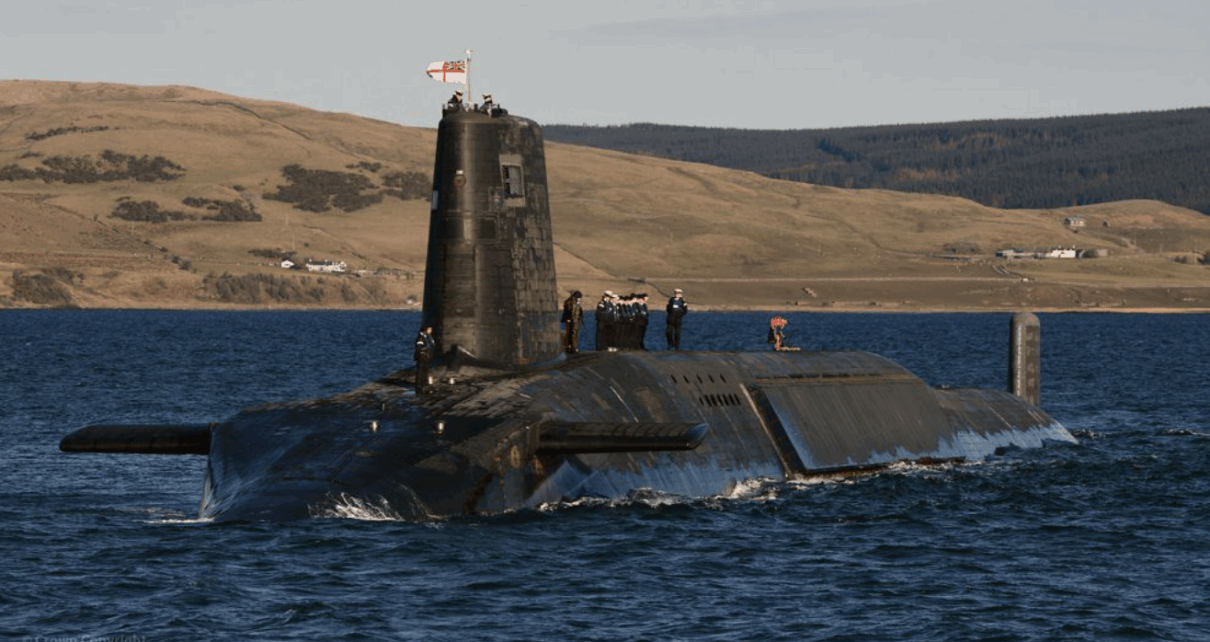
France and the UK, the two nuclear-armed NATO states in Europe, have expressed willingness to create their own nuclear umbrella within or outside NATO that would apply to allies on the European continent. Technically, the United Kingdom’s nuclear deterrence already extends to NATO allies through its Continuous At Sea Deterrent (CASD). However, the system’s submarine-launched missiles that carry nuclear payload rely on US manufacture and maintenance, and replacement missile models are not produced domestically, raising questions over the long-term sustainability of the program should tensions with the US continue. France on the other hand, while boasting a significant nuclear arsenal and a fully domestic production and maintenance chain, reserves its deterrence measures only for itself. It is the only country not to be part of NATO’s Nuclear Planning Group – a consultative body to discuss nuclear matters. While there have been talks over France extending some nuclear protection over Europe, Ottawa has not been part of these discussions.
Canada has limited options vis-à-vis partners who can provide extended nuclear deterrence. Ottawa is restricted geographically and cannot rely on potential extended deterrence solutions that emerge from the European continent at the behest of London and Paris. Yet Canada’s location does bring one unique advantage – the North American Aerospace Defense Command (NORAD). The aerospace defence partnership between Canada and the United States is arguably the closest and most comprehensive of its kind. Ottawa and Washington have collaborated deeply during the cold war in establishing vast networks of missile detection and interception infrastructure and early-warning systems across the vast Canadian North. The US relies on Canada for early detection and interception of missiles coming from the Arctic, which is the shortest path to the North American continent for both Chinese and Russian missiles. Canada’s nuclear security and by consequence, extended deterrence, are essential to broader American deterrence and nuclear self-defence goals. This suggests that the US’s apparent withdrawal from the steadfast defence of Europe might not apply to Canada.
A complete US withdrawal from providing extended deterrence to Canada may be unlikely, but expecting business as usual with the increasingly transactional foreign and defence policy-oriented Washington could be naive. Demands for more financial responsibility and less blanket security provisions are not unreasonable to expect. The problem these actions create is therefore not the absolute withdrawal of the US nuclear umbrella, but damage to its credibility. And should this damage be substantial enough, it may lead adversaries like China or Russia to reevaluate and recalculate odds of a broad array of hostile diplomatic and military actions against Canada. With this in mind, Canada should transform its geographic disadvantage of being relatively far away from NATO’s European members to a position of strength. By emphasizing its importance to North America’s nuclear defence systems through its membership in NORAD and physical proximity to the Arctic, Ottawa has the potential to fill in potential gaps in its extended nuclear deterrence.
Disclaimer: Any views or opinions expressed in articles are solely those of the authors and do not necessarily represent the views of the NATO Association of Canada.
Photo: “Trident Nuclear Submarine HMS Victorious” by Defence Imagery via Flickr. Licensed under CC BY-SA 2.0