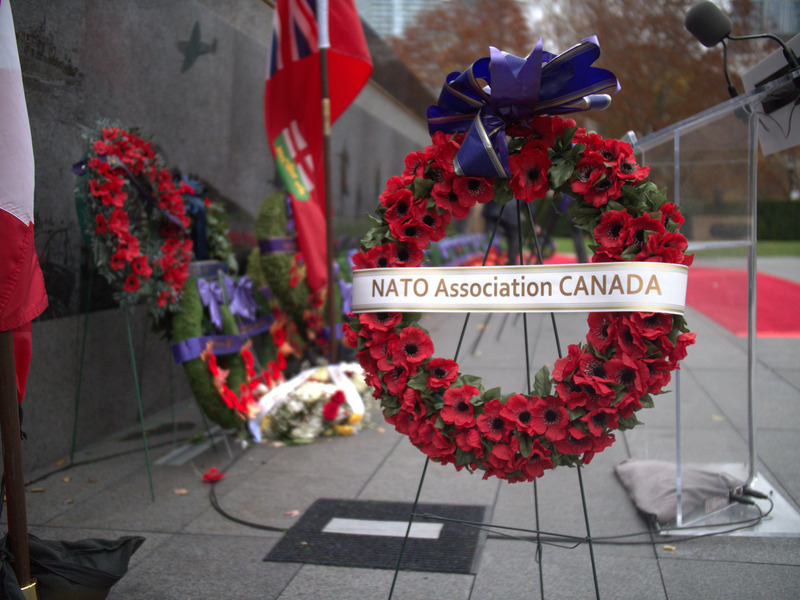
On November 11th, Canadians and their European allies observe Remembrance Day or Armistice Day, honouring those who sacrificed their lives in the World Wars and serving as a reminder of why maintaining the capability to fight remains important. For Canada, an extraordinary sacrifice was made in solidarity with the British. In a subtle display of Read More…
Tag: Defence spending
More than a game: Canada’s strategic opportunities with the 2026 FIFA World Cup
As the 2026 FIFA World Cup slowly approaches, fans and human rights groups alike are campaigning against matches hosted on US soil. Targeted immigration policies and discrimination against the LGBTQ+ community are some of the concerns raised by groups for the upcoming global event. For some, the policies of the Trump administration pose a significant Read More…
Canada’s Stance on NATO Enlargement
Introduction Since its inception in 1949, NATO has grown from 12 to 32 members, a process formally known as enlargement. In accordance with Article 10 of the North Atlantic Treaty, membership is open to all European countries so long as they commit to NATO’s principles and meet the Alliance’s requirement for defence spending, along with Read More…
POWER PLAY IN THE ARCTIC: Part 2 – Dissecting the Arctic’s Power Struggles by State
*This is the second instalment of a six-part series. As each Arctic state strengthens its security and defence capabilities in the High North, there is likewise an overall intensification of geopolitical rivalries, an expansion of coastal states’ territorial and energy ambitions, increasing clashes of interest, and a corresponding potential for instability. Problematically, NATO lacks an Arctic policy, Read More…
Strength in Unity: The Discussion on Canada-Latvia Relationship with Reinis Pozņaks
On September 18th, 2025, the NATO Association of Canada and the Canadian Armed Forces College Foundation hosted Latvian MEP Reinis Pozņaks for a discussion on Latvia’s role in international defence. Read this report to learn about the key topics raised, including Canada–Latvia cooperation, importance of increased defence investment, and the future of European security.
NATO’s Defence Spending Surge Is a Smart Move – But Can Europe and Canada Keep Up?
In June 2025, during the NATO summit in The Hague, the alliance agreed to a massive increase in defence spending, committing to reach the 5% goal by 2035. This article examines why Canada and the EU must match their rhetoric with resolve and highlights effective avenues for achieving higher defence investment.
NATO Summit 2025: Canada’s Leadership, Leverage, and Alliance Future
In the weeks leading up to the NATO Summit in The Hague taking place from June 24th–25th, Canada has found itself at the centre of multiple international conversations. Coming off the heels of the G7 summit in Kananaskis, where Prime Minister Mark Carney pledged an extra $2 billion in aid to Ukraine and promised to hit NATO’s 2% defence spending benchmark by Read More…
The North Atlantic Treaty Must Be Accepted in Whole, Not Just in Part
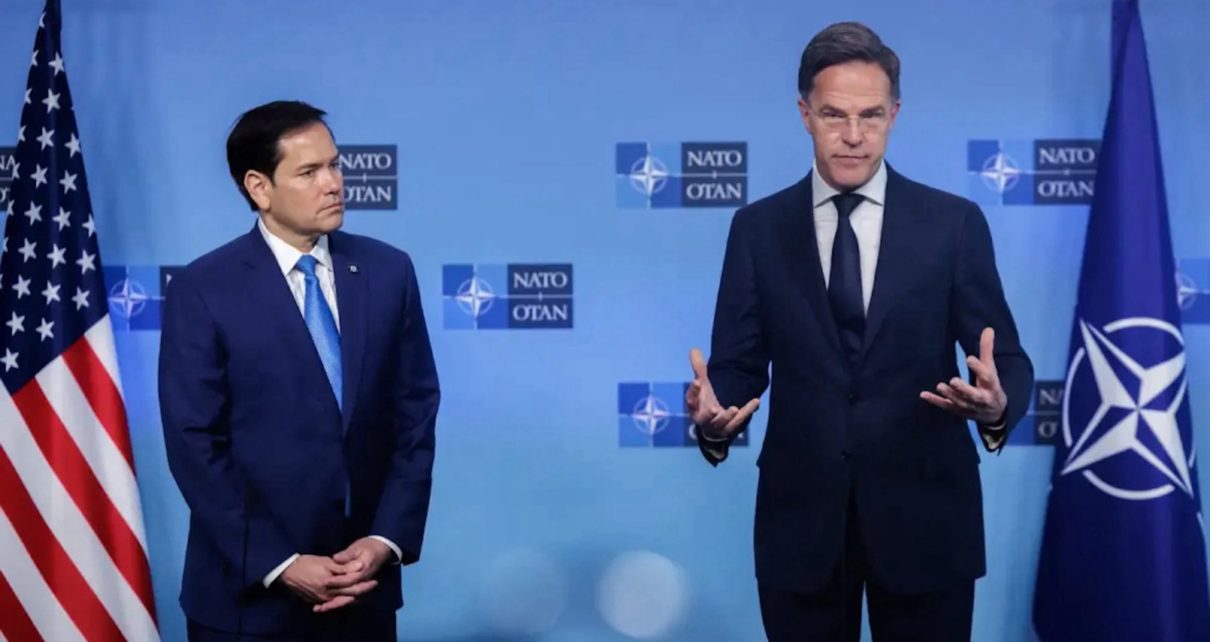
In early April, U.S. Secretary of State Marco Rubio spoke softly and carried a big stick at a NATO Ministers of Foreign Affairs meeting in Brussels. A more mainstream, small-l liberal Republican in an overwhelmingly “MAGA” administration, Rubio was probably the most suitable Trump cabinet pick to dispatch to Europe to smooth over relations with the representatives of Read More…
NATO’s 2% Spending Minimum. Will Canada Ever Make It?
On April 8th, 2024, Prime Minister Justin Trudeau announced a new federal investment plan in defence spending for the 2024 federal budget. The “Our North: Strong and Free” defence policy update proposed to raise Canada’s defence spending-to-GDP ratio to 1.76% by 2029-30, amounting to $8.1 billion over five years, and $73 billion over 20 years, in new Read More…
Towards a Stronger Europe: EDIS Feasibility and Collaboration for Enhanced Defence Resilience
Europe faces unprecedented security challenges, and the European Commission is seeking the opportunity to transform its defence-industrial base by creating the European Defence Industrial Strategy (EDIS), pledging €1.5 billion to support this initiative between (2025-2027). Critical procurement vulnerabilities have been exposed since the COVID-19 pandemic, Russia’s invasion of Ukraine, and the potential return of a Trump administration. Addressing these vulnerabilities and diversifying Read More…