1. The NORAD Story
Founded in 1957, the North American Aerospace Defense Command (NORAD) arose from the converging security imperatives of the United States and Canada during the early Cold War. Its mandate was clear and urgent: continuously detect, validate, and issue warning of ballistic missile or air-breathing threats, principally Soviet bombers, approaching North America via the Arctic (the shortest geographic route), thereby enabling timely interception and deterrence.
To operationalize this vision, the tri-layered radar network Pinetree Line, Mid-Canada Line, and the Distant Early Warning (DEW) Line was constructed across the Arctic periphery during the 1950s and 1960s. The DEW Line, spanning some 4,800 km across northern Canada, Alaska, and Greenland, represented a feat of military engineering, combining early warning radar technology with logistical infrastructure in remote, inhospitable terrain.
By the 1980s, this Cold War-era architecture was deemed outdated. Consequently, Canada and the U.S. initiated the North Warning System (NWS), which deployed solid-state radar, more efficient communications, and fewer manned sites. Between 1986 and 1992, the NWS was constructed and later became fully operational, replacing the DEW Line while maintaining the strategic stillness along the polar approaches.
This Arctic radar infrastructure was not only critical for North American defense but also contributed to broader collective security frameworks under NATO. By ensuring early detection and rapid response to potential Soviet attacks, NORAD enhanced transatlantic security and interoperability with NATO allies, providing shared intelligence, surveillance capabilities, and coordinated air defense strategies. The integration of Canada and the U.S. in this bi-national command demonstrated a commitment to collective defence principles, reinforcing NATO’s deterrence posture during the Cold War and establishing enduring protocols for allied coordination in aerospace warning and control.
2. Why Now? Rising Geopolitical Pressures
The Arctic has shifted from strategic backwater to geostrategic flashpoint, driven by climate change and advancing technologies. Rapid ice melt is opening the Northern Sea Route and other shipping corridors, while previously locked energy reserves and mineral deposits are now feasible to access, triggering heightened interest from multiple state actors.
Russia’s Arctic Militarization
Russia holds the longest Arctic coastline and has actively revitalized its Soviet-era infrastructure. Through its Arctic Policy 2035, Moscow has declared the imperative of safeguarding its sovereignty and territorial integrity in the region, while upgrading military assets including air bases (e.g., Nagurskoye, Temp), Arctic-capable units like the 80th Arctic Motor Rifle Brigade, missile test ranges (Pan’kovo), and expanding its nuclear submarine deployment (Northern Fleet).
China’s Arctic Ambitions
China, though a non-Arctic state, has declared itself a Near-Arctic State and advanced its influence via the Polar Silk Road, part of its broader Belt and Road Initiative. Through scientific stations (e.g., China-Iceland Arctic Science Observatory in Iceland, a station in Svalbard), icebreaker investments, and funding for infrastructure, Beijing seeks economic and strategic access to Arctic routes and resources. But these moves have sparked skepticism: many Arctic states suspect that China’s activities could serve both civilian and military purposes, raising broader concerns about how its presence might reshape the rules and norms of Arctic governance.
Moreover, the controversy surrounding the 2023 high-altitude balloon (HAB) detected over North America, which U.S. officials identified as a surveillance platform despite Chinese claims of scientific research, underscores these concerns. Such incidents illustrate how ostensibly civilian technologies may mask intelligence-gathering purposes, deepening strategic anxieties about China’s intentions in the Arctic.
It is clear from the preceding discussion that both China and Russia may be regarded as potential threats to the Arctic region; however, an actor can only be defined as a threat if it demonstrates a combination of both intent and capability. While future intent is inherently difficult to predict, it remains essential to monitor and assess the evolving capabilities of these states in order to ensure preparedness. NORAD’s existing NWS infrastructure lacks capacity to detect hypersonic glide vehicles, low-flying cruise missiles, or advanced undersea assets; additionally, maritime and underwater warning systems remain insufficient.
3. Canada’s Strategic Response
In recognition of the evolving Arctic threat landscape, Canada and the U.S. have launched a sweeping NORAD modernization effort. Announced in June 2022 and formally integrated into Canada’s 2024 North, Strong and Free defence policy, the plan commits CAD 38.6 billion over 20 years to upgrade continental defence capabilities. Key initiatives include replacing the aging North Warning System with Arctic and polar Over-the-Horizon Radar (OTHR), strengthening satellite-based sensing in low Earth orbit, enhancing command-and-control systems, and expanding undersea detection networks. The investment also covers new surveillance aircraft, advanced air-to-air missiles, and hypersonic and cruise missile defence systems. According to the Department of National Defence, CAD 6.38 billion has already been allocated for early projects, with major milestones scheduled between 2024 and 2035. These investments signal a decisive shift in North American defense strategy, ensuring that Canada and the U.S. can detect, deter, and respond to emerging threats in the Arctic.
Given these modernization operate across northern Canadian territories, Indigenous peoples and local communities are key stakeholders. Crown-Indigenous Relations and Northern Affairs Canada emphasizes respectful partnership in defence projects, ensuring that Indigenous rights, land uses, and environmental impacts are addressed in planning and implementation. This approach underscores the imperative of inclusive governance for strategic projects in the North.
These modernization efforts strengthen North American defense and interoperability with NATO allies and highlight the growing intersection of climate security, sovereignty, and Arctic defence. Yet public understanding of the Canadian Arctic’s strategic importance remains limited, creating an informational gap between policymakers and voters who influence defence priorities. As NORAD adapts to emerging threats, it raises a critical question: how can Canada ensure that its Arctic policies are both strategically robust and widely understood by its citizens?
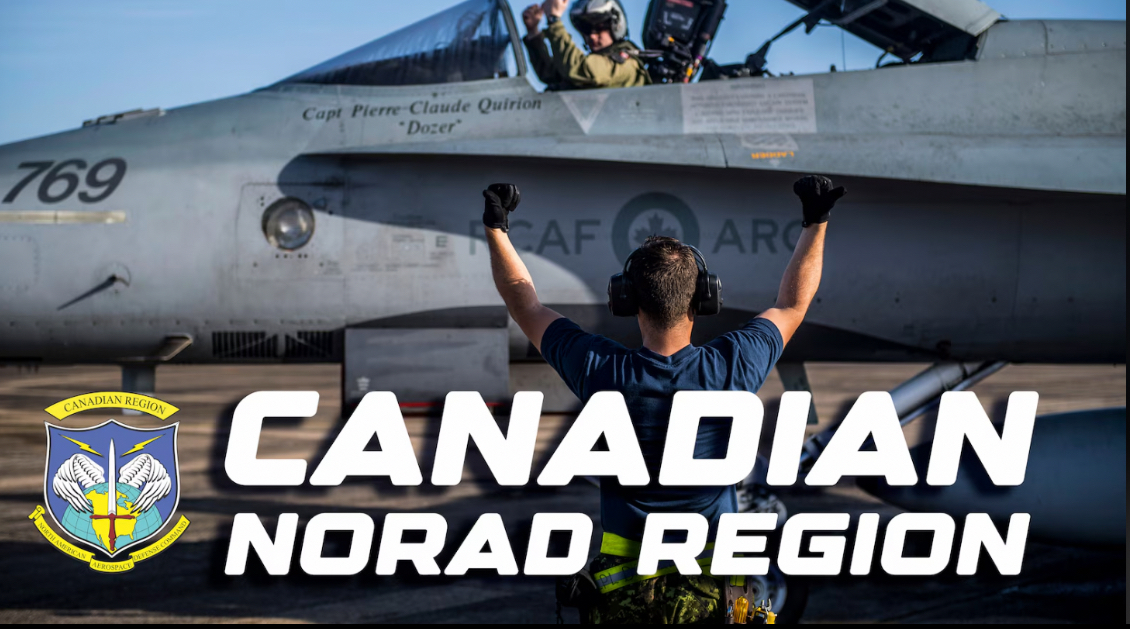
Photo: Royal Canadian Air Force CF-18 Hornet pilot assigned to the Canadian NORAD Region, 2023. © NORAD, via NORAD Newsroom
Disclaimer: Any views or opinions expressed in articles are solely those of the authors and do not necessarily represent the views of the NATO Association of Canada.