When Canada sanctions Russia, it’s about defending peace and security. When Canada sanctions Russia, it’s also about your bill at the gas pump and how Ottawa allocates your tax dollars. In 2025, Ottawa faces a strategic triangle: enforcing sanctions to uphold NATO and trans-atlantic unity, funding growing defence commitments, and keeping life affordable for Canadians. How it balances these pressures will shape both its credibility abroad and its stability at home
NATO, as an alliance, doesn’t itself impose sanctions, but its individual member states, and organizations like the European Union (EU) and G7, do. Since Russia’s invasion of Ukraine in 2022, Canada and its allies have implemented coordinated sanction packages designed to restrict Russia’s trade and energy revenues, weakening its capacity to finance war. These efforts form part of a broader strategy of deterrence, essential to NATO’s objectives.
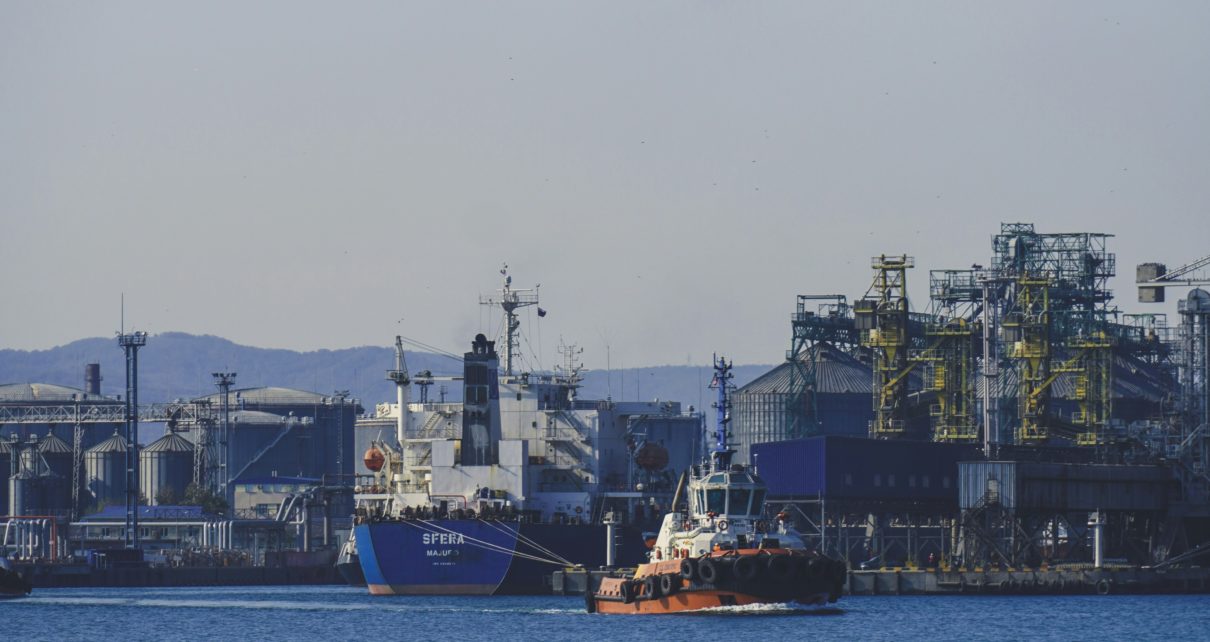
The EU’s most recent and 18th sanction package, adopted July 18th, targets “Russia’s energy, banking and military sectors” with major additions, including lowering the Russian oil price cap (from US $60 to $47.6 per barrel). It also restricts access to financial and maritime services, and targets Russia’s “shadow fleet”, which are vessels used to evade sanction rules by disguising oil exports. Though, oil exports still account for roughly one third of Russia’s government revenues. Meaning that coordinated sanctions are still vital: every loophole closed means fewer resources for Russia’s war chest. Each shadow vessel denied insurance or port access equates to less money for missiles and tanks. This latest package reflects the direct response to Russia’s evolving evasion tactics, which are also characterized by re exports via third countries. Yet it should be noted that European governments, still managing historical energy dependencies on Russia, have avoided full embargoes.
Canada, in alignment with its NATO allies, released its largest-ever sanction expansion measures on June 17th, emphasizing that it includes “Canada’s biggest-ever package of vesseland trade-related sanctions.” This package adds sanctions on 77 individuals, 39 entities, and nearly 1,000 traded items. The package also targets shadow fleets by blacklisting an additional 201 vessels and further imposing prohibitions on previously listed ones. When Canada blacklists a ship, insurers, ports, and banks are prohibited from dealing with it, making it harder for Russia to sell oil globally.
The impacts? Gone are the days of Russia funding war from surplus oil revenues. In Q2 of 2025, The Center for Research on Energy and Clean Air, reported that in spite of an 8% increase in volumes exported, Russian year-over-year fossil fuel revenues fell 18%. Marking the lowest quarter since its full-scale invasion of Ukraine and stemming from sanctions that force Russia to sell at steep discounts.
The Kremlin further announced plans, on September 24th, to raise value-added tax from 20% to 22%, despite Putin’s promises to freeze rates until 2030. With the intent to raise funding for the spiralling government budget deficit, due to defence and security spending, the strain on the Russian economy is mounting and being relegated to everyday citizens and corporations. In fact, the International Monetary Fund (IMF) recently downgraded Russia’s growth forecast due to policy tightening and lower oil prices, coming after 2 years of wartime economic boom. According to the Kyiv School of Economics, the size of its deficit surpassed 4.9 trillion rubles (equivalent to nearly 82 billion CAD) this year, representing 129% of the full-year target. Further economic evaluations show that “employment has softened, and GDP growth slowed to 1.4% in Q1, down sharply from 4.5% the previous quarter.”
Despite these evolutions, general expert consensus has been that there is a lot more room for improvement when it comes to the effectiveness of sanctions in constricting Russia’s war funding abilities. They’ve curbed revenues and forced Russia into costly evasion schemes, but enforcement remains a constant race against adaptation. For Canada and its allies, the numbers mark the growing effects of coordinated sanction actions. Though, it also shows that imposing restrictions is easier than sustaining them politically and fiscally over time.
Sanctions, of course, are felt by everyone. They restrict supply chains, pushing up world energy, shipping, and commodity costs, putting strain on all, not only the Kremlin. While Europe feels it more acutely, shown in various economic findings, Canadians may feel it indirectly via higher import costs and global market instability. For Ottawa, the problem is more fiscal; it’s in balancing sanctions enforcement capacity with increased defence spending commitments.
Global Affairs Canada (GAC) has further stated that its sanctions were designed to maximize pressure on Moscow while minimizing disruption at home. In practice, this means targeting sectors where Canada has limited dependence, such as Russian coal, while avoiding goods Canadians rely on. McMillan, a Canadian Business Law firm, has noted that many of the new goods prohibitions won’t affect contracts made prior to June 23, 2025, in order to limit the adverse effect on Canadian businesses. The firm also highlighted that enforcement, while limited, carries weighty penalties. The recent arrest and prosecution for illegal exports tied to Russian arms production show Ottawa’s willingness to act. Beyond symbolism, these actions reflect Canada’s participation and reinforces solidarity with its transatlantic allies.
Even so, further questions and criticisms have been raised on GAC’s capabilities and capacity to enforce and track these sanctions robustly, besides just announcing them. Leading to also wonder whether Canada risks falling behind in economic competitiveness if enforcement is too heavy. Amplified with pressure to spend 2% of GDP on defence, currently projected at 1.37%, Canada navigates this balance and tests how much public faith remains in the alliance itself. As sanctions and defence commitments sustain collective credibility, if one ally pulls back, it can weaken the whole. Yet, as a reliable NATO member, Canada’s continued buy-in signals that middle powers remain invested.
Canada also brings unique contributions and strengths: Arctic presence, resource exports, defence industry partnerships, and North-Atlantic domain awareness. The credibility of Canada’s voice within NATO depends on whether it can manage the scale at home while staying dependable abroad.
Canada is essentially at the center of a sanctions vs. affordability vs. defence triangle. Canadians may never see the mechanics of oil caps, or banking restrictions, or NATO’s strategic debates, but they feel their outcomes in the costs of imported goods and evolutions of foreign relations. Effective sanctions enforcement signals dependability. Defence investments demonstrate burden-sharing. Maintaining affordability ensures legitimacy. If any side of this triangle collapses, then allied confidence suffers.
The choices Ottawa makes now on how much to spend, how rigorously to implement sanctions, and how much burden to ask from citizens, will ultimately impact Canada’s standing in NATO and at home, whether Canadians accept the costs of participation. The credibility ultimately rests on its ability to balance resolve with restraint.
Disclaimer: Any views or opinions expressed in articles are solely those of the authors and do not necessarily represent the views of the NATO Association of Canada.