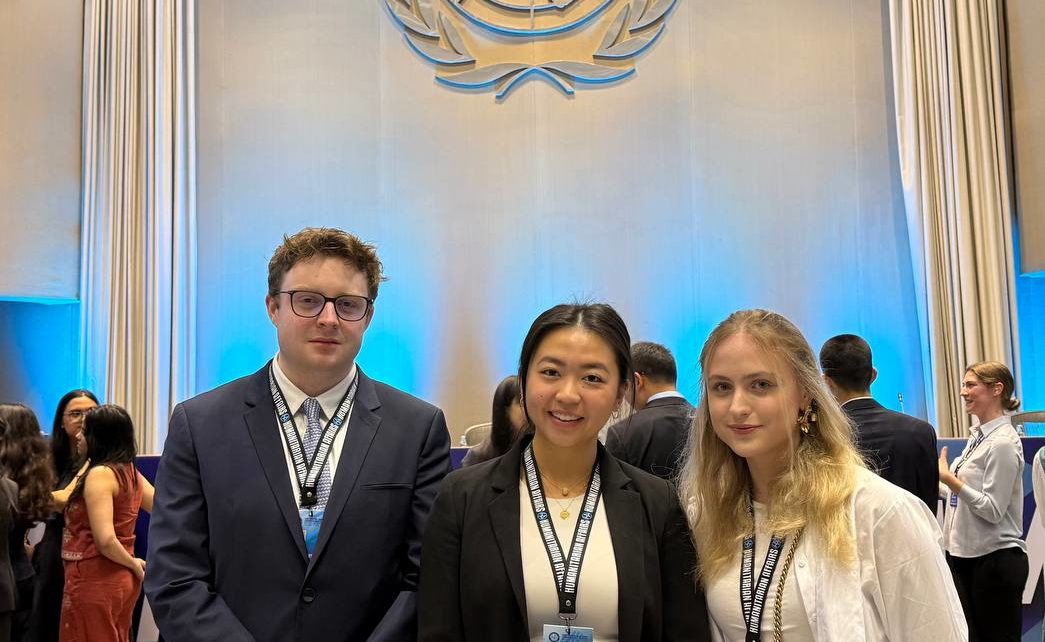
From 20–23 January 2026, the interns of the NATO Association of Canada, Nataliia Dikalchuk, Isabelle Zhu and Matthew Reddock attended the 5th Global Peace Summit of Emerging Leaders in Bangkok, Thailand. The event was organized by Humanitarian Affairs Asia at the United Nations Conference Centre.
The Summit convened approximately 400 young leaders from over 60 countries, who discussed contemporary peacebuilding challenges and reinforced the role of youth leadership in advancing inclusive and sustainable peace. Over three days, the Summit hosted a series of sessions on peacebuilding and humanitarian engagement.
The event commenced with the Official Opening Ceremony, which included remarks by Patricia Shafer, Executive Director of the international nonprofit organization NewGen Peacebuilders. She reminded the attendees that sustainable peace requires long-term investment in youth leadership. Peace and education are intertwined and they are not something we wait for – we must build them together. Dr. Manal Omar, Founder and Chief Executive Officer of Across Red Lines, a global organization dedicated to inclusive peacebuilding through dialogue, training, and conflict prevention, delivered the second session.. Drawing on her extensive experience working in conflict-affected environments, Dr. Omar highlighted the importance of inclusive dialogue and trust-building across deeply divided communities. The first day of the Summit concluded with a speech delivered by UNHCR Goodwill Ambassador Emi Mahmoud. Drawing on her background as a former refugee from Sudan, Emi recited poetry to highlight the profound emotional and social consequences of displacement. She spoke about the loss of home and the ongoing challenges faced by women and refugees in securing their rights in post-conflict setting.
The second day of the Summit began with a speech by Alfred Orono, the Head of Field Office at the United Nations Mission in South Sudan. Mr. Orono shared insights into the complex processes of conflict resolution and post-conflict reconstruction, emphasizing the importance of local engagement and sustained international support. The summit continued with deeply moving personal narratives in the panel “A Story of Fleeing Conflict,” presented by Mirsad Solaković, a Bosnian genocide survivor, and Lejla Damon, born shortly after the Bosnian war. Through speakers’ stories, delegates observed the enduring human consequences of armed conflict, such as displacement, and the resilience required to rebuild livelihoods. The speakers emphasized that moving forward with one’s life requires the difficult but essential act of forgiveness, even toward those who have committed cruel acts of aggression. The second day concluded with the speech “Hope in the Darkness of War,” presented by Ruben Mawick, a German combat medic serving in Ukraine. His presentation highlighted acts of courage, selfless assistance, medical care, and support for civilians in war zones, reinforcing the Summit’s message that peace is both a personal and collective responsibility.
The final day opened with the session “Hope Against the Odds,” by the representatives of Palestine and Israel, Sulaiman Khatib and Chen Alon of Combatants for Peace. As former fighters from opposing sides, they now work together to promote nonviolence, showing that reconciliation and dialogue are possible even in deeply divided conflicts. Sulaiman and Chen highlighted that in pursuit of achieving peace, we must strive to talk to our enemies, not friends. Only dialogue with those we oppose can break cycles of fear and entrenched polarizing narratives, and open the path to long-term reconciliation. The next speaker, Jennifer Nadel, Director of Compassionate Politics at the Centre for Compassion and Altruism Research and Education atStanford University, delivered “A Manifesto for a Kinder World.” Her presentation highlighted the importance of self-care in the process of peacemaking. One cannot truly care for others without first caring for themselves. Peacemaking thrives on human interactions, and to contribute meaningfully, each person must cultivate enough inner strength and capacity to share with others.
The Official Closing Ceremony featured a children’s chorus performance by Wattana Wittaya Academy, followed by a film documenting the delegates’ journey throughout the Summit. The event concluded with a symbolic call to action by ambassadors, which invited participants to carry forward the lessons, networks, and inspiration gained over the three days into their communities and future work.
Throughout the conversations and Q&A sessions, speakers and delegates reaffirmed that peacebuilding is both a collective endeavour and a deeply personal commitment. Drawing on lived experiences—from war zones to reconciliation initiatives—participants emphasized the human realities that underpin security and stability.
The Summit reinforced the urgency of the NATO Association of Canada’s mission to foster informed dialogue, youth engagement, and public understanding of peace and security. The discussions highlighted that effective collective defence and conflict prevention require an informed citizenry capable of understanding NATO’s purpose, Canada’s responsibilities, and the human dimensions of security. They reaffirmed the importance of NAOC’s role in connecting Canadians to transatlantic debates, amplifying diverse voices, and preparing the next generation of leaders to engage critically with global security challenges. Without this work, public discourse risks becoming disengaged or misinformed, undermining Canada’s long-term credibility and effectiveness within the Alliance.