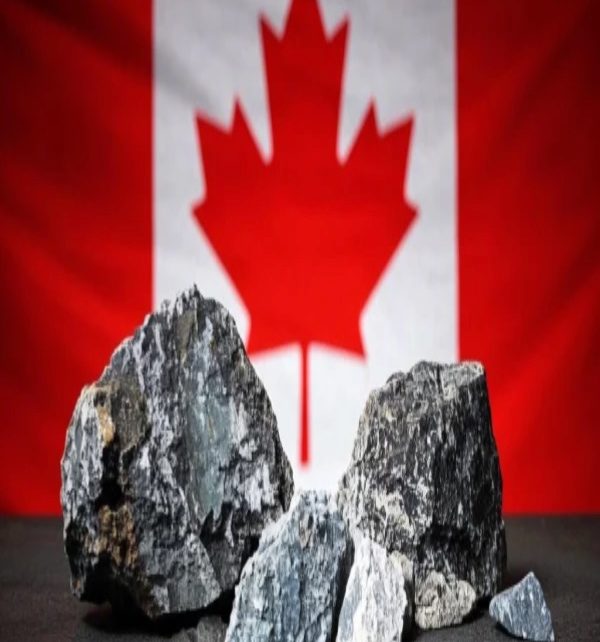
At the 2025 NATO Summit, Prime Minister Mark Carney announced that critical mineral expenditures would contribute to Canada’s 5% NATO defense spending contribution. Key to this new positioning is the building of essential industrial infrastructure necessary for critical mineral development and exportation, of which 1.5% of the new commitment is dedicated to. This new approach to fulfilling Canada’s alliance commitments effectively highlights the importance of the country’s significant critical mineral capacity, a potential defining feature to its future positioning and military contributions within NATO.
Why do we need critical minerals for defense systems?
The manufacturing of defence equipment and key security systems worldwide relies on the continued availability and supply of critical minerals. NATO has identified 12 key critical minerals for the manufacturing of their essential defence infrastructure, from Gallium and Iridium necessary for defence radars and sensor technology to Tungsten used in engine components and warheads. Obstructions to the supply and processing of these essential raw minerals would consequently impede technology development programs as well as the ongoing operation of current defence systems, endangering the operational readiness of NATO allies.
This supply chain vulnerability is based in the reality that the military capacity of critical mineral-based systems within the NATO alliance is largely controlled by the dominant producer for these essential minerals, China. Its near monopoly over the supply and processing of raw minerals worldwide is due to China’s significant domestic supply as well as heavy investments in mines within third countries. While at the moment there is a steady Chinese supply for most NATO members, there remains a risk of potential Chinese export controls on minerals and personnel expertise which would prevent the use of certain equipment and halt new technology developments, a measure that was implemented in response to U.S. tariffs in April and October of last year. In light of the Chinese-dominated minerals market, NATO member states’ desire for a counterweight to Chinese influence and an allied minerals supplier presents a unique opening for a Canadian entrance into the market.
An opportunity for Canada in NATO’s defence supply chains.
Canada’s opportunity lies in its possession of a significant critical mineral capacity and well developed mining industry. Out of the 12 defence-critical minerals identified by NATO, Canada possesses identified reserves for all 12, while 10 are refined and produced in Canada. Despite these large reserves and a clear global demand, Canada is not yet a global supplier of these resources and its current production largely undershoots its potential supply. Developing its mineral extraction capacity would mean securing the supply chain demands of both the Canadian industry and its Alliance partners while securing substantial growth for the domestic economy.
The European Union (EU) presents the clearest path for cooperation to push forward this industrial development for Canada. Already engaged in the Canada-EU Strategic Partnership on Raw Materials announced in 2021 to integrate critical mineral supply chains, Canada has been recognized as a natural trading partner for the EU based on shared environmental standards, governance practices, and social values. This integration will prove essential as the EU demand for rare earth metals is predicted to increase six-fold by 2030 and continued Russian aggression has reinforced the desire for fortified defence infrastructure. Similarly, as the threat of tariffs continues to mark Canada’s relations with its southern neighbour, the imperative to develop its mineral capacity has heightened, not only to safeguard access to the U.S. market or establish alternative trade partnerships, but also to potentially strengthen Canada’s negotiating position in the 2026 review of the United States-Mexico-Canada Agreement where leadership in critical minerals could present significant strategic leverage. Having made up 4% of the national gross domestic product and contributing over 430,000 jobs directly in the field in 2023, Canada’s mining sector not only defines its international relations but also maintains a pivotal role in the domestic economy. By engaging in “raw minerals diplomacy” with other NATO members, Canada can facilitate the diversification of the Alliance’s current mineral export partnerships, allowing for greater mitigation of the risk of supply chain disruptions as well as the creation of new ties with NATO partners to further domestic Canadian industries.
The Canadian government has already made moves to prepare for the development of its mineral industry.
Notably, several Canadian leaders have acknowledged the importance of leveraging the country’s mineral deposits, with the building of resilient supply chains deemed “vital to our shared security and prosperity“ by Minister of Defence David J. McGuinty and an important measure which “deepens Canada’s strategic alignment with NATO and our allies” by Secretary of State for Defence Procurement Stephen Fuhr. As a result, the previous year has seen an increased effort to prepare for the future development of the industry. This past October at the G7 Energy and Environment meeting in Toronto, it was announced that $6.4 billion of investments from G7 countries was to be invested in critical mining projects across Canada. This paired with a new “critical minerals sovereign fund” included in the plans of the early-November federal budget represents a shift of the Canadian government towards a focus on mining as a viable and profitable export commodity.
However, in light of these efforts, key challenges remain that will influence Canada’s progression into a critical mineral supplier. Despite the great potential for produced results, many mining projects in Canada fail to yield these benefits due to difficulties securing upfront capital to begin these projects. A large deterrent of upfront investment is the volatility of critical mineral prices and the resulting financial risk. Establishing financial risk-sharing agreements between the government and mining companies that subsidize mining projects during price lows and are repaid during price highs would reduce investor risk and allow projects to secure the funding necessary for their development. Another concern is maintaining public approval for mining projects, especially from local indigenous communities directly affected by mining projects. Ensuring greater consultation with affected communities throughout the planning process allows for the addressing of community concerns and building of community trust, while also contributing to the Canadian government’s mission towards Indigenous reconciliation. It is clear that to mitigate these challenges and create the opportunity for the mineral industry to develop to the level needed to supply key NATO demands, government intervention will be necessary to ensure the availability of capital and public support needed for Canadian companies to launch projects and maintain their viability in light of Chinese competition.
With important industry events coming up including the International Energy Agency (IEA) 2026 Ministerial Meeting in Paris in February, and the Prospectors and Developers Annual Conference (PDAC) this March in Toronto, Canadian leaders have an opportune moment to advance a clear strategy for positioning Canada as a key actor in the future of global defense cooperation. By accelerating the development of its critical mineral supply chains, Canada can demonstrate tangible commitment to the NATO alliance, support progress toward its 5% contribution goal, and strengthen its role as a strategic partner capable of supplying the essential inputs for allied defense manufacturing and supply chains.
______________________________________________________________________________________
Any views or opinions expressed in articles are solely those of the authors and do not necessarily represent the views of the NATO Association of Canada.
Photo Credits: NAI 500