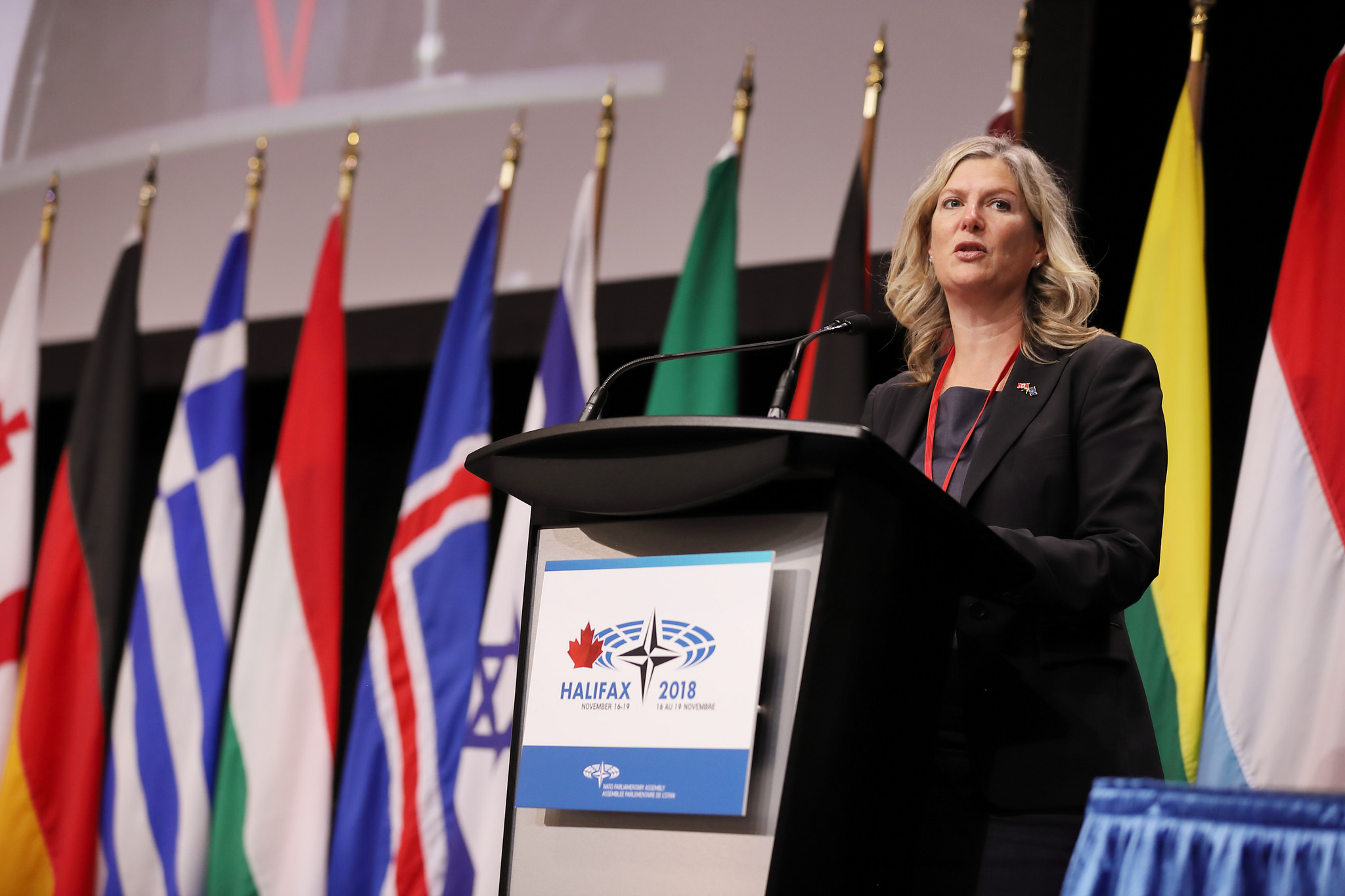
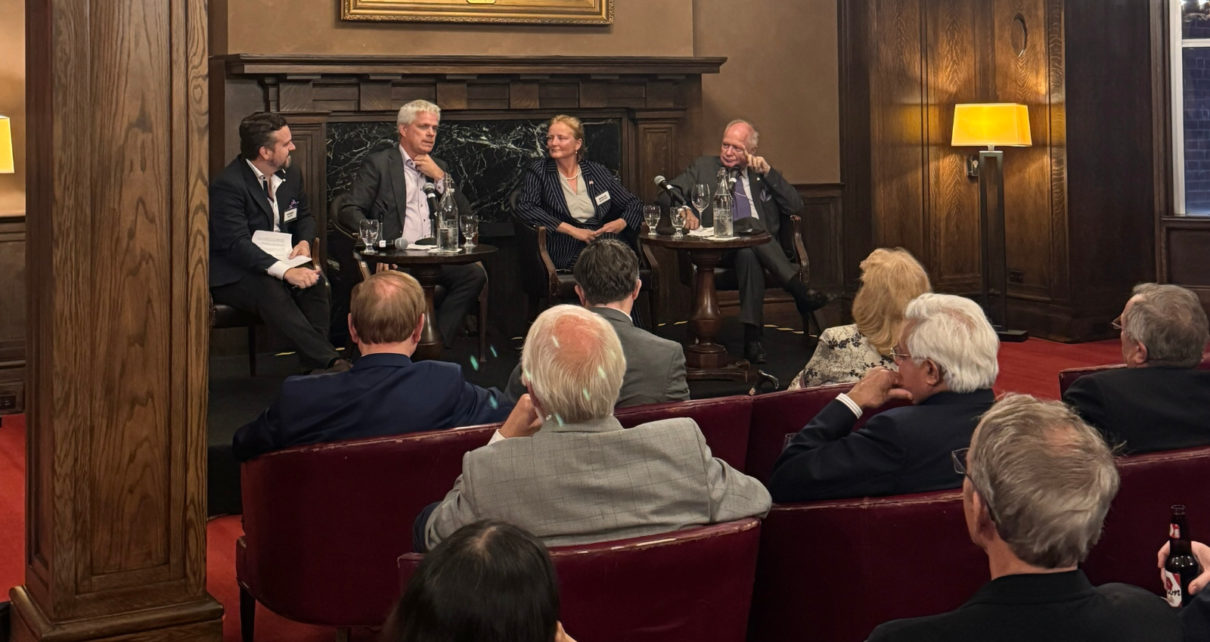
On September 23rd, the NATO Association of Canada (NAOC) and the National Club jointly hosted a panel discussion on the importance of international institutions in present-day international relations. The discussion was moderated by NAOC CEO and President Robert Baines and featured three guest speakers: Ben Rowswell, former Canadian Ambassador to Venezuela; Hon. Bryon Wilfert, Consul of Mongolia; and Marjan Schippers, representing the Consulate General of the Netherlands in Toronto. The event also included a Q&A session and a networking reception.
Mr. Baines commenced the evening by asking the panelists to reflect on examples of successes and failures of international cooperation. Mr. Rowswell highlighted Canada’s inability to protect democratic institutions in Venezuela. In 2014, the country found itself in a struggle between Maduro’s authoritarianism and oppositionist democratic forces. Despite Canada’s advocacy, disagreements between members of the Organization of American States (OAS) left the body ineffective in countering Venezuela’s fall into dictatorship. Ambassador Rowswell argued that this case illustrates the importance of consensus and cohesion in international cooperation. By contrast, he described NATO’s mission in Afghanistan as an example of success. Following the 9/11 attacks, NATO invoked Article 5 for the first and only time in its history to support the United States in its fight against terrorism. The lives of many Canadian soldiers were lost, and even more returned injured, but there were measurable achievements as a result of these sacrifices. For instance, Mr. Roswell highlighted that female literacy in Afghanistan rose from 9% to 61%. During this mission, NATO demonstrated a high degree of commitment to democracy, human rights, and the rule of law.
To complement this point, Hon. Bryan Wilfert discussed the value of parliamentary diplomacy in strengthening the work of international institutions. He recounted how Canadian-Japanese friendship groups advanced a 15-point trade plan, known as the Canada-Japan Joint Study. This initiative helped enhance bilateral relations between the countries, complementing the work of diplomats.
Finally, Consul Marjan reflected on her experiences promoting peace and security as Dutch Ambassador to South Sudan. She argued that while the UN has faced criticism for its failure to stabilize South Sudan, its contribution is still important as it helped prevent complete state failure. While the South Sudanese government has not delivered security for its citizens, the presence of a revitalized peace agreement and international partnerships, however imperfect, has has served as a commendable tool for stability.
All speakers underscored the importance of educating civil society and countering disinformation and populist narratives that seek to turn people against institutions. They emphasized that governments must connect with people in language that is tailored to their everyday concerns and needs. For example, rather than simply announcing increased defence spending, the government should explain its relevance to citizens’ concerns. The speakers suggested linking it to issues like wildfire response, which Canadians care deeply about. Connecting with people is the best way to maintain public trust and to uphold legitimacy of our institutions.
The discussion ended with a Q&A, where several attendees inquired about Canada’s adaptation to the U.S. retreat from global leadership.. The panelists agreed that Canada must strengthen its alliances outside of the U.S. While institutions like NATO and the EU remain vital, reforms are needed to reflect modern geopolitical realities. Moving forward, Canada must focus on what it does best – governance, protection of human rights, and engagement in relationships that promote collective security.
Overall, the panel discussion underlined the importance of the rules-based international order and highlighted main challenges it is facing today. The event reminded guests that the future of the rules-based international order depends not only on the strength of institutions themselves, but on the political will, public trust, and collective action of Canada and its allies.
Disclaimer: Any views or opinions expressed in articles are solely those of the authors and do not necessarily represent the views of the NATO Association of Canada