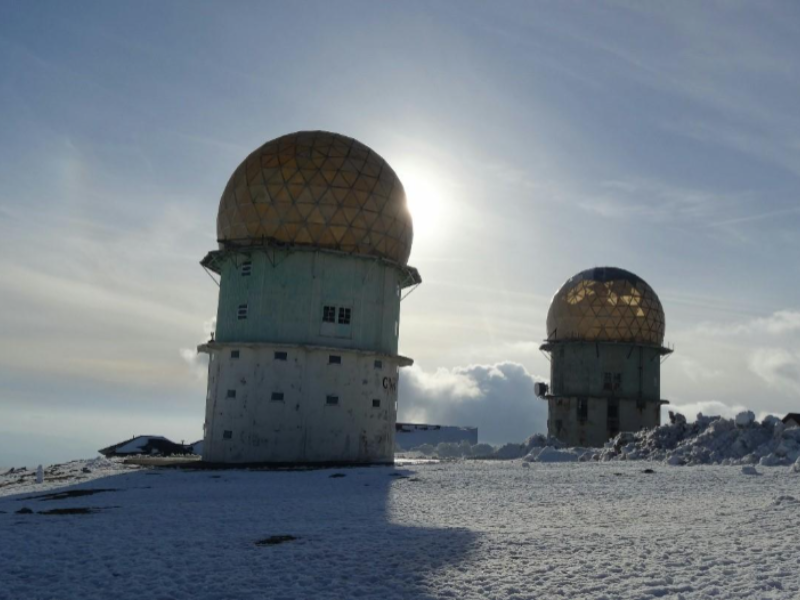
As Canada accelerates its generational investment in infrastructure and defence, the Arctic becomes a region of particular importance. A warming climate is easing access to critical shipping routes and natural resources, leading to intensified global competition in the region. As states become increasingly interested in the Arctic, Canada’s sovereignty and territorial integrity are challenged. Lack of infrastructure in the Canadian Arctic makes the region even more vulnerable to breaches of sovereignty. Canada has recently undertaken a commitment to safeguard Arctic sovereignty. This is evidenced by Canada’s $38.6 billion pledge to modernize the North American Aerospace Defence Command (NORAD) over the next two decades. In light of potential challenges posed by American ambivalent attitudes toward cooperation on NORAD, Ottawa is fast-tracking massive investments in its Arctic infrastructure and defence capabilities.
This is not the first time the modernization of defence capabilities in the Arctic has taken the front seat in Canadian domestic policy. During the Cold War, Canada constructed the Distant Early Warning (DEW) Line, a network of radar and communication stations across the Arctic. This was Canada’s response to the possibility of a Soviet attack and was later replaced by the North Warning System (NWS). Built incredibly quickly between 1955 and 1957, with minimal environmental consideration or local Indigenous consultation, the legacy of both projects continues to impact the human security of Arctic Indigenous peoples. This is manifested in asbestos, polychlorinated biphenyls, and other contaminants in the soil, water, and atmosphere that impact the quality of water supply and negatively affect traditional hunting and gathering methods.
Herein lies the risk of expedited massive development in the Arctic. The Canadian Government and the Canadian Armed Forces (CAF) do not have a stellar track record of honouring rhetorical pledges to sustainable development and Indigenous involvement. The priorities of southern provinces have historically taken precedence over local Arctic concerns. It is clear, given growing Russian and Chinese investment and presence in the region, that Arctic security needs to be bolstered in the face of external threats. However, for this investment to be viable in the long run, it must also consider wider sustainability concerns such as the relationship between increased military infrastructure and the Indigenous communities whose traditional lands they will be built upon.
Learning from past mistakes
Sustainable defence must be carried out in collaboration with local Indigenous populations. Radar stations, runways, and military infrastructure cannot be run effectively in communities in crisis. For these massive investments to pay dividends in the future, development and defence projects must be undertaken with respect for those who will live around them. Given the shortcomings of previous defence infrastructure in the Canadian Arctic and its legacy of abandoned infrastructure and environmental degradation, it is time for the northern defence strategy to adopt a more forward-leaning approach. The Canadian government can accomplish this by prioritizing the sustainability of new developments and ensuring they benefit both the CAF’s mission to defend Canadian sovereignty and the communities and individuals in the region. The government can do so by incorporating Indigenous voices and knowledge of the environment in building practices. However, this does not appear to be the case. Despite Foreign Affairs Minister Anita Anand’s comments that “security imposed without partnership is not sovereignty,” there are persistent disagreements between the government and relevant Indigenous actors. Natan Obed, the head of the Inuit Tapiriit Kanatami, an organization that protects and advances the rights of Inuit in Canada, has recently stated that the Canadian federal government still does not provide equitable treatment to the Inuit. He cited remediation failures of the previous Cold War infrastructure as a grave concern for the potential impact that new Arctic legislation could have on the environment and its constituents.
Integrated Deterrence
“Decolonizing deterrence” is not just about making amends for past shortcomings; it is about strengthening Canada and NATO’s shared priority of integrated defence. By fortifying communities and sustainable infrastructure, Canada and NATO are making their northern flank less vulnerable to foreign attacks. Contemporary deterrence is no longer centred solely on the ability to counter kinetic strikes but on resilience and civil preparedness. This resilience is central to withstanding natural disasters, failures of critical infrastructure, and hybrid or armed attacks, all of which the Arctic is particularly vulnerable to. It is also especially pertinent in the context of increasing grey zone attacks. These are disruptive tactics outside the threshold of armed hostilities employed by hostile states such as Russia and China, to sow dissent among populations and interfere with critical infrastructure. Examples include influence operations, subversion and coercion of critical infrastructure and populations. A few recent instances of this are Russian hacking in the Norwegian Arctic city of Tromsø and diplomatic espionage at UiT, the Arctic University of Norway. Canada may also fall victim to these tactics. It is perhaps at an even higher risk than Norway, as Canada’s Arctic cities remain much less developed than their Norwegian counterparts. Grey zone attacks are easier to execute in areas with lower levels of infrastructure resilience. Communities with modern amenities, housing, and food security, built around CAF Arctic developments, will strengthen resolve and reduce vulnerability to covert enemy interference, such as economic coercion or sabotage. Furthermore, commitment to sustainable development will serve as a real pledge to the continuation of projecting sovereignty over remote areas and communities. This infrastructure reinforces the “human flagpole” effect but is appropriately constructed to reflect modern realities rather than forced relocations and assimilation.
The sustainable path forward
Other Arctic NATO members, such as the Kingdom of Denmark (Greenland), Norway, and Finland, have a similar imperative to build sustainable, long-lasting defence capabilities alongside domestic Indigenous populations. They are also vulnerable to the expansion of hostile grey zone tactics. This concern is compounded by recent threats made towards Greenland, which have highlighted the difficulties in maintaining trust between alliance members in the Arctic. By creating a cohesive, NATO-wide strategic resilience framework in Arctic communities, many of which are Indigenous, Arctic partners can build a solid, unified front grounded in the principles of integrated deterrence and resilience. Establishing a NATO framework that enshrines Indigenous participation gives Canada the opportunity to spearhead an alliance-wide approach focused on implementing local knowledge. This will allow Indigenous actors to provide a more advisory role regarding defence, while formalizing an integrated deterrence approach. Importantly, this will enshrine that local knowledge of surviving and operating in the harsh Arctic environment is recognized as a strategic asset. Both proposed recommendations ensure that deterrence fosters decolonization, differentiating current policy from past practices and making the Canadian north more resilient than ever before.
The Government of Canada must mandate that new infrastructure in the region be “dual use.” This means that conventional infrastructure benefits everyday civilian and commercial needs while also contributing to strategic military considerations. By mandating that every Arctic runway, power station, or medical facility serves both the CAF’s mission as well as the local community, the government can ensure that defence investment also serves a social and economic purpose for the communities in which they are based. This strategy would reinforce the previously mentioned “human flagpole” effect, where thriving communities act as the strongest representation of Canadian sovereignty in the Arctic.
Photo: White and Brown Dome Building on Snow Covered Ground during Daytime. Source: Mager, Hans-Jurgen / Unsplash
Disclaimer: Any views or opinions expressed in articles are solely those of the authors and do not necessarily represent the views of the NATO Association of Canada