From devastating floods in Pakistan to prolonged droughts across the Horn of Africa, climate-related disasters are increasingly shaping political and humanitarian crises around the world. Climate change is often described as a “threat multiplier” because it tends to intensify challenges that already exist within societies rather than directly causing conflict on its own. Environmental pressures such as droughts, floods, rising temperatures, and resource scarcity can worsen poverty, displacement, food insecurity, and political instability, particularly in countries with limited infrastructure or weak governance systems. According to the IPCC, climate-related extreme weather events are becoming more frequent and severe, disproportionately affecting vulnerable regions with lower adaptation capacity. In this way, climate change interacts with existing social and economic inequalities, making already vulnerable regions even more susceptible to crisis.
These effects are especially visible across parts of the Global South, where many states rely heavily on climate-sensitive sectors such as agriculture while also facing development and governance challenges. Despite contributing the least to global emissions, many countries in the Global South remain among the most vulnerable to the effects of climate change. In regions such as the Sahel or the Horn of Africa, prolonged droughts and resource shortages have contributed to displacement, economic insecurity, and tensions between communities competing over land and water resources. Similarly, extreme flooding in countries like Pakistan has shown how climate disasters can overwhelm state capacity and create long-term humanitarian and economic consequences. The 2022 floods in Pakistan displaced millions of people and caused widespread damage to infrastructure, agriculture, and housing, illustrating how climate disasters can quickly evolve into broader political and humanitarian crises.
Although climate change should not be viewed as the sole cause of instability, its ability to deepen existing vulnerabilities has made it increasingly relevant within discussions of international security. As environmental pressures continue to intensify, governments and international organizations are being pushed to reconsider how security is defined and addressed in the twenty-first century.
Why Traditional Security Responses Are Insufficient
Traditional approaches to security have largely focused on military threats, armed conflict, and territorial defense. However, climate insecurity cannot be addressed through military solutions alone because many of its impacts are tied to deeper structural issues such as poverty, weak infrastructure, food insecurity, and unequal access to resources. While armed forces can play an important role in disaster response and humanitarian assistance, they cannot fully address the environmental and social conditions that leave communities vulnerable to climate-related crises.
In many parts of the Global South, climate change places additional pressure on governments that already struggle with limited resources and institutional capacity. Extreme weather events can damage infrastructure, disrupt agricultural production, and force large populations to migrate, creating challenges that go far beyond the scope of traditional defense strategies. Addressing these issues therefore requires long-term investment in climate adaptation, sustainable development, and resilience-building rather than relying only on short-term reactive measures. As a result, climate resilience and development policy are becoming increasingly important parts of long-term security planning.
This shift has also encouraged policymakers to adopt broader understandings of security that place greater emphasis on human security and international cooperation. This reflects a growing shift toward human security frameworks that focus on protecting people and communities rather than only defending state borders. Climate insecurity highlights the close connection between environmental stability, economic development, and political stability, showing that security in the twenty-first century can no longer be understood only through a military lens.
Climate Security and International Policy Responses
As climate-related risks continue to grow, international organizations and security institutions have started incorporating climate change into broader policy and strategic discussions. In recent years, organizations such as NATO have increasingly acknowledged that climate change can affect global stability by contributing to humanitarian crises, displacement, and additional pressure on fragile states. NATO has also begun integrating climate considerations into defense planning and resilience strategies, reflecting the growing recognition that environmental instability can carry direct geopolitical and security consequences. This reflects a broader shift in how security is being understood, moving beyond traditional military concerns to also include environmental and human security challenges.
At the same time, climate insecurity cannot be addressed by security institutions alone. Effective responses require international cooperation, investment in climate adaptation, and stronger support for regions disproportionately affected by environmental change. Policies focused on disaster preparedness, sustainable infrastructure, food security, and resilience-building are becoming increasingly important in reducing the long-term risks associated with climate instability.
The growing recognition of climate change within international security frameworks demonstrates that environmental issues are no longer separate from broader political and strategic concerns. As climate pressures continue to intensify, governments and international organizations will need to develop more coordinated approaches that address both the environmental and security dimensions of climate change.
Climate change is increasingly reshaping the way security is understood in the twenty-first century, particularly in the Global South, where environmental pressures often interact with existing political, economic, and social vulnerabilities. While climate change does not directly cause conflict, its ability to intensify food insecurity, displacement, resource scarcity, and instability has made it a growing concern for governments and international organizations alike. These challenges reveal the limits of traditional military-centered approaches to security and highlight the need for broader strategies focused on resilience, adaptation, and human security. As climate instability continues to grow, the line between environmental and security policy will likely become increasingly difficult to separate.
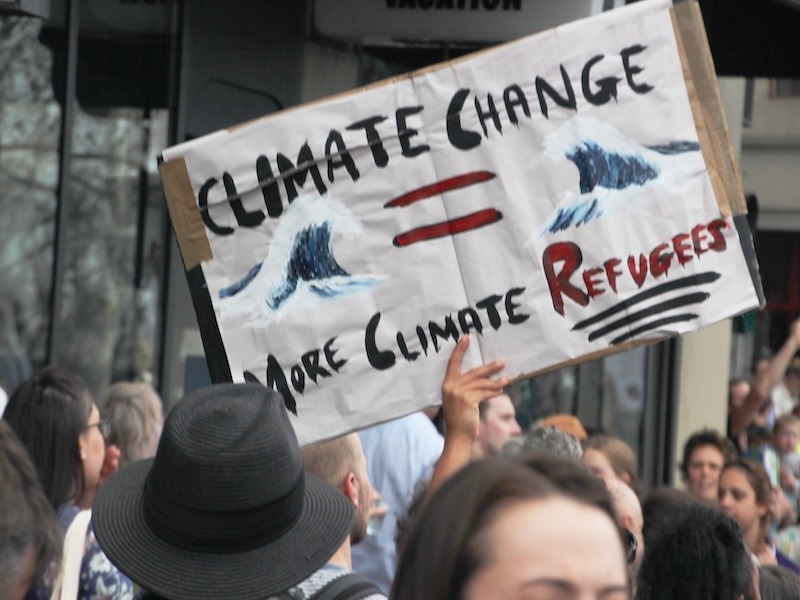
Image credit: Climate change = more climate refugees. – Melbourneclimatestrike IMG 5187 (20 September 2019), depicting a protest sign at the Melbourne Global Climate Strike, by Takver via Wikimedia Commons. Licensed under CC BY-SA 2.0.
Disclaimer: Any views or opinions expressed in articles are solely those of the author and do not necessarily represent the views of the NATO Association of Canada.

.jpg)
