As NATO countries increase defence spending amid rising geopolitical tensions, Canada faces pressure to strengthen its military. The federal government has committed billions of dollars to modernizing the Canadian Armed Forces (CAF), but increased spending does not automatically translate into greater military capability. Major defence projects have faced years of delays, while personnel shortages and challenges in recruitment, retention and training continue to limit the CAF’s readiness. The capacity of Canada’s defence industry to meet growing military demands presents an additional challenge.
Defence procurement is one of the clearest examples of this problem. Buying new aircraft, ships, weapons, and other military equipment can take years, and sometimes decades. Other NATO countries face many of the same challenges, but some have taken different approaches to buying equipment and working with their defence industries. Comparing these systems with Canada’s offers useful lessons about what can be done differently. As Canada increases defence spending, the question is not simply how much it spends, but whether that money can produce the military capabilities the country actually needs.
- Canada’s Procurement Problem
Canada’s defence procurement problems are not new. The replacement of Canada’s CF-18 fighter jets is one of the clearest examples. Canada began considering replacements in the late 2000s, but political disagreements and changes to the procurement process delayed the project. An agreement to purchase 88 F-35 fighter jets was eventually finalized in 2023. Since then, the estimated cost of the project has risen from $19 billion to $27.7 billion, and the federal government has launched a review of the acquisition to determine whether the F-35 remains the best option for Canada. Canada remains committed to acquiring an initial 16 aircraft. Despite these developments, the current delivery schedule remains largely unchanged, with the first aircraft expected to be delivered to Luke Air Force Base in the United States in 2026 for pilot training and the first F-35s expected to arrive in Canada in 2028. By the time the entire fleet is delivered, nearly two decades will have passed since the replacement process began.
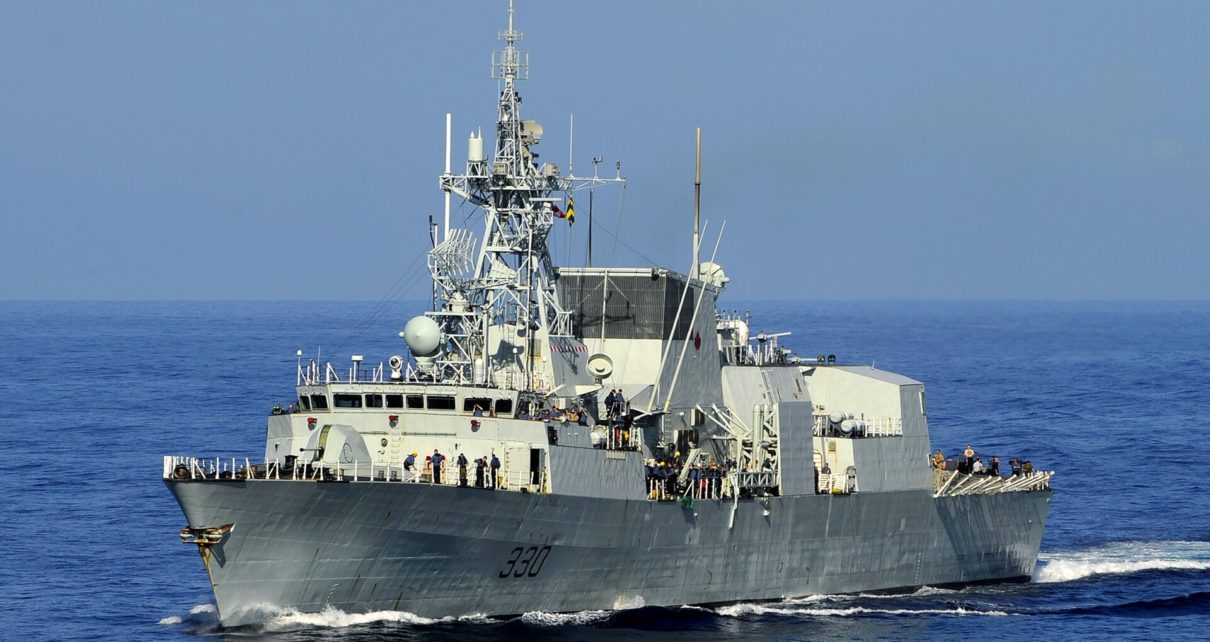
The Royal Canadian Navy has faced similar delays. Plans to replace the aging Halifax-class frigates have been in development for years, while the new River-class destroyers are not expected to enter service until the 2030s. Until then, the Navy will continue relying on frigates that first entered service in the 1990s.
Part of the problem lies in how Canada’s defence procurement system has traditionally been organized. Responsibility for major projects has been divided across several federal departments and agencies. National Defence defines military requirements and technical specifications, while Public Services and Procurement Canada manages the procurement process, and Innovation Science and Economic Development Canada oversees industrial benefit requirements. Major projects can also pass through multiple stages of review and approval before contracts are awarded. While these mechanisms provide oversight, the division of responsibility, extensive documentation requirements, and layers of approval have contributed to a procurement system that can struggle to make decisions quickly. Recent government evaluations have also identified disconnected information systems, staffing shortages, and a risk-averse procurement culture as barriers to faster acquisition.
Cases like the F-35 and River-class destroyers show the consequences of these structural problems. When procurement takes decades, older equipment must remain in service longer, often becoming more difficult and costly to maintain while the CAF waits for replacements.
However, Canada’s procurement record is not uniformly negative. The Arctic and Offshore Patrol Ship program has now delivered all six Harry DeWolf-Class vessels to the Royal Canadian Navy, with the final ship delivered in August 2025. The vessels have already supported Arctic sovereignty patrols, international deployments, and domestic operations. Progress has also been made in replacing Canada’s fixed-wing search-and -rescue fleet, with the CC-295 Kingfisher entering operational service at 19 Wing Comox in May 2025. These cases demonstrate that Canada can translate procurement programs into operational capability, even if delays and implementation challenges remain across the broader system.
- Looking to Other NATO Allies
Other NATO members have taken different approaches to defence procurement. France, for example, relies on the Direction générale de l’armement (DGA), a specialized agency responsible for overseeing military equipment programs and working closely with the armed forces and defence industry. Its role is not limited to purchasing equipment. The DGA is involved in the development of new military capabilities and supports France’s domestic defence industry. More recently, France has also pushed the DGA to work faster and strengthen coordination between the military, procurement officials, and industry.
Poland has taken a different approach, particularly after the Russian invasion of Ukraine revealed vulnerabilities on the Eastern flank. Faced with the need to expand its military quickly, Poland turned to large foreign purchases, including agreements with South Korea in 2022 for equipment such as K2 tanks. A key feature of this approach was the purchase of off-the-shelf equipment already in production, allowing Poland to prioritize rapid delivery rather than waiting for newly developed or extensively customized systems. These agreements focused on getting equipment delivered quickly while also including training, logistical support, and participation from Polish industry.
Canada cannot simply copy either system. France and Poland have different security priorities, defence industries, and political systems. However, both cases show ways Canada could improve its own process. France’s centralized procurement expertise provides a contrast to Canada’s traditionally fragmented system, where responsibilities have been divided across multiple departments. Poland’s use of off-the-shelf foreign purchases also shows how proven equipment from allies can provide a faster option when military needs are urgent. For Canada, clearer responsibility for major projects, earlier coordination with industry, and greater flexibility to purchase existing equipment from allies could help reduce procurement delays.
- Beyond Procurement
Fixing procurement would only address part of the CAF’s readiness problems. New equipment still requires personnel to operate, maintain, and support it, making recruitment and training just as important. Between 2022 and 2025, the CAF recruited roughly 15,000 members, despite plans to recruit more than 19,700. The recruitment process itself was also slow, often taking much longer than the CAF’s target of 100 to 150 days. Training has faced its own difficulties, including shortages of instructors, equipment, and available facilities.
- Turning Reform into Results
Canada has already started addressing some of these problems. The new Defence Investment Agency (DIA) is meant to simplify a procurement system where responsibility has traditionally been spread across several departments. Its role includes bringing procurement expertise together, cutting unnecessary approval steps, and involving industry earlier in the process. Canada’s new Defence Industrial Strategy also introduces a “Build-Partner-Buy” approach, which prioritizes building equipment in Canada when possible, working with allies when necessary, and buying from abroad when those options cannot meet the CAF’s needs.
These changes could help address some of the delays that have affected Canadian procurement, but creating a new agency will not solve the problem on its own. The real test for the DIA will be whether major projects actually reach CAF members faster.
Canada is preparing to spend significantly more on defence, but the size of the budget will only tell part of the story. What matters is whether that money results in equipment that arrives on time, enough trained personnel to use it, and a military that is better prepared to meet its commitments. If Canada can shorten procurement timelines while improving recruitment, training, and retention, increased spending could translate into a more capable CAF and a stronger contribution to NATO. If the same delays continue, however, a larger defence budget alone will not fix the problems Canada has faced for years.
Photo: https://commons.wikimedia.org/wiki/File:HMCS_Halifax_(FFH_330)_en_route_to_Haiti_2010-01-18.jpg
Disclaimer: Any views or opinions expressed in articles are solely those of the authors and do not necessarily represent the views of the NATO Association of Canada.


_en_route_to_Haiti_2010-01-18.jpg)
